Does a diabetes diagnosis determine whether Zepbound could be an option? No. If you’re considering Zepbound for non-diabetic weight loss, the FDA-approved use for chronic weight management applies to adults with obesity, or adults with overweight and at least one weight-related health condition. Diabetes isn’t required, but meeting these criteria doesn’t guarantee treatment is appropriate for you.
It’s reasonable to want clear answers about eligibility, safety, and what happens after a prescription. This article explains the approved criteria and clinical evidence, along with the personal health details a clinician may need to assess, including your medical history and current medications. It also outlines what to ask about side effects, follow-up, and monitoring your response, and how to distinguish clinician-led care from medication-only offers. Use it to prepare for a conversation about whether Zepbound may fit your health needs.
Key Takeaways
- Zepbound for non-diabetic weight loss may be considered under its weight-management indication. Diabetes isn’t required, but eligibility criteria still apply.
- Review your BMI and any weight-related health conditions with a clinician to understand whether you meet the labeled criteria.
- Bring your medical history and current medication list to discuss potential side effects, serious risks, and treatment goals.
- Before choosing care, ask who evaluates you, how follow-up is handled, and what medication information you’ll receive.
Can You Use Zepbound for Weight Loss Without Diabetes?
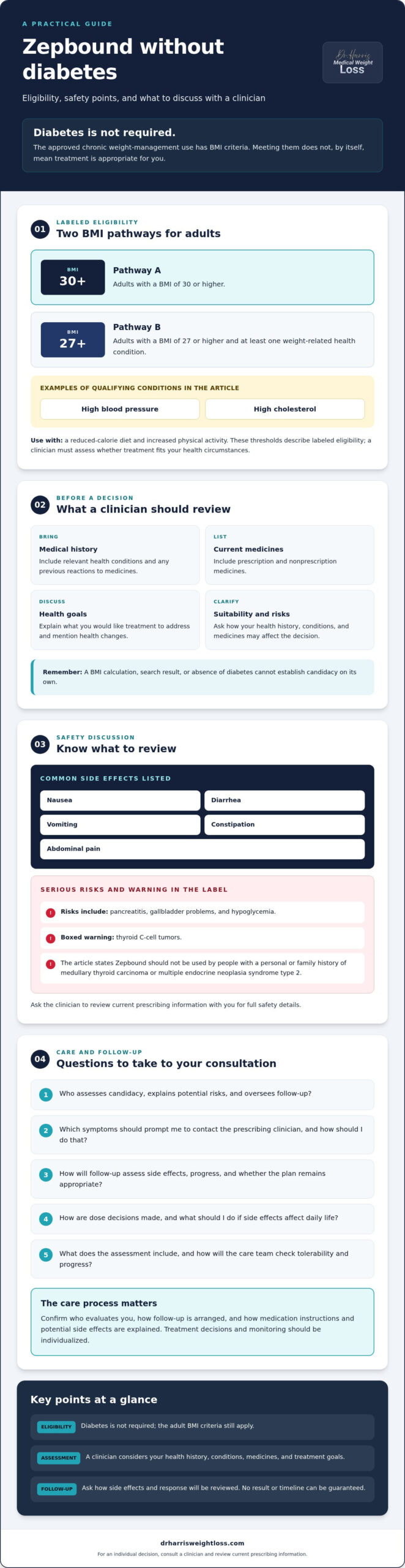
Yes. A diabetes diagnosis isn’t required for Zepbound’s weight-management indication. Under current FDA prescribing information, Zepbound is used with a reduced-calorie diet and increased physical activity for adults who meet specified criteria: a body mass index (BMI) of 30 or higher, or a BMI of 27 or higher with at least one weight-related condition, such as high blood pressure or high cholesterol.
These thresholds describe labeled eligibility, not an individual prescription decision. A clinician needs to consider your health history and circumstances to determine whether treatment is appropriate. A search query, BMI calculation, or absence of diabetes cannot establish candidacy on its own.
What does Zepbound’s approved use mean for someone without diabetes?
The indication is for chronic weight management in adults who meet the BMI criteria, alongside diet and physical activity. Diabetes status and candidacy are separate questions: someone may meet the weight-management criteria without diabetes, but still needs an individual clinical assessment.
Zepbound contains tirzepatide. The same active ingredient is marketed as Mounjaro under separate FDA labeling for type 2 diabetes. The brand names and approved uses shouldn’t be treated as interchangeable. For background on the active ingredient, see Tirzepatide (Zepbound). For eligibility and prescribing details, rely on the current FDA prescribing information rather than a general overview.
In practical terms, Zepbound for non-diabetic weight loss may be an option for some adults who meet the labeled criteria. A clinician must assess whether it fits an individual’s health needs.
What Should You Review Before Starting Zepbound Without Diabetes?
A clinician’s assessment should consider more than eligibility. Before discussing Zepbound for non-diabetic weight loss, gather your medical history, a list of prescription and nonprescription medicines, relevant health conditions, and the goals you’d like treatment to address. Mention any previous reactions to medicines and changes in your health. This information helps the clinician consider suitability and potential risks rather than making a decision from one measure alone.
Ask the clinician to review the current prescribing information with you. Common side effects include nausea, diarrhea, vomiting, constipation, and abdominal pain. The label also warns about more serious risks, including pancreatitis, gallbladder problems, and hypoglycemia. It includes a boxed warning about thyroid C-cell tumors and states that Zepbound shouldn’t be used by people with a personal or family history of medullary thyroid carcinoma or multiple endocrine neoplasia syndrome type 2. The FDA approval for chronic weight management explains the approved use. Consult the current prescribing information for full safety details.
Which questions belong in a Zepbound consultation?
Bring questions that clarify both the initial decision and the care that follows:
- How could my health history, conditions, or current medicines affect suitability or risk?
- Which symptoms should prompt me to contact the prescribing clinician, and how should I do that?
- How will follow-up assess side effects, progress, and whether the plan remains appropriate?
Monitoring and treatment decisions should be individualized. Ask how dose decisions are made and what to do if side effects affect daily life. No result or timeline can be guaranteed. If you’re in South Florida, you can learn about Dr. Harris’s medically supervised Zepbound program and ask whether an assessment may be appropriate for you.
How to Choose Supervised Zepbound Care in South Florida
Choosing care for Zepbound for non-diabetic weight loss involves more than checking whether a program provides medication. First, confirm who evaluates candidacy and discusses risks. Then ask what the assessment covers, how follow-up is arranged, and how medication instructions and potential side effects will be explained. A clear process should allow time for questions and individualized decisions, rather than assuming everyone is a candidate.
Ask how the clinician will review your response and decide whether the treatment plan remains appropriate. The clinical trial evidence provides research context, but studies don’t determine whether a medication is suitable for you. That requires an assessment of your own health circumstances.
What should South Florida patients ask a local provider?
- Who assesses candidacy, explains potential risks, and oversees follow-up?
- What does the assessment include, and how will the care team check tolerability and progress?
- If treatment is approved, how are prescriptions provided, and when can the program begin? Confirm current steps directly with the practice.
Dr. Harris Medical Weight Loss offers a medically supervised Tirzepatide (Zepbound) program for patients in Fort Lauderdale, Boca Raton, Broward County, and Palm Beach County. The practice identifies itself as a LegitScript certified dispensing office. Certification does not guarantee a particular clinical outcome or replace an individual assessment. According to the practice, approved patients can receive prescriptions and begin their programs. Ask about current appointment, dispensing, and follow-up processes when discussing candidacy. The practice also has information about its Tirzepatide program in Fort Lauderdale and its medical weight loss overview.
Take the Next Step With an Informed Care Plan
A diabetes diagnosis isn’t required for Zepbound’s weight-management indication, but meeting the labeled criteria doesn’t automatically make treatment right for you. Eligibility, medical history, current medicines, and potential risks all matter. A clinician can help you weigh those factors and explain how follow-up will guide care.
If you’re considering Zepbound for non-diabetic weight loss in South Florida, Dr. Harris Medical Weight Loss offers a medically supervised Tirzepatide (Zepbound) program for patients in Fort Lauderdale, Boca Raton, Broward County, and Palm Beach County. The practice is a LegitScript certified dispensing office. Certification doesn’t guarantee a particular clinical outcome, and candidacy still requires assessment.
Discuss whether the Zepbound program may be appropriate for you. Reviewing your health needs with a clinician can help you choose your next step with greater confidence.
Frequently Asked Questions
Can you take Zepbound for weight management if you do not have diabetes?
Yes. Diabetes isn’t itself required for Zepbound’s weight-management indication. Whether it may be prescribed depends on current FDA-labeled criteria and a clinician’s assessment of your health. Check the current FDA information and discuss your medical history, conditions, and medicines with a qualified professional. A diagnosis or online search alone can’t determine whether treatment is suitable for you.
Who may qualify for Zepbound for weight management?
Potential eligibility depends on the current FDA label, including BMI criteria and relevant weight-related health factors. Meeting a single criterion doesn’t guarantee a prescription. A clinician also needs to consider your health history and whether treatment is appropriate for your circumstances. Ask a qualified clinician to review your details and confirm how the current criteria apply to you.
What should I discuss with a doctor before starting Zepbound?
Discuss your medical history, current medicines, relevant conditions, treatment goals, possible adverse effects, and the follow-up plan. Ask the clinician to review the current prescribing information with you and explain which symptoms need prompt attention. These details help guide an assessment of whether treatment is appropriate. If you’re in Fort Lauderdale, Boca Raton, Broward County, or Palm Beach County, Dr. Harris Medical Weight Loss offers a medically supervised Tirzepatide (Zepbound) program.
Does Zepbound replace nutrition and physical activity changes?
No. The current FDA label describes Zepbound as part of treatment alongside a reduced-calorie diet and increased physical activity, not as a replacement for clinician guidance or health behaviors. Recommendations should fit your health and circumstances rather than follow a one-size-fits-all plan. Ask your clinician what changes may be suitable for you and how they’ll be considered as part of care.