Stopping tirzepatide can affect more than appetite. What happens when you stop taking tirzepatide may include renewed hunger, weight regain, higher blood sugar for people with type 2 diabetes, and gradual loss of improvements in blood pressure, cholesterol, and other metabolic measures. These changes may unfold over time rather than all at once.
If you’re considering a pause or have already stopped, it’s understandable to wonder what comes next. Tirzepatide’s effects can take several weeks to wear off. After a longer break, restarting may involve a lower dose to help limit gastrointestinal side effects.
This article explains how stopping may affect blood sugar, weight, and cardiovascular and metabolic health, and what to consider if you’re thinking about restarting. You’ll also learn why a treatment plan matters, especially when tirzepatide is part of ongoing care for type 2 diabetes or weight management.
Key Takeaways
- Stopping tirzepatide may affect blood sugar and appetite, so consider how it fits into your broader care plan.
- Changes in fullness and hunger can emerge as the medication’s effects wear off.
- Blood pressure, cholesterol, and other metabolic benefits may diminish over time after stopping.
- Restarting may be possible after a break, with the dose shaped to help limit gastrointestinal side effects.
Blood sugar changes after stopping
Stopping tirzepatide can affect glucose control, appetite, and weight. A practical answer to what happens when you stop taking tirzepatide starts with whether it was prescribed for type 2 diabetes or weight management.
Blood Sugar Shifts
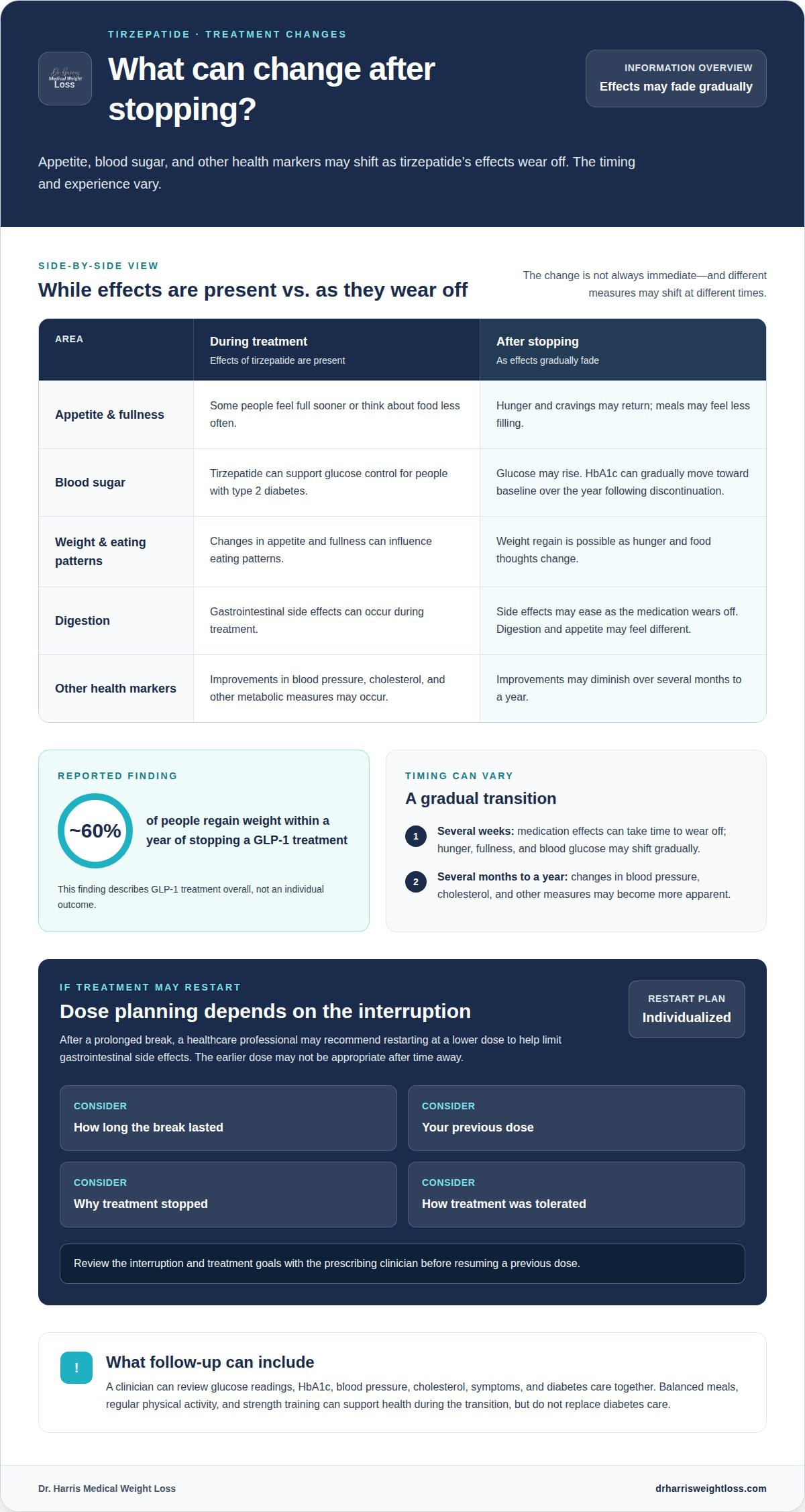
Blood sugar shifts are changes in glucose control after tirzepatide’s effects diminish. For people with type 2 diabetes, glucose may rise, and HbA1c can gradually move toward its baseline over the year following discontinuation. Some clinical study participants had worse blood sugar control within a few weeks. This matters because stopping may require changes to the diabetes management plan, so discuss timing with the clinician overseeing care.
How Long Effects Last
Tirzepatide’s effects don’t disappear immediately after the last dose. They can take several weeks to wear off, so appetite, fullness, and blood glucose may shift gradually. Some people notice increased hunger within a few weeks of stopping Zepbound. This is part of what happens when you stop taking tirzepatide, though the timing and experience vary.
As effects fade, hunger and cravings may return, and meals can feel less filling. Weight regain is possible. About 60% of people regain the weight they lost within a year of stopping a GLP-1 treatment, according to Cleveland Clinic. This finding describes GLP-1 treatment overall, not an individual outcome. Mounjaro is a tirzepatide brand; Ozempic is another GLP-1 medication.
Supportive habits can help maintain health after stopping: plan balanced meals, include protein and fiber, and make regular physical activity part of your week. Strength training is one way to support muscle. Gastrointestinal side effects may ease as the medication wears off, while appetite or blood glucose changes may emerge. A healthcare professional can monitor these changes and adjust diabetes care when needed.
Can someone restart a GLP-1-based medication after stopping?
Restarting may be an option, but the appropriate dose depends on how long the break lasted, your previous dose, why you stopped, and how you tolerated treatment. After a prolonged interruption, a healthcare professional may recommend restarting tirzepatide at a lower dose to help minimize gastrointestinal side effects. Don’t resume your earlier dose without discussing the interruption and your treatment goals with your prescriber.
Tirzepatide acts on GLP-1 and GIP receptors, which are involved in appetite and fullness signals. While taking it, some people feel full sooner or think about food less often. As treatment stops and its effects wear off, appetite may return, meals can feel less satisfying, and food thoughts may become more frequent. These changes can influence eating patterns and contribute to weight regain.
Digestion may also feel different as the medication’s effects change. Gastrointestinal side effects may ease after stopping, while appetite and fullness gradually shift. If treatment restarts after a long break, a lower dose may help reduce gastrointestinal side effects as your body readjusts. A sustainable lifestyle plan can support you during this transition: eat regular meals with protein, include strength-focused physical activity, and follow up to review symptoms and progress.
For Mounjaro or Zepbound, FDA guidance and insurance coverage are separate considerations. Coverage can affect access, but it doesn’t determine an individual stopping schedule or restart dose. The treatment goal, response, length of interruption, and side effects all matter when planning whether to continue.
Reversal of cardiovascular and metabolic health benefits
Stopping tirzepatide can affect more than appetite or weight. As treatment effects fade, improvements in blood sugar, blood pressure, cholesterol, and other metabolic risk factors may diminish over several months to a year. For people living with obesity or type 2 diabetes, this matters because those conditions are chronic and health markers can shift as treatment changes.
The SURMOUNT-4 study followed adults for another year after they switched from tirzepatide to placebo. Participants had received lifestyle advice throughout the study, yet researchers still observed weight regain after treatment stopped. That pattern helps explain why a reduction in weight does not necessarily preserve every related health benefit once medication ends. The change is not limited to the number on a scale.
Blood sugar deserves particular attention for people with diabetes. Without tirzepatide’s ongoing effects, glucose control can worsen, while changes in weight and hunger may influence blood pressure and cholesterol over time. Semaglutide studies also describe health changes after treatment ends, but each medication’s results should be considered on their own. A doctor can review glucose readings, HbA1c, blood pressure, and cholesterol together, rather than treating one measurement as the full picture.
Planning a treatment change with a doctor gives your care team an opportunity to monitor relevant markers and respond to changes. Regular exercise, including strength training, and consistent eating habits can support your health during the transition, but they don’t replace diabetes care. The key point: stopping treatment can reduce some metabolic and cardiovascular gains, so follow-up should include blood sugar and broader health measures.
Dr. Harris: Tirzepatide (Zepbound) Program
Dr. Harris offers a medically supervised Tirzepatide (Zepbound) Program for people considering treatment or reviewing their next steps after stopping. A conversation about the interruption, previous dose, treatment goals, and any side effects can help inform a plan for continuing or restarting. If you have type 2 diabetes, include changes in blood sugar or diabetes care in that discussion.
The program may be a relevant next step if appetite or weight changes are affecting your health goals, or if you’re unsure how to approach treatment after a break. Treatment decisions should account for your health history and experience with tirzepatide, rather than assuming the previous dose is right after time away.
Contact Dr. Harris to discuss the Tirzepatide (Zepbound) Program and your next steps.
Choose a plan that fits your next chapter
Understanding what happens when you stop taking tirzepatide can help you approach the next decision with clarity, but the right plan depends on more than medication history. Consider what you want treatment to support over time, which health priorities matter most, and what has changed in your daily routine since your last dose.
A focused conversation with Dr. Harris can turn those reflections into a practical path, whether that means discussing continued treatment, a restart, or another appropriate option. Before your appointment, note what prompted the pause, what changed in your energy or routine, and which outcomes you want your care to prioritize. These details can help keep the discussion centered on your needs and health history.
For a thoughtful next step, discuss your options with Dr. Harris. Your treatment journey can move forward with a plan shaped around your goals, one considered step at a time.
Frequently Asked Questions
What happens when you stop taking a GLP-1?
Stopping a GLP-1 can allow appetite and glucose patterns to shift as medication effects fade. For someone with type 2 diabetes, the practical concern is whether their diabetes care still keeps readings within the range set with their clinician. Share the last dose date, recent glucose readings, and medication changes with the prescribing clinician. These details help assess what support may be needed.
Do you have to stay on GLP-1-based medications forever?
No. There is no universal rule that everyone must take a GLP-1 medication forever. Whether to continue depends on the reason for treatment, health measures, tolerability, and changing goals. For someone managing type 2 diabetes, stopping may affect the broader glucose plan; for someone using medication for weight management, ongoing care may involve other strategies. Discuss a planned change with the clinician managing treatment.
Are GLP-1-based medications meant to be taken long term?
They may be used long term because obesity and type 2 diabetes are chronic diseases, and ongoing treatment can help maintain health benefits. That doesn’t mean every person follows the same duration. A clinician considers the condition being treated, response, side effects, and health priorities. Revisit the plan as those factors change, rather than treating a treatment timeline as automatically permanent.
Can you stop tirzepatide cold turkey?
GLP-1-based medications generally don’t require gradual dose reduction to prevent withdrawal symptoms. Still, stopping tirzepatide can affect glucose management for someone with type 2 diabetes, so coordinate a change with the clinician overseeing care. If you receive care in Fort Lauderdale, Boca Raton, Broward County, or Palm Beach County, bring your recent glucose readings and medication list to that discussion.
Can you withdraw from Zepbound?
Zepbound isn’t generally associated with withdrawal that requires tapering to prevent withdrawal symptoms. However, changes in appetite or fullness can occur as its effects wear off. That isn’t the same as a withdrawal syndrome. If symptoms concern you, or you’re unsure whether they relate to stopping or another health issue, discuss their timing and severity with a healthcare professional.