What if a program’s headline price tells only part of the story? Medication, appointments, and ongoing care may be billed separately, so the amount quoted upfront may not reflect the full cost. Understanding the cost of medical weight loss programs means looking at what is included and how care may be organized over time.
This guide explains common cost components, including medication, clinician visits, monitoring, and possible lab work or platform fees. It also offers a practical way to compare what a program includes, so you can consider both the cost and the clinical oversight. Dr. Harris Medical Weight Loss provides medically supervised treatment options in South Florida. A useful first step is to identify the care you need and understand how each part of your plan is billed.
Key Takeaways
- Understanding the cost of medical weight loss programs means checking what the quoted amount covers and which services may be billed separately.
- Compare the same components across programs: evaluation, medication, clinician oversight, monitoring, and follow-up.
- Consider how the treatment plan and level of clinical guidance fit your health needs and budget.
- People in Fort Lauderdale, Boca Raton, Broward County, and Palm Beach County can explore physician-supervised Tirzepatide (Zepbound), Semaglutide, and Phentermine options.
Understanding Medical Weight Loss Program Costs: What Shapes the Total?
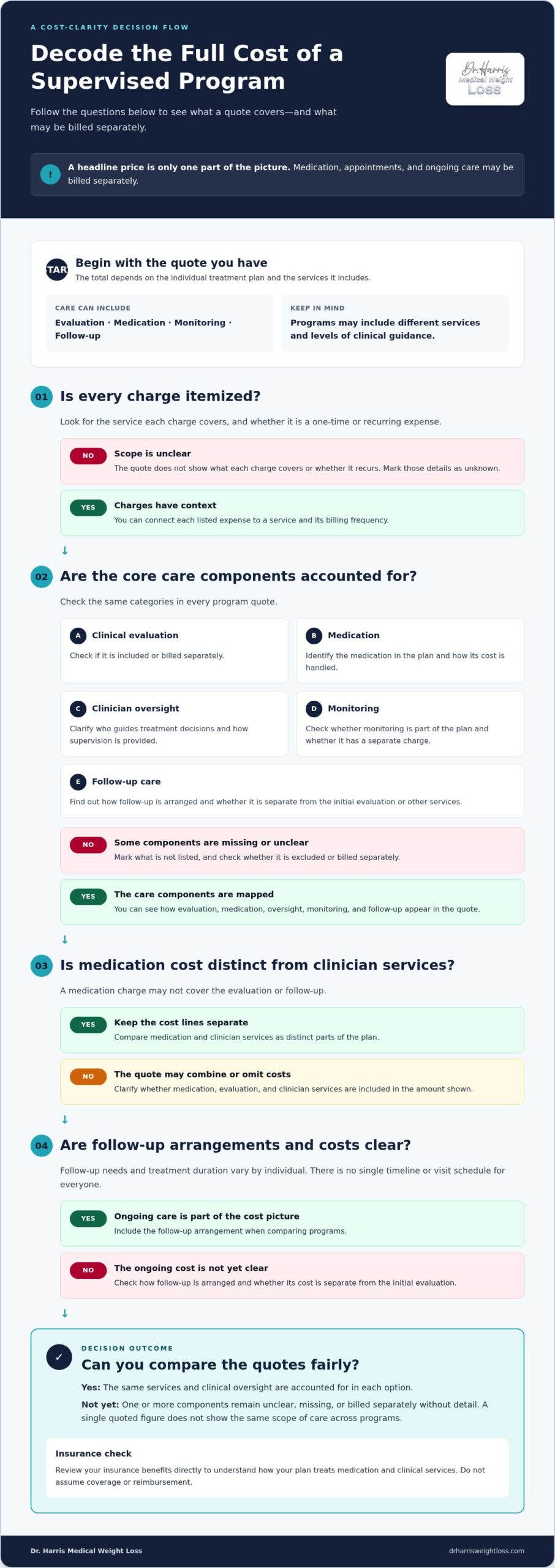
A headline price does not show what a program covers or how care is organized. One quote may focus on medication, while another may include clinician services or monitoring. To understand the total, list the components of care, note which are included, and identify any costs billed separately.
Total expenses depend on the individual treatment plan and the services it includes. Care may involve a clinical evaluation, medication, monitoring, and follow-up visits. The plan and its costs depend on individual clinical needs, so avoid assuming that every program includes the same services. Understanding the cost of medical weight loss programs means looking at the care behind the quote, not just the number itself.
Which parts of a supervised program may affect cost?
Medication and clinician services may be billed separately. For example, a medication charge may not cover the evaluation or follow-up. Monitoring may also be part of care, depending on the treatment plan. Request an itemized explanation of each charge, including what service it covers and whether it is a one-time or recurring expense.
Follow-up needs and treatment duration vary by individual. There is no single timeline or visit schedule for everyone. A clinician guides decisions about the plan and follow-up over time. The broader concept of weight management includes different approaches, which is one reason care plans and their costs can differ.
How to Compare Medical Weight Loss Programs Beyond the Price
A useful comparison starts with the services each program provides. Understanding the cost of medical weight loss programs means comparing the same components across options, rather than treating every quoted amount as if it covers the same level of care.
- Identify included services. Separate the cost of an evaluation from medication, monitoring, and follow-up care. Record which services are included and which may be billed separately.
- Clarify the medication plan. Identify the medication included in the plan and whether its cost is separate from clinician services.
- Understand clinician oversight. Consider who guides treatment decisions and how clinical supervision is provided. A physician-led medical weight loss program in Fort Lauderdale explains how care is guided by a physician.
- Review follow-up. Find out how follow-up is arranged and whether its cost is separate from the initial evaluation or other services.
What should a cost comparison clarify?
Check whether medication expenses are being presented separately from evaluation and ongoing clinical care. Compare those components individually, and review your insurance benefits directly to understand how your plan treats medication and clinical services. Do not assume coverage or reimbursement.
A meaningful cost comparison matches the services and oversight included, rather than relying on a single quoted figure. For more context on care and ongoing health habits, read the guide to weight management in Florida. The physician-led program page also explains the clinical approach offered in Fort Lauderdale.
Choosing a Medical Weight Management Program in South Florida
For people in Fort Lauderdale, Boca Raton, Broward County, and Palm Beach County, choosing care means considering both the treatment plan and the clinical guidance behind it. Dr. Harris Medical Weight Loss offers medically supervised programs featuring Tirzepatide (Zepbound) and Semaglutide, as well as Phentermine medication options. The practice is a LegitScript certified dispensing office. A clinician can discuss how an option fits an individual plan without assuming the same treatment is right for everyone.
How can a first conversation clarify your options?
A conversation with a clinician can connect your health history and goals with potential treatment options. Use it to clarify which services are part of your plan, how medication and clinical care are handled, and what follow-up may involve. Those details put understanding the cost of medical weight loss programs in the context of the care involved, rather than treating a quote as the full picture.
Learn about the treatment options separately by exploring the Tirzepatide program in Fort Lauderdale and the Semaglutide program in Fort Lauderdale. Each resource provides information about its respective program.
To learn more about care in South Florida, explore physician-led care with Dr. Harris.
Choose Care With Clarity and Confidence
Understanding the cost of medical weight loss programs means looking beyond a quoted amount to the treatment plan, clinical oversight, and follow-up involved. Comparing the same services across options can clarify what a quote covers and whether the plan fits your needs and budget.
Dr. Harris Medical Weight Loss serves people in South Florida with medically supervised treatment options. The practice has more than 30 years of clinical experience and is a LegitScript certified dispensing office. Discussing your health history and goals with a clinician can help clarify treatment options and how care is structured.
Explore physician-led weight management with Dr. Harris and take the next step toward care that fits your needs.
Frequently Asked Questions
What affects the cost of a medical weight loss program?
Costs can depend on the clinical evaluation, medication, monitoring, and follow-up involved in an individual plan. Understanding the cost of medical weight loss programs means checking which services are included and which may be billed separately. Treatment needs and follow-up schedules vary, so a quoted amount may not represent the same scope of care as another program’s quote.
Does insurance cover medical weight loss medication?
Coverage depends on your insurance plan and the medication prescribed, so do not assume that a medication or program will be covered. Review your benefits directly with your insurer, including any requirements that apply to your prescription. For people in Fort Lauderdale, Boca Raton, Broward County, and Palm Beach County, checking plan details can help clarify potential out-of-pocket costs.
Are medication and medical supervision included in one program fee?
Not always. Medication costs may be separate from clinical services such as evaluation, monitoring, or follow-up. Dr. Harris Medical Weight Loss provides physician-supervised programs featuring Tirzepatide (Zepbound) and Semaglutide, as well as Phentermine medication options. The cost components of an individual plan depend on the treatment selected and services involved, so review them together rather than assuming one fee covers everything.
How can I compare medical weight loss programs if prices are not presented the same way?
Compare the same components across programs: evaluation, medication, clinician oversight, monitoring, and follow-up. Note which services are included and which are separate, then review your insurance benefits directly. This gives you a clearer view of each program’s scope and helps you assess the care behind a quote, rather than choosing based on the headline figure alone.