
What if stronger appetite after stopping phentermine is a predictable change, not a personal failure? As the medication’s appetite-suppressing effects wear off, hunger and cravings may increase. Transitioning off phentermine without gaining weight starts with preparing for that shift through steady eating patterns, nourishing meals, and regular movement.
It makes sense to worry about losing progress when your appetite changes. The transition is not simply about willpower: habits that fit your daily life and follow-up with a clinician can help you respond to hunger and support ongoing weight management.
This article explains what may happen to appetite after stopping phentermine, which nutrition and activity habits can help, and why clinician follow-up matters. You’ll also learn how a personalized medical weight-management plan can support your next stage of care.
Key Takeaways
- Build meals around protein and keep a consistent eating schedule to help create structure as appetite changes.
- Expect hunger and food cravings to increase as phentermine’s appetite-suppressing effects wear off, and plan routines that help you respond.
- Use clinician follow-up to review appetite, weight patterns, and the habits that support long-term management.
- Learn how Dr. Harris Medical Weight Loss’s phentermine, tirzepatide, and semaglutide programs may fit into a clinician-guided plan.
Sustainable nutrition and activity habits
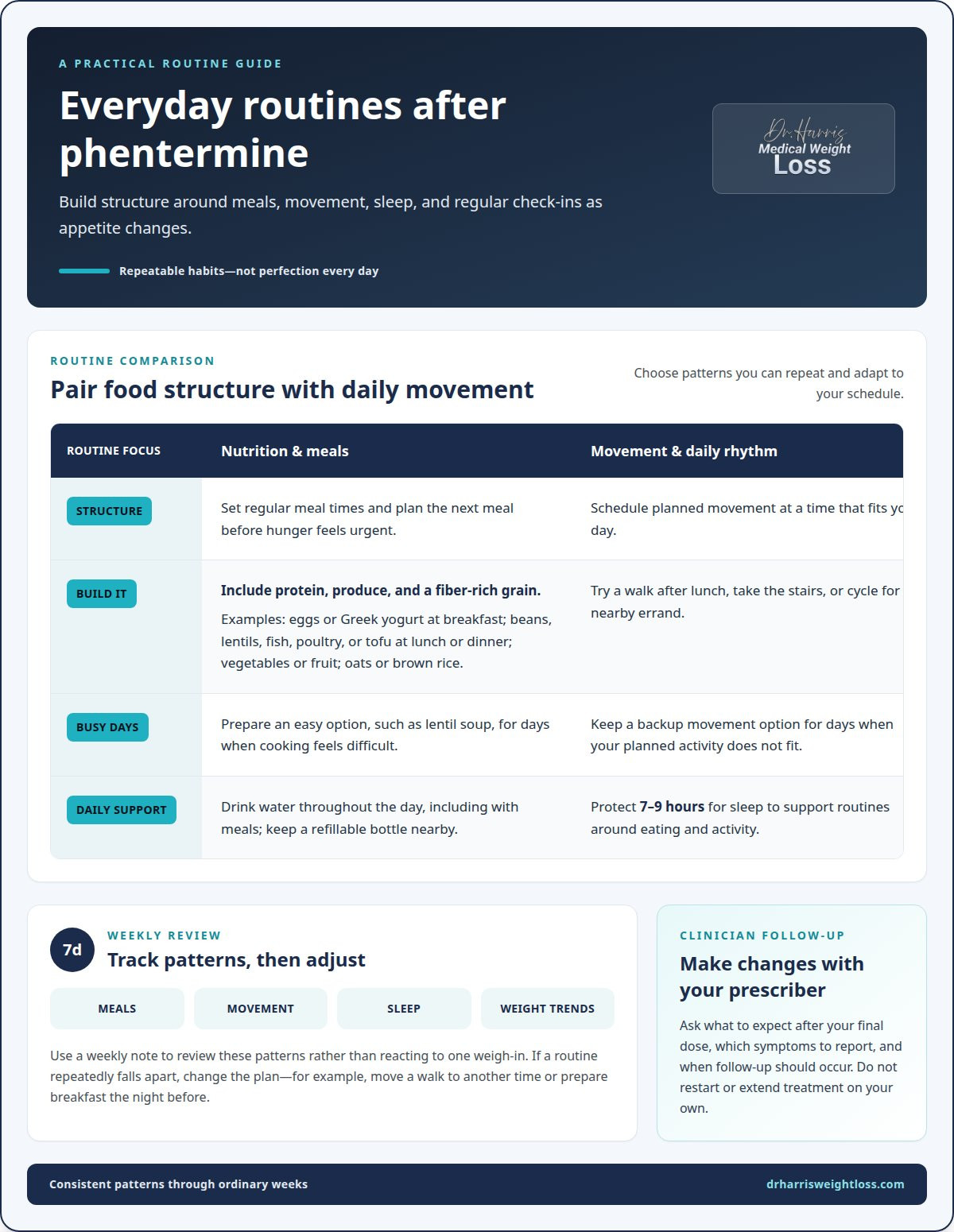
After phentermine, build a daily pattern that doesn’t rely on appetite cues alone. Set regular meal times and plan your next meal before hunger becomes urgent. For example, pair eggs or Greek yogurt with breakfast, then include beans, lentils, fish, poultry, or tofu at lunch or dinner. Add vegetables or fruit and a fiber-rich grain such as oats or brown rice. This gives meals a clear structure. A plan for transitioning off phentermine without gaining weight can begin with routines you can repeat.
Make activity practical enough to maintain. Choose options that fit your schedule, such as walking after lunch, taking the stairs, or cycling for a nearby errand. Schedule planned movement and keep a backup option for busy days. Drink water throughout the day, including with meals, and keep a refillable bottle nearby as a reminder.
- Track your weight consistently and note changes alongside meal and activity routines.
- Prepare an easy meal, such as lentil soup, for days when cooking feels difficult.
- Protect 7-9 hours for sleep, which can support routines around eating and activity.
Review these habits regularly instead of reacting to one weigh-in. A weekly note can track meals, movement, sleep, and weight trends. If a routine repeatedly falls apart, adjust the plan: move a walk to another time or prepare breakfast the night before. For people transitioning off phentermine without gaining weight, consistency means maintaining a pattern through ordinary weeks, not being perfect every day. Exploring specialized recovery and performance resources, such as those provided by My Health 360, can also offer helpful ideas for supporting overall physical stamina and long-term vitality during lifestyle transitions.
Appetite changes after stopping phentermine
In the United States, adults may be prescribed phentermine for weight management with a BMI of 30 or higher. A BMI of 27 or higher may qualify with a weight-related condition, such as diabetes, high blood pressure, or high cholesterol; typical use is short-term, from a few weeks to a few months.
Drivers of Renewed Hunger and Weight Regain
Renewed hunger means your appetite or food cravings may rise as phentermine’s effects wear off. Familiar portions may feel less satisfying, prompting extra snacks. For example, an afternoon craving may lead to unplanned grazing. Notice when hunger appears and what preceded it. Meal timing, sleep, and daily routines can shape eating patterns. These observations help identify triggers and guide adjustments, rather than treating each craving as a personal failure.
Risks of Long-Term Use or Sudden Stopping
Long-term phentermine use is not recommended. Reported concerns include strokes, palpitations, and agitation. After stopping, appetite and cravings may increase as the medication’s effects fade. This shift can make weight regain more likely if eating routines change. Stopping suddenly can reveal the return of hunger. Don’t restart or extend treatment on your own. Discuss when to stop with your prescribing clinician. Report palpitations or agitation, and review a follow-up plan for appetite changes and ongoing weight management.
Clinician follow-up and long-term weight management
Plan phentermine cessation with the prescriber rather than changing your dose alone. Whether tapering is appropriate depends on your prescribed regimen and clinical history. Ask what to expect after your final dose, which symptoms to report, and when follow-up should occur. Doctors typically monitor phentermine patients monthly, creating regular opportunities to review treatment concerns and adjust care. This guidance can help people transitioning off phentermine without gaining weight approach the change with a clear clinical plan.
Bring specific questions to each appointment. For example, ask how increased hunger may affect your current treatment goals or what to do if a side effect returns. A medication list, including prescriptions and nonprescription products, can help your clinician assess your overall care. Share changes in mood, energy, or daily functioning that began during treatment or after stopping.
If stress affects your eating patterns, ask whether behavioral therapy could help. A therapist can work with you to recognize emotional triggers and practice responses to difficult situations, such as tension at work or family gatherings. Discuss which approaches fit your circumstances and how progress will be reviewed.
Long-term management may involve revisiting your plan as health needs and treatment goals change. Use follow-up appointments to discuss concerns, treatment options, and support that feels sustainable. Rather than relying on medication decisions alone, talk through how clinical care and everyday routines can work together. For individuals whose wellness goals extend to broader hormonal and reproductive care, multidisciplinary providers like Sincere Healthcare Group highlight the benefits of comprehensive men’s and women’s healthcare. This ongoing partnership can make transitioning off phentermine without gaining weight a more informed process, while keeping the focus on your health and individual needs.
Dr. Harris Medical Weight Loss: Phentermine Medication
Dr. Harris Medical Weight Loss provides medically supervised weight-management programs for people considering medication or reviewing their current plan. If your appetite has returned after phentermine, a clinician-led discussion can consider your treatment history, health, and goals. Bring examples of appetite changes and routines that have become harder to maintain.
The Phentermine Medication program may be relevant when a clinician is assessing whether phentermine fits your needs and monitoring plan. If you have stopped taking it, discuss your next steps rather than restarting on your own. Share changes in hunger, eating patterns, or weight trends to make follow-up specific to your experience.
The Tirzepatide (Zepbound) Program may be relevant if you and a clinician are considering medication-based weight management. Discuss your medical history, treatment goals, and the follow-up needed to support your plan. The Semaglutide Medication Program may also be considered as part of care. Discuss your health history, goals, and how treatment fits alongside daily habits. Each option calls for an individual clinical discussion.
Medication is only one part of ongoing care. A clinician can help connect treatment decisions with eating routines, activity, sleep, and appetite changes. For example, if evening hunger disrupts your routine, discuss when it occurs and what support may help. Continued follow-up gives you space to review what is working and address challenges without relying on guesswork.
To discuss your next step, contact Dr. Harris Medical Weight Loss.
Frequently Asked Questions
What Happens to Your Appetite?
Appetite may feel stronger after phentermine’s appetite-suppressing effect fades. You might find larger portions more appealing or think about snacks between meals. This change isn’t a measure of discipline. For useful context, record when hunger appears, what you ate beforehand, and whether stress or a schedule change played a role. Share recurring patterns during follow-up.
Will You Gain the Weight Back?
Weight regain is possible, but it isn’t automatic. Appetite, daily routines, activity, sleep, and treatment history can all affect what happens after medication ends. Individual results vary, and outcomes depend on genetics, lifestyle, adherence, and medical guidance. If the scale changes, look at the pattern over time rather than treating one reading as proof of lasting regain.
How common is weight regain after stopping phentermine, and how much weight do people typically regain?
There isn’t one typical amount that applies to everyone, and regain isn’t inevitable. Changes depend on factors such as appetite, eating patterns, activity, sleep, and the health circumstances surrounding treatment. Instead of expecting a fixed rebound, monitor the direction of change over time. Discuss a sustained upward trend with your clinician, along with any shifts in appetite or routine.
What diet and exercise strategies help maintain weight loss after stopping phentermine?
Make your environment support the routine you want to maintain. For example, place planned snacks where they’re easy to choose and keep less nourishing impulse foods out of your usual work area. Set a realistic activity cue, such as taking a walk after finishing a regular task. Review what works each week, then address one obstacle rather than rebuilding your whole routine.
How can a doctor help manage weight regain after phentermine treatment?
A doctor can review your pattern of change, treatment history, and health factors that may affect appetite or weight. Bring a short record of medication dates, appetite shifts, and relevant routine changes. This helps make the visit specific and supports a discussion of appropriate next steps, including whether ongoing medical weight management or a different treatment plan fits your needs.