
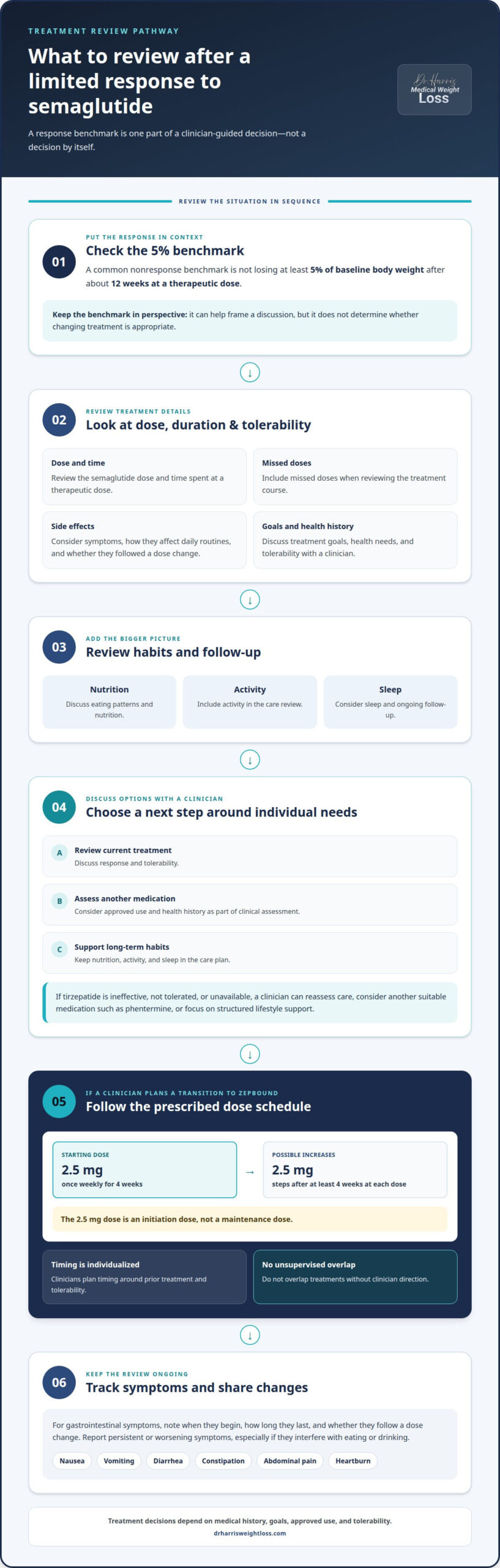
A 5% benchmark can help put a limited response to semaglutide in context: in obesity pharmacotherapy, nonresponse is often defined as not losing at least 5% of baseline body weight after about 12 weeks at a therapeutic dose. Tirzepatide for patients who have failed semaglutide may be a treatment option to discuss, but that benchmark alone doesn’t determine whether a switch is appropriate.
It’s understandable to want clear evidence before changing treatment. This guide reviews information about semaglutide and tirzepatide independently, covers common gastrointestinal side effects, and explains what to consider when discussing treatment after semaglutide. A plateau or limited change can feel discouraging, but it gives your clinician useful information when evaluating next steps.
Key Takeaways
- Learn which factors, including dose, treatment duration, tolerability, and lifestyle, can help explain a limited response to semaglutide.
- Review trial findings on semaglutide and tirzepatide independently, including blood-sugar and A1C outcomes.
- Recognize common gastrointestinal side effects and how dosing schedules are structured to support treatment.
- See how Dr. Harris Medical Weight Loss’s Tirzepatide (Zepbound) Program may fit into a clinician-guided next step.
What to consider after semaglutide treatment failure
A limited response can have several explanations. Review your treatment goals, tolerability, and daily routines with a clinician before considering tirzepatide for patients who failed semaglutide.
Treatment Selection Considerations
Review semaglutide dose, time at a therapeutic dose, missed doses, and side effects. A common nonresponse benchmark is not losing at least 5% of baseline body weight after about 12 weeks at a therapeutic dose. Long-term care also considers nutrition, activity, sleep, and follow-up.
| Option | Focus |
|---|---|
| Review current treatment | Response and tolerability |
| Assess another medication | Approved use and health history |
| Support long-term habits | Nutrition, activity, and sleep |
Choose a next step based on health needs, treatment goals, and tolerability.
Treatment Nonresponse and Alternatives
If tirzepatide is ineffective, not tolerated, or unavailable, clinicians can reassess care, consider another suitable medication such as phentermine, or focus on structured lifestyle support. Options for tirzepatide for patients who failed semaglutide depend on medical history, goals, and side effects.
Approved Uses and Eligibility
In the United States, tirzepatide is FDA-approved for weight management and moderate-to-severe obstructive sleep apnea in adults with obesity. Mounjaro is approved for children aged 10 years and older with type 2 diabetes. Eligibility depends on the indication and clinical assessment.
Transitioning From Semaglutide
Zepbound starts at 2.5 mg once weekly for 4 weeks, an initiation dose rather than a maintenance dose. Increases may occur in 2.5 mg steps after at least 4 weeks at each dose. Clinicians plan timing around prior treatment and tolerability, without unsupervised overlap.
In the United States, medication costs depend on the specific case. Insurance coverage and eligibility for savings programs vary by plan and program.
Clinical trial outcomes for semaglutide and tirzepatide
Clinical trials report outcomes for groups of enrolled participants and can help frame treatment discussions. They cannot predict what an individual will experience after changing medication.
Trial Outcomes for A1C and Body Weight
In STEP-1, adults taking semaglutide 2.4 mg lost an average of 14.9% of their body weight at 68 weeks; about 86% reached at least 5% weight loss. Separately, SURMOUNT-1 participants taking tirzepatide lost 15% to 22.5% at 72 weeks, depending on dose. A type 2 diabetes study reported an A1C reduction of 2% to 2.5% with tirzepatide.
Weight-Loss Plateaus
A plateau can prompt a review of treatment duration, adherence, eating patterns, and activity. Very restrictive eating may be difficult to maintain over time. Tracking food and beverages for 3-7 days can help identify patterns to discuss with a clinician. Trends across multiple measurements provide useful context, while treatment goals and tolerability help shape a progress review.
Tirzepatide Trial Outcomes
SURMOUNT-5 studied treatment groups. Its findings describe outcomes among enrolled participants and do not predict an individual’s experience. For tirzepatide treatment, clinical trial findings can help frame discussions with a clinician. Outcomes vary among individuals, and treatment goals and tolerability are relevant to a progress review. Trial results provide information about groups of participants, not a prediction for any one person.
Common gastrointestinal side effects
Semaglutide can cause nausea, vomiting, diarrhea, constipation, abdominal pain, and heartburn. These symptoms may affect eating, hydration, and daily routines. Keep track of when symptoms begin, how long they last, and whether they follow a dose change. Sharing these details can help your clinician assess tolerability and discuss treatment decisions.
Tirzepatide can also cause gastrointestinal symptoms, including nausea, vomiting, diarrhea, constipation, abdominal pain, and heartburn. A meta-analysis found the 15 mg dose had the highest risk of nausea, vomiting, and diarrhea among the doses assessed. Dose decisions should take symptom severity and treatment response into account.
People who stopped semaglutide because of side effects may or may not tolerate tirzepatide. The symptom, its severity, whether it resolved, and the timing of the last dose all matter in a clinical review. Your clinician can consider these details when assessing whether treatment is suitable. Report persistent or worsening symptoms, especially if they interfere with eating or drinking. This information can help guide decisions about treatment and side-effect management.
Clinical comparisons can provide context, but they do not predict an individual’s digestive symptoms. In SURPASS-2, serious side effects occurred in 5.3% to 7% of participants taking tirzepatide, compared with 2.8% of participants taking semaglutide. These figures describe serious side effects overall; they do not establish whether a particular person will experience nausea, diarrhea, or other gastrointestinal symptoms. A clinician can help interpret safety information alongside a person’s symptoms and treatment response.
Weight-loss effectiveness is a separate consideration. A meta-analysis reported that tirzepatide doses of 10 mg or 15 mg were more effective for weight loss than semaglutide doses of 1 mg or 2 mg in people with type 2 diabetes. That result does not determine which treatment will be easier to tolerate. If compounded drugs are being considered, the U.S. Food and Drug Administration says compounded drugs are not FDA approved and are not reviewed by the agency for safety, effectiveness, or quality before being marketed. Discussing the product and any ongoing symptoms with a clinician can help inform treatment decisions.
Dr. Harris Medical Weight Loss: Tirzepatide (Zepbound) Program
Dr. Harris Medical Weight Loss offers a medically supervised Tirzepatide (Zepbound) Program for people considering treatment. It may be an option to discuss when reviewing your response, side effects, and health history with a clinician. The assessment can include your previous dose, treatment duration, and symptoms. Care is directly led by Dr. Harris, not a sales team or an automated program.
Tirzepatide treatment is considered in light of individual medical needs and its approved uses. Share relevant health history, current medications, and any previous difficulties with gastrointestinal symptoms. These details inform a clinician’s assessment of whether tirzepatide is appropriate and how treatment may be managed. Don’t combine it with another GLP-1 or GLP-1/GIP receptor agonist unless a doctor directs it.
Dr. Harris Medical Weight Loss also offers a Semaglutide Medication Program and Phentermine Medication. A medically supervised evaluation can help assess the appropriate treatment based on your health history, goals, and tolerability.
To discuss whether the Tirzepatide (Zepbound) Program may suit your next step, contact Dr. Harris Medical Weight Loss.
Frequently Asked Questions
How are they given?
Semaglutide is available as a daily oral pill or a weekly injection. The oral semaglutide option has specific administration instructions: take it with 4 ounces or less of plain water, then wait at least 30 minutes before eating, drinking, or taking other medicines. Follow the instructions for your prescribed formulation. Tirzepatide is given as a once-a-week injection.
How do they work?
Semaglutide mimics the GLP-1 hormone pathway. This pathway affects appetite and blood-sugar regulation. A clinician may consider weight-management goals and blood-glucose measures when reviewing semaglutide treatment. Tirzepatide activates GLP-1 and GIP pathways, which affect appetite and blood-sugar regulation. A clinician may consider weight-management goals and blood-glucose measures when reviewing tirzepatide treatment. Neither medication is intended to be combined with another GLP-1 or GLP-1/GIP receptor agonist unless a doctor directs it.
What side effects and risks should patients consider?
Semaglutide can cause nausea, vomiting, diarrhea, constipation, abdominal pain, and heartburn. It carries a boxed warning about thyroid C-cell tumors, is not recommended during pregnancy, and should be avoided by people with severe gastroparesis. Tirzepatide can also cause nausea, vomiting, diarrhea, constipation, abdominal pain, and heartburn. It carries a boxed warning about thyroid C-cell tumors, is not recommended during pregnancy, and should be avoided by people with severe gastroparesis. Before changing treatment, discuss your symptoms, their severity, and relevant medical history with the prescribing clinician.
When should clinicians assess treatment response?
A common nonresponse benchmark is not losing at least 5% of baseline body weight after about 12 weeks at a therapeutic dose. The time spent increasing the dose should be distinguished from time at a therapeutic dose. At review, clinicians can consider weight trends alongside adherence, tolerability, and treatment goals, rather than relying on one measurement.