
What might continuing semaglutide mean for your health over time? It’s a reasonable question, especially because treatment can involve common digestive side effects, less frequent serious risks, and unanswered questions about extended use. Understanding semaglutide safety and long-term effects means weighing what studies have established against what researchers are still investigating.
Current research identifies gastrointestinal symptoms as the most common concern. Longer-term studies offer useful findings, but they cannot answer every question about ongoing treatment. Your health history, response to medication, and follow-up all matter. This article explains known side effects and important warnings, what current evidence can and cannot tell us about extended use, and how clinician monitoring can guide decisions over time. Use it as a starting point for discussing whether treatment fits your needs and what to review before and during care.
Key Takeaways
- Consider semaglutide safety as an individual benefit-risk discussion, not a guarantee that side effects won’t occur.
- Interpret evidence on semaglutide safety and long-term effects in light of study duration, participants, and outcomes.
- Use clinician follow-up to discuss your medical history, medicines, symptoms, and response to treatment.
- Bring questions about known risks and unanswered concerns to a clinician as part of an informed treatment decision.
Semaglutide safety: what is known about risks and side effects?
Safety is an individual benefit-risk discussion, not a promise that treatment will cause no adverse effects. The decision depends on your health history, treatment goals, and response, and should be made with a clinician. The exact product matters, so review its current prescribing information rather than assuming every semaglutide formulation has identical directions or warnings.
Nausea, diarrhea, vomiting, and constipation are among the gastrointestinal effects reported with semaglutide. The prescribing information also carries a boxed warning about thyroid C-cell tumors observed in rodents; whether this finding applies to humans is unknown. It contraindicates use for people with a personal or family history of medullary thyroid carcinoma or Multiple Endocrine Neoplasia syndrome type 2. For general background, the Semaglutide Wikipedia page summarizes the medicine, but product-specific prescribing information is the key reference for labeled risks.
Label warnings describe identified potential risks. Questions about longer exposure and broader real-world use remain under study. This distinction matters when weighing semaglutide safety and long-term effects: a warning deserves attention, but it does not predict what will happen to every individual.
Which symptoms deserve a prompt conversation with a clinician?
Tell your clinician about symptoms that persist, worsen, or interfere with eating and drinking. Severe or persistent abdominal pain, especially with vomiting, warrants urgent medical assessment. Swelling of the face, lips, tongue, or throat, or difficulty breathing, may signal a serious allergic reaction; seek emergency care immediately. These signs do not establish a diagnosis, and other symptoms may also need attention. Their severity and duration, your medical conditions, and other medicines all affect the appropriate response. If you are unsure how urgently to act, contact your clinician for guidance. Do not change or stop treatment without discussing it with them.
What does the evidence say about semaglutide’s long-term effects?
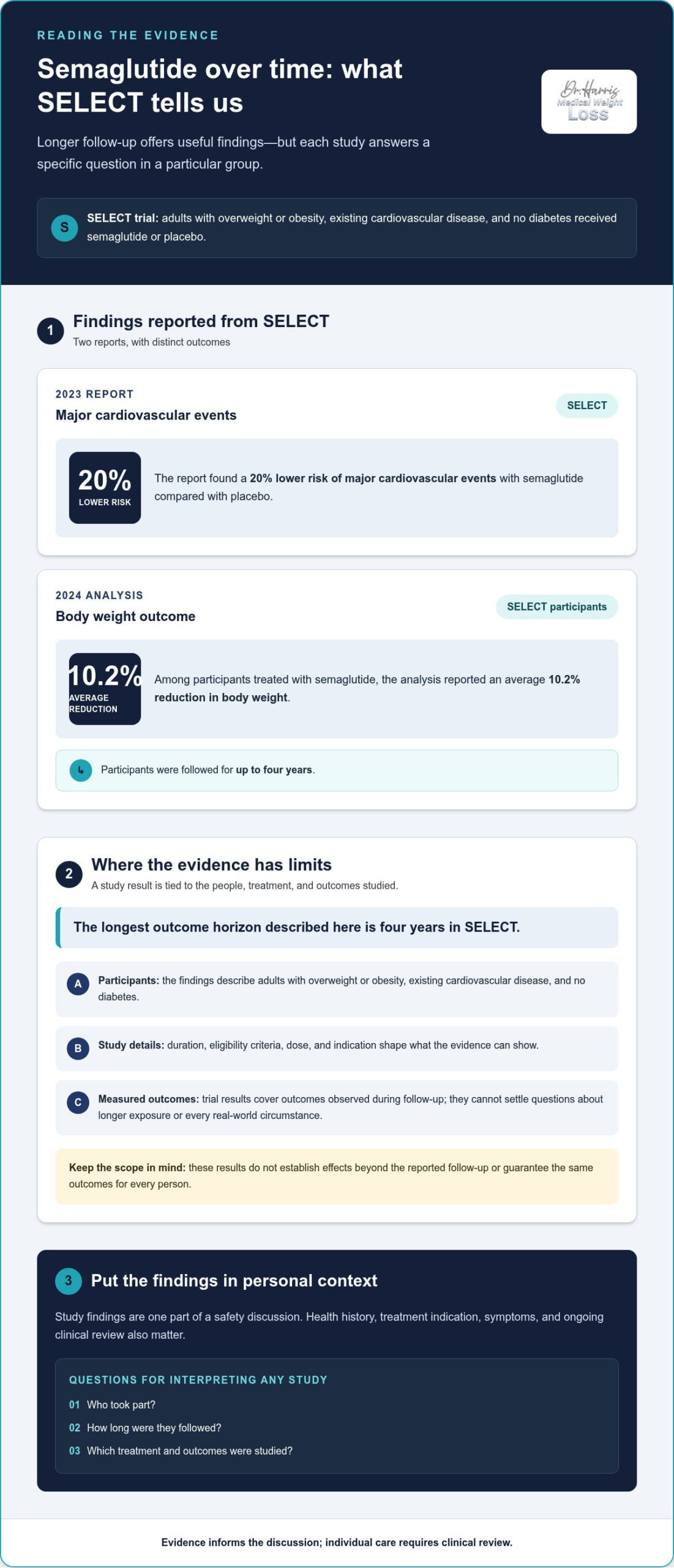
Longer follow-up offers a clearer picture, but each study answers a defined question in a particular group. In the SELECT trial, adults with overweight or obesity, existing cardiovascular disease, and no diabetes received semaglutide or placebo; the 2023 report found a 20% lower risk of major cardiovascular events with semaglutide. A 2024 analysis of SELECT participants followed for up to four years reported an average 10.2% reduction in body weight among those treated with semaglutide. These outcomes describe the participants and treatment studied, not a guarantee of the same results for every person.
The longest outcome horizon described here is four years in SELECT. Its findings cannot establish effects beyond that period or predict outcomes for people unlike its participants. Study duration, eligibility criteria, dose, indication, and measured outcomes all shape what the evidence can show. Results for a specific product and indication should not be assumed to apply to every semaglutide formulation or use. Research on safety concerns in broader settings, discussed by Harvard Medical School, adds context but does not replace trial evidence or individual assessment.
How should readers interpret long-term safety data?
Trials can identify outcomes observed during their follow-up, but they cannot settle questions about longer exposure or every real-world circumstance. Consider semaglutide safety and long-term effects alongside the treatment indication, your health history, and ongoing clinical review. For treatment context, read about the semaglutide injections clinical reference. If you are considering supervised care, explore the Semaglutide program in Fort Lauderdale, which includes clinical evaluation and supervision.
How clinician supervision can guide semaglutide treatment over time
Follow-up should reflect your health, symptoms, and response to treatment, rather than follow a one-size-fits-all schedule. A clinician can review whether treatment remains appropriate, discuss side effects, and consider whether changes in your health call for a revised plan. This ongoing conversation puts questions about semaglutide safety and long-term effects in the context of your care.
What should patients discuss before and during treatment?
Share relevant medical conditions, all medicines and supplements you take, and any prior reactions to medication. During treatment, report new or persistent symptoms, changes in appetite or daily functioning, and how you feel the treatment is working. Details that may seem unrelated can help your clinician assess the full picture.
A clinician should reassess treatment if your health changes or side effects affect your ability to tolerate it. Do not adjust the dose or stop treatment on your own; ask the prescribing clinician how to proceed. Follow-up and monitoring should be guided by that clinician based on your circumstances and the treatment being used.
For broader context on care and planning, read the sustainable weight management clinical guide. Dr. Harris Medical Weight Loss offers a semaglutide program that includes clinical evaluation and supervision as part of a plan for managing weight. If you are considering treatment, explore the Dr. Harris semaglutide program as a next step in discussing suitability, potential side effects, and follow-up with a clinician.
Make an informed decision about semaglutide care
The evidence on semaglutide safety and long-term effects offers useful guidance, but it does not remove the need to consider your health history. Common side effects, labeled warnings, and unanswered questions about longer use all belong in a balanced conversation with a clinician. Ongoing review can help address symptoms, changes in health, and whether treatment remains appropriate for you.
At Dr. Harris Medical Weight Loss, the semaglutide program includes clinical evaluation and supervision as part of a plan for managing weight. The practice serves patients in Fort Lauderdale, Boca Raton, Broward County, and Palm Beach County. Explore the semaglutide program and clinical oversight to learn about care and discuss your next steps.
With clear information and clinician guidance, you can make a considered choice that reflects your health needs and priorities.
Frequently Asked Questions
Is semaglutide safe to take long term?
Semaglutide may be used over an extended period when a clinician determines its benefits continue to outweigh its risks for the individual. Research includes follow-up lasting several years, but it cannot establish every effect of longer exposure or predict outcomes for every patient. Discuss semaglutide safety and long-term effects in light of your medical history, response to treatment, and ongoing clinical review.
What are the most common side effects of semaglutide?
The most common side effects are gastrointestinal symptoms, especially nausea, diarrhea, vomiting, and constipation. These can affect eating, hydration, or daily routines, so tell your clinician if they persist, worsen, or feel difficult to manage. Severe or persistent abdominal pain or signs of a serious allergic reaction need prompt medical attention. Your prescriber can advise what action fits your symptoms and health history.
Can semaglutide cause problems after someone stops taking it?
Some people may experience a return of appetite or regain weight after stopping, because medication-related effects may not continue once treatment ends. Individual experiences vary. Do not change or stop your dose without consulting the prescribing clinician. Discuss what you might expect and how to plan care if treatment is paused or discontinued, including how changes in your health or symptoms should be addressed.
How is safety monitored while taking semaglutide?
Monitoring is individualized and may include reviewing your health history, current medicines, symptoms, and response to treatment. Share new symptoms or changes in your health with the prescribing clinician, who can guide follow-up and treatment decisions. Dr. Harris Medical Weight Loss includes clinical evaluation and supervision in its semaglutide program for patients in Fort Lauderdale, Boca Raton, Broward County, and Palm Beach County.