
A 24-hour period without food or an OMAD (one meal a day) schedule isn’t automatically a safe fit with semaglutide. These approaches may intensify nausea, dizziness, or dehydration for some people. There isn’t one schedule that suits everyone; appetite changes and the ability to maintain fluids and adequate nourishment matter.
It’s understandable to wonder whether a shorter eating window could make managing food intake easier when semaglutide reduces appetite. This article explains what to consider before combining semaglutide with time-restricted eating, why longer periods without food call for particular care, and how 12-hour, 16:8, 18:6, and 5:2 schedules differ from OMAD. It also reviews what research suggests about effects on weight, with a focus on hydration, nutrition, and symptoms rather than pressure to eat less. A clinician can help determine whether changing your eating pattern fits your medications and health needs.
Key Takeaways
- Consider how semaglutide affects appetite and digestion before adding periods without food, especially if you experience nausea, dizziness, or fatigue.
- Research does not establish that combining medication with time-restricted eating produces greater results than medication alone.
- Understand how schedules such as 12-hour and 16:8 eating windows differ from OMAD or a 24-hour period without food before deciding what to discuss with a healthcare provider.
- Learn when Dr. Harris Medical Weight Loss’s Semaglutide Medication Program, Tirzepatide (Zepbound) Program, or Phentermine Medication may be a relevant next step.
Can You Combine Weight Loss Injections with Time-Restricted Eating?
Some people combine semaglutide with time-restricted eating, but longer periods without eating may intensify symptoms. When considering semaglutide and time-restricted eating, appetite, fluid intake, and other medications all matter.
Appetite and Stomach Emptying
Semaglutide reduces appetite and slows stomach emptying, so meals may keep you feeling full for longer. This can make a set eating window feel manageable, but it may also make adequate food and fluid intake harder. Smaller meals eaten slowly may be easier to tolerate than one large meal after a long period without food.
Overlapping Side Effects and Safety
Nausea, vomiting, and other gastrointestinal side effects can occur with semaglutide. Going without food may also cause fatigue or dizziness. When these effects overlap, reduced food and fluid intake can leave you feeling worse. If you take medicines that can lower blood sugar, discuss changes to your eating schedule with a medical provider. Fluid restrictions can also make going without food unsafe.
Going Without Food and Nausea or Vomiting
Yes. Going without food can worsen nausea or dizziness for some people taking semaglutide, especially when symptoms already limit eating or drinking. Vomiting can further reduce fluid intake and increase the risk of dehydration. If nausea or vomiting occurs, extending the time without food may make it harder to stay hydrated and nourished. Don’t respond to discomfort by restricting food further.
Clinical Evidence and Medical Guidance
Evidence on semaglutide and time-restricted eating remains limited. A quality-improvement project analyzed 12 non-diabetic adults; over two months, the combination did not produce significantly superior results. This small project doesn’t establish the best schedule for an individual. Medical guidance supports discussing major eating-pattern changes with a healthcare provider, particularly when medicines may lower blood sugar. People with reduced awareness of low blood sugar need medical supervision before attempting an eating schedule that excludes food.
Potential Benefits of Time-Restricted Eating for Weight Loss
A semaglutide study reported weight loss averaged 15% over 68 weeks. That finding doesn’t show whether adding an eating window enhances the result.
Addressing Weight-Loss Plateaus
A plateau means weight readings have stopped changing despite continued treatment and dietary effort. One study of eight-hour time-restricted eating found participants consumed about 300 fewer calories per day. That finding suggests a set window can shape intake, but it doesn’t show that the method resolves a plateau while taking semaglutide. Before changing meal timing, consider portions, food choices, activity, and treatment routine. A restrictive window isn’t a substitute for understanding which part of the routine has changed.
Weight Loss and Metabolic Health
Metabolic health includes blood sugar regulation and how the body uses energy; weight change is only one measure. Semaglutide acts on GLP-1, a gut hormone involved in blood sugar control. After stopping medication, regular meals and activity can provide structure for maintaining habits. Time-restricted eating isn’t required for that structure. If an eating window makes it difficult to meet nutritional needs, a balanced dietary pattern may be easier to continue. For example, a regular eating window can anchor meal planning without extending restriction. The useful approach is one that remains workable beyond the medication period.
Time-Restricted Eating Schedules, Including OMAD
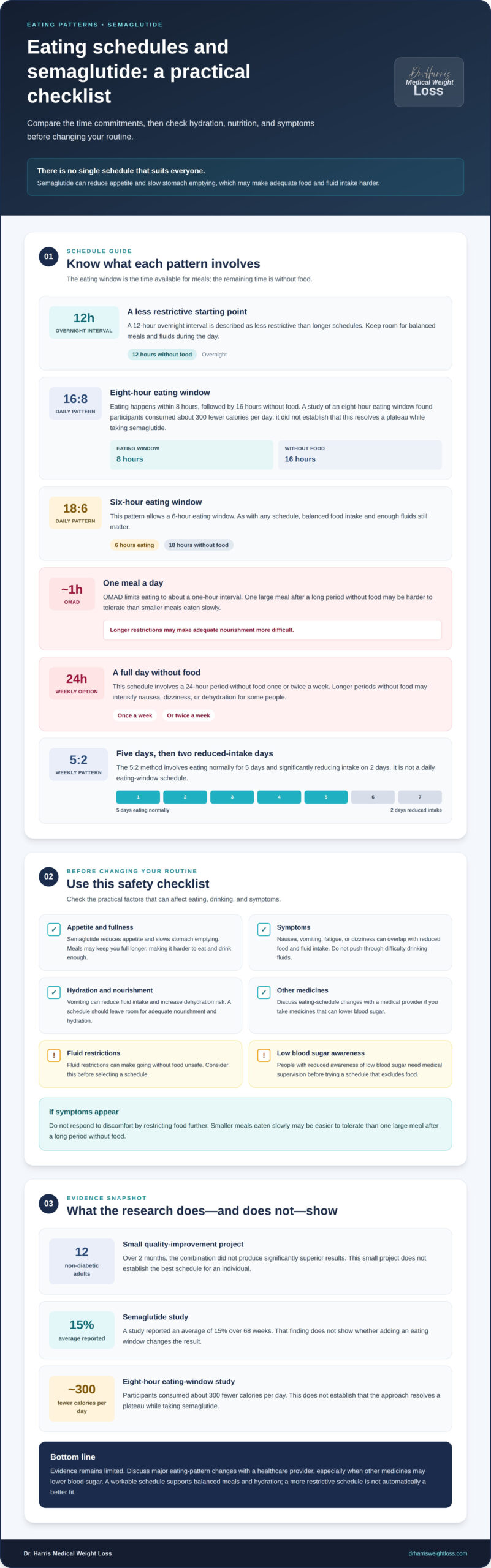
Schedules range from a daily eating window to a full 24 hours without food. Semaglutide is a GLP-1 receptor agonist that can suppress appetite and affect blood sugar. With semaglutide and time-restricted eating, the eating window should leave room for adequate nourishment.
A 12-hour overnight interval is a less restrictive starting point than longer schedules. In a 16:8 pattern, eating happens within eight hours, followed by 16 hours without food. An 18:6 pattern allows a six-hour eating window. Each schedule shapes when meals happen, but balanced food intake still matters.
OMAD, or one meal a day, limits eating to about a one-hour interval. Other options include a 24-hour period without food once or twice a week, and the 5:2 method, which involves eating normally for five days and significantly reducing intake on two days. For people considering semaglutide and time-restricted eating, these longer restrictions may make adequate nutrition more difficult.
Studies describe different schedules, but don’t establish one as safest for everyone taking semaglutide. A practical takeaway is to discuss changes with a healthcare provider, especially if another medication affects blood sugar. Avoid pushing through nausea, dizziness, or difficulty drinking fluids. A schedule that supports balanced meals and hydration is more workable than choosing OMAD or a 24-hour period simply because it is more restrictive.
Dr. Harris Medical Weight Loss: Semaglutide Medication Program
Dr. Harris Medical Weight Loss offers medically supervised programs for people considering medication as part of weight management in Fort Lauderdale, Boca Raton, Broward County, and Palm Beach County. Its Semaglutide Medication Program offers clinical oversight while you discuss medication, eating patterns, and symptoms such as nausea. Time-restricted eating is not required, and a restrictive schedule should not replace a discussion about your health needs.
Semaglutide is a prescription medication provided by licensed pharmacies and dispensed safely under physician supervision. A clinical discussion can address how appetite changes and your current eating routine fit together, including whether a proposed fasting schedule could make nourishment or hydration difficult. Treatment is considered in the context of your health, rather than adding restrictions automatically.
Dr. Harris Medical Weight Loss also offers a Tirzepatide (Zepbound) Program and Phentermine Medication. These are prescription options provided by licensed pharmacies and dispensed safely under physician supervision. Each is a separate treatment pathway, and the appropriate option depends on your medical circumstances and treatment goals.
If you’re unsure whether medication or a change to meal timing belongs in your plan, clinical guidance can help clarify the next step. You can contact Dr. Harris Medical Weight Loss to discuss its medication programs and your questions.
Frequently Asked Questions
Can I go 24 hours without eating while taking weight-management medication?
A 24-hour period without food isn’t a safe default for everyone taking medication. The decision depends on medicines that can lower blood sugar, your ability to recognize low blood sugar, and any fluid restrictions. Don’t change medication doses to accommodate this schedule. Discuss the plan with your healthcare provider, who can consider your medication routine and health history.
Can I use medication and time-restricted eating together?
Yes, some people use both, but combining them does not mean a restrictive eating schedule is necessary. Consider whether your meals provide enough nourishment and whether the schedule works with your medication routine. If a narrow eating window makes it difficult to eat regularly, widening it may be more practical. Discuss significant changes with your healthcare provider.
Should I take a GLP-1 injection on an empty stomach?
GLP-1 injections don’t need to be taken with a meal, so an empty stomach isn’t required. Food doesn’t affect the injection in the way it can affect some oral medicines. Follow the timing and administration directions provided for your prescription, and don’t change your dose based on whether you’ve eaten.
Is it safe to combine semaglutide with time-restricted eating?
Time-restricted eating may suit some people, but it is not automatically safe for everyone taking semaglutide. Because semaglutide can reduce appetite, a restricted eating window may make it harder to maintain food and fluid intake. Before making a substantial change to your eating pattern, a healthcare provider should consider your other medicines, blood sugar concerns, symptoms, and hydration needs.
Does semaglutide change the risks or benefits of time-restricted eating?
Semaglutide may further reduce appetite, making it harder to eat enough during a short eating window. This can raise practical concerns about nourishment and hydration, but it does not establish that time-restricted eating adds benefit. Studies have not established that combining the two reliably improves results beyond semaglutide alone. A suitable schedule depends on how well you tolerate treatment and maintain regular nourishment.