The most useful questions to ask a weight loss doctor connect treatment options to your health history and daily life. Before your first consultation, you may be unsure what to share, whether medication could be appropriate, or what support follows the first visit. A thoughtful conversation can help you understand your options and what comes next.
Use this checklist to prepare relevant health information and ask about evaluation, medication risks, and follow-up. These questions can help you understand how a physician-supervised plan may fit your needs and make an informed decision.
Key Takeaways
- Bring a current medication list, relevant diagnoses, previous treatment history, and personal goals to make the consultation more useful.
- Ask how your health history informs the evaluation and which care options may be appropriate.
- Discuss potential side effects, medication interactions, and circumstances that may lead your physician to reassess your care.
- Clarify how follow-up works, how your response will be reviewed, and whom to contact with non-emergency concerns.
Questions to Ask a Weight Loss Doctor Before Your First Visit
A first appointment is a chance to explain what matters to you and learn how a clinician’s recommendations relate to your health history. Preparing a few questions can help you use the time well. You don’t need to have every answer ready; your clinician can help determine which details and evaluations are relevant.
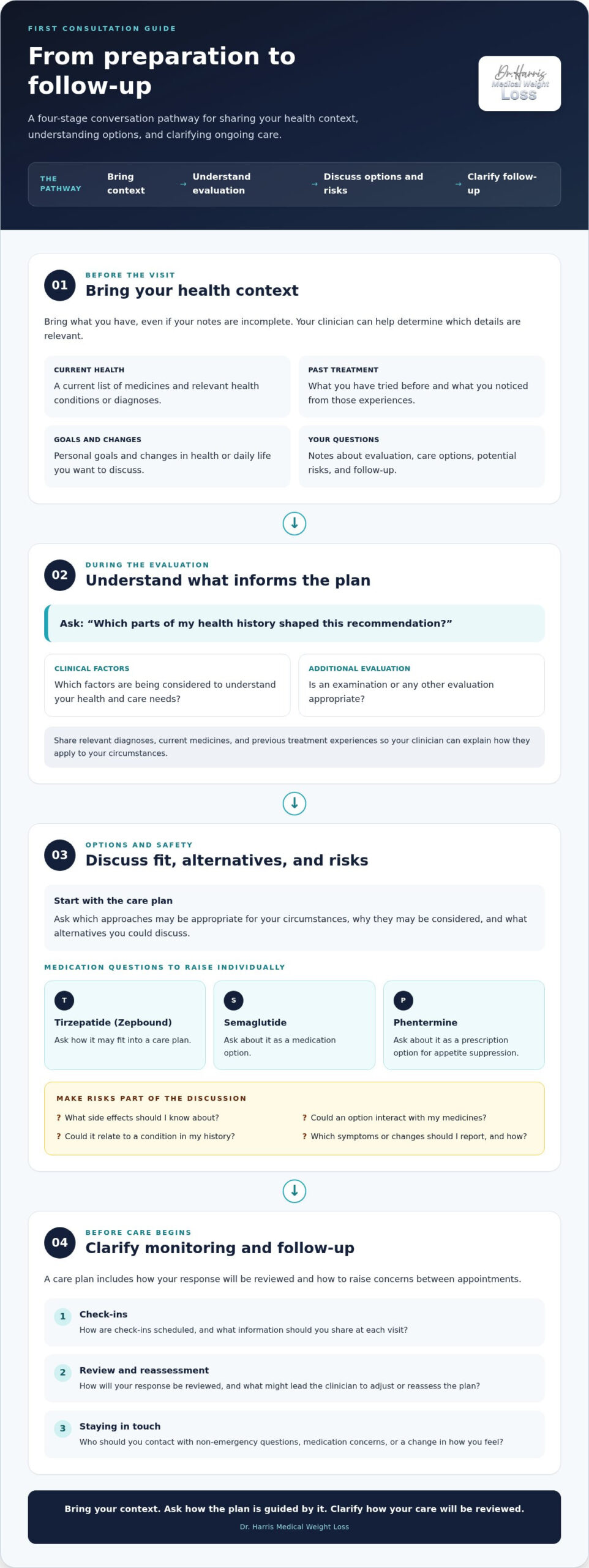
Before meeting with a Fort Lauderdale weight loss doctor, gather a current list of medicines, relevant diagnoses, and notes about treatments you’ve tried and how they affected you. Write down your questions and any changes in health or daily life you want to discuss. For background before your visit, understanding obesity can help you become familiar with the condition and its management.
What information should I bring to a weight management consultation?
Bring what you have, even if your notes aren’t complete. Your clinician can determine which parts of your medical history and any examination are relevant to the evaluation.
- Current medicines and relevant health conditions
- Previous treatment experiences, including what you tried and what you noticed
- Questions about evaluation, treatment options, potential risks, and follow-up
- Personal goals and changes in health or daily life you want to discuss
Use this checklist to guide the conversation:
- Evaluation: What will you review to understand my health and care needs?
- Options: Which approaches may be appropriate for me, and why?
- Risks: What side effects or medication interactions should I understand?
- Follow-up: How will we review my response, and when might care need reassessment?
- Practical expectations: What should I know about starting care and staying in touch with the clinical team?
These questions to ask a weight loss doctor can turn uncertainty into a clearer, more useful discussion.
Questions About Evaluation, Medication Options, Risks, and Monitoring
A recommendation should reflect your health history, current medicines, and priorities. Ask your clinician to explain what informs the plan, which other options may be considered, and how you’ll review whether the plan remains appropriate. The NIDDK guide to how to choose a weight loss program also offers questions to help you assess care.
How do I ask whether a prescribed option fits my health history?
Try asking, “Which parts of my health history shaped this recommendation?” Share relevant diagnoses, medicines, and previous treatment experiences. Your clinician can explain how those factors apply to you and determine whether an examination or other evaluation is appropriate.
- 1. Assessment: What clinical factors are you considering, and is there any additional evaluation you recommend?
- 2. Options: Which approaches may suit my circumstances, and what alternatives could we discuss? Ask how tirzepatide (Zepbound) may fit into a care plan. You can also ask separately about semaglutide as a medication option and phentermine as a prescription option for appetite suppression.
- 3. Risks: What side effects should I know about? Could an option interact with my current medicines or relate to a condition in my history? Which symptoms or changes should I report, and how should I raise concerns?
- 4. Monitoring: How will we review my response, and what might lead us to adjust or reassess the plan?
Your clinician’s recommendations should account for your individual medical circumstances, so use the conversation to understand the reasoning rather than choosing a medication on your own. For people in South Florida, Dr. Harris physician-supervised care includes a clinical evaluation to guide next steps.
Questions About Follow-Up and Starting Care in South Florida
A care plan includes more than its starting point. Before beginning, ask how follow-up works, how your clinician will review your response, and how to raise concerns between appointments. The Mayo Clinic overview of obesity diagnosis and treatment describes factors clinicians may consider when planning care.
What should I clarify before beginning a physician-supervised program?
Ask how check-ins are scheduled, what information you should share at each visit, and how medication review or adjustments fit into your care plan. Find out whom to contact with non-emergency questions, including concerns about a medication or a change in how you feel. Ask what the team will review to decide whether the plan continues to meet your needs.
Dr. Harris Medical Weight Loss provides physician-supervised programs for people in South Florida. If you’re in Fort Lauderdale, Boca Raton, Broward County, or Palm Beach County, learn about the physician-led weight management approach in Fort Lauderdale and care planning beyond medication.
Patients approved for care can receive their prescriptions and begin their programs immediately. Ask your clinician about the next steps for your plan, including follow-up and how to stay in touch with the clinical team. These questions to ask a weight loss doctor can help you understand ongoing care and decide whether the approach fits your needs.
Take the Next Step With Confidence
A useful consultation starts with an honest conversation about your health history, previous treatment experiences, and goals. Questions to ask a weight loss doctor can help you understand why an option is recommended, which risks or medication interactions to discuss, and how follow-up will work.
Care doesn’t end with a prescription. Ask how your clinician will review your response, address concerns, and decide whether your plan needs to change. Dr. Harris Medical Weight Loss provides physician-supervised programs in South Florida and is a LegitScript-certified dispensing office.
If you’re ready to discuss care with a clinician, explore physician-guided care with Dr. Harris. Bring your questions and health information to start a conversation about next steps.
Frequently Asked Questions
What should I bring to my first weight loss doctor appointment?
Bring a current list of medicines, relevant diagnoses, and notes about treatments you’ve tried and how they affected you. Write down questions and any changes in health or daily life you want to discuss. You don’t need to know which details matter most; your clinician can help determine what’s relevant and whether an examination or further evaluation is appropriate.
How do I ask a doctor whether a weight management medication is appropriate for me?
Ask, “Which factors in my health history inform this recommendation, and what alternatives could we consider?” Share relevant conditions, current medicines, and previous treatment experiences so your clinician can assess your circumstances. Questions to ask a weight loss doctor can help you understand the reasoning behind a recommendation, but only your treating clinician can determine whether a medication is appropriate for you.
Can I ask my weight loss doctor about side effects and medication interactions?
Yes. Ask which side effects may occur, whether a medication could interact with anything you take, and what symptoms or changes to report. Provide a complete, current medication list, including prescription medicines and other products you use. Your clinician can explain how these details apply to your health history and how to raise concerns during care.
What follow-up questions should I ask before starting a physician-supervised program?
Ask how check-ins are arranged, what your clinician will review, how medication decisions may be revisited, and whom to contact with non-emergency concerns. Clarify how follow-up fits your plan. Dr. Harris Medical Weight Loss provides physician-supervised programs for people in Fort Lauderdale, Boca Raton, Broward County, and Palm Beach County. Ask your care team what ongoing support will involve.