Medication is one option, not the whole plan. Weight loss in Palm Beach County can begin with a review of your health and a discussion of whether prescription treatment is appropriate. A program can also include practical guidance and ongoing clinical support, connecting treatment decisions with everyday routines.
It’s reasonable to want clear information before considering medication. This article explains what a medical evaluation and treatment plan may involve, how supportive treatments fit, and which FDA-approved medications may be considered. You’ll also learn how clinicians approach these options, so you can better understand the process and the role medical oversight plays.
Key Takeaways
- A medical weight management plan may bring health assessment, nutrition testing, dietary guidance, and counseling together around your needs.
- Learn how supportive treatments may fit into care, including which options require clinician guidance and how they are used.
- Understand the role of Semaglutide and Tirzepatide as separate medication options, and what to discuss when considering either one.
- Explore Dr. Harris Medical Weight Loss programs, including medication options, to identify a next step that aligns with your care needs.
What Is a Medical Weight Loss Program?
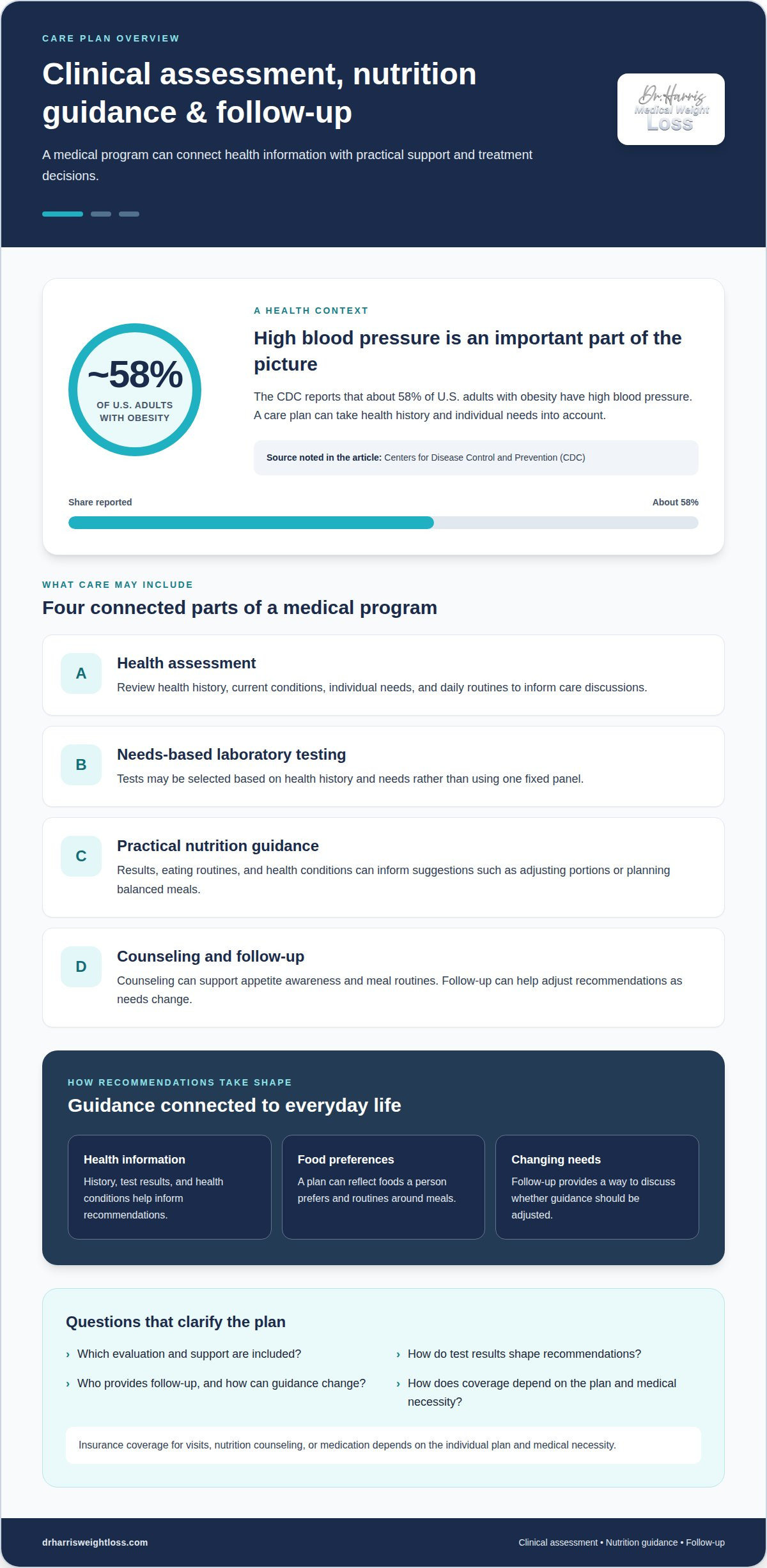
A medical program combines health assessment with nutrition guidance and follow-up. The Centers for Disease Control and Prevention (CDC) reports that about 58% of U.S. adults with obesity have high blood pressure. Patients seeking weight loss care in Palm Beach County can expect care to consider health history and individual needs.
Nutrition Testing and Dietary Changes
An assessment may include reviewing your health history and choosing laboratory tests based on your needs. Results, eating routines, and health conditions can inform practical dietary guidance, such as adjusting portions or planning balanced meals. Ask how test results shape recommendations. Programs for weight loss involve clinical oversight; bariatric surgery is a separate treatment, and commercial programs may not include clinical assessment.
Nutrition Guidance and Hunger Support
Counseling can help patients work with appetite and build meal routines. Ask who provides follow-up and how recommendations may be adjusted as needs change. To assess a program, ask what evaluation and support it includes. Verify physician credentials by requesting the physician’s name and checking license details in Florida’s licensing records.
Personalized Nutrition Plans
A plan can reflect your health information, food preferences, and daily routines. In West Palm Beach, laboratory testing may be selected based on your history rather than using one fixed panel. Weight loss care in Palm Beach County may include evaluation, guidance, and medication programs. Services vary across the area, including West Palm Beach, Boca Raton, Boynton Beach, and Delray Beach. Insurance coverage for visits, nutrition counseling, or medication depends on your plan and medical necessity.
Injections and other supportive treatments
Injectable treatments can be one part of a weight management plan, alongside nutrition and exercise. Some prescription injections are intended for at-home use on a weekly schedule, following the prescribed directions. GLP-1 analogue injections may help regulate appetite, reduce cravings, and support feeling fuller for longer. Nausea can occur in some cases. These effects are important to discuss as part of a weight loss program, including how treatment fits your health history and routine.
MICC injections and NAD+ are names you may encounter when researching supportive treatments. Ask what an option contains, what purpose it serves, and how a clinician would determine whether it fits your plan. A clear explanation helps you understand the treatment rather than relying on a label or broad promises. Support should be tailored to your health goals and coordinated with your care.
Before starting an injection, review its intended use, schedule, instructions, and possible side effects with the prescribing clinician. Report symptoms such as nausea so the care team can guide next steps. Prescription medication is not a substitute for nutrition guidance or movement; these parts of care work together. Explore injection-based treatment options as one part of a supervised approach, with decisions grounded in your needs and treatment plan.
FDA-approved medications for weight loss
Medication may be considered as part of care that accounts for your health history, lifestyle, and treatment goals. If you’re considering care for weight loss under medical supervision in Palm Beach County, a consultation can help clarify whether prescription medication suits your needs. Semaglutide, tirzepatide, and other medication options can be discussed with a clinician.
Medication Eligibility
Eligibility for semaglutide or tirzepatide depends on an individual clinical assessment. A clinician can review medical history, current conditions, medications, and goals before considering either option. Insurance plans may set coverage criteria, including BMI thresholds or records of previous weight management efforts. Ask how the assessment informs the decision and what follow-up involves.
Semaglutide is available through a medication program. Tirzepatide, also known as Zepbound, is another prescription option. Discuss each medication individually, including its potential role and how it may fit with nutrition and activity habits. This can help you prepare focused questions for a consultation.
Medication Risks and Side Effects
Prescription medications can cause side effects. Injections used in weight management may cause nausea in some cases. During consultation, discuss your health history, current medicines, possible effects, and symptoms to report. Understanding these points helps you consider medication as part of care and clarify what follow-up support involves.
If you’re exploring care for weight loss under medical supervision in Palm Beach County, request a medication consultation to discuss your care goals and treatment options with a medical professional.
Dr. Harris Medical Weight Loss
Dr. Harris Medical Weight Loss offers physician-supervised medication programs for people considering medical weight management. If you’re weighing prescription options, the next step is to understand what each program includes and discuss whether medication suits your health needs. Treatment is led directly by Dr. Harris, with decisions based on medical evaluation rather than a promise of a particular outcome.
The Tirzepatide (Zepbound) Program offers tirzepatide as part of medically supervised weight management. The Semaglutide Medication Program provides semaglutide as part of a supervised plan. These are separate programs, and each medication is considered individually in light of your health history and treatment needs.
Phentermine Medication is another prescription option offered by the practice, with medical supervision. A discussion can clarify its intended role, relevant health considerations, and questions to address before deciding. Your goals and medical background are important context.
Choosing a program starts with understanding the medication involved and the role it may have in your care. Dr. Harris Medical Weight Loss offers medication options as part of medically supervised weight management. A direct conversation about your needs and treatment questions is a useful next step.
Contact Dr. Harris Medical Weight Loss to discuss your options.
Take the Next Step With Clarity
If you’re considering weight loss care under medical supervision in Palm Beach County, the next step can be a focused conversation, not an immediate commitment. Think about what you want care to address, which daily habits feel hardest to change, and what concerns you want answered. Sharing these priorities can make the discussion more relevant to your routine.
You can also use the conversation to understand how treatment decisions are made and what ongoing communication may involve. The aim is to leave with a clearer sense of your options and the questions that matter for your health, without pressure to choose on the spot. If you’re ready to discuss your situation, contact Dr. Harris Medical Weight Loss. A thoughtful first step can help you move forward with confidence.
Frequently Asked Questions
How soon can I expect to see results?
The timing and extent of changes vary from person to person. Individual results vary; outcomes of weight loss can vary based on individual factors like genetics, lifestyle, and adherence to the program. Follow-up with your care team helps assess how treatment is affecting you and whether your plan needs adjustment.
Are labs done at the same office?
Yes. Dr. Harris Medical Weight Loss includes on-site lab work in its physician-led care. The practice has offices in Fort Lauderdale and Boca Raton and serves Broward and Palm Beach Counties. Medical evaluation and lab work help inform whether medication is appropriate for your care plan.
Do I need a referral for a weight-management evaluation?
You can request a weight-management evaluation directly. Insurance coverage may have separate conditions, depending on your plan and whether care is considered medically necessary. Keep these steps distinct: requesting an evaluation and determining how your insurance handles covered services are not the same process.
Do I need to follow a strict diet throughout the entire program?
The program includes a discussion of your dietary requirements, rather than one menu for everyone. Your usual meals, schedule, and preferences can help shape practical nutrition guidance. Share what works in your day and what feels difficult, so recommendations can be discussed in a way that fits your routine.
What Does the Weight Management Program Include?
The first appointment package includes an EKG, a comprehensive metabolic blood panel, a medication overview and assessment, discussion of dietary requirements, and the first week of medication. Medication is prescribed only when medically appropriate. Dr. Harris Medical Weight Loss is LegitScript Certified and serves Fort Lauderdale, Boca Raton, Broward County, and Palm Beach County.