What should you eat when treatment changes your appetite, but diet advice points in every direction? If you’re looking for a nutrition plan for medical weight loss patients, you may want guidance that fits your health needs, food preferences, and routine. A generic menu may not account for changes in appetite or digestion, or for a shifting schedule.
Your eating approach can be practical without being rigid. This guide explains how to organize meals and snacks, adjust your routine when appetite or digestion changes, and prepare questions for your prescribing clinician. You’ll also learn how clinician-supervised care can take your nutrition concerns and health history into account. The goal is a flexible structure you can adapt in real life, not another set of rules that’s difficult to follow.
Key Takeaways
- A nutrition plan for medical weight loss patients can offer a flexible structure for meals, hydration, preferences, and clinician-informed needs.
- Plan around your actual routine: identify when you can eat, choose convenient foods you enjoy, and review what works.
- Bring notes about your eating patterns, preferences, health history, and nutrition questions to discussions with your clinician.
- Discuss nutrition as part of your treatment plan instead of relying on a one-size-fits-all menu.
What should a nutrition plan for medical weight loss patients include?
A nutrition plan is a flexible structure for meals, hydration, food preferences, and needs informed by a clinician. It connects everyday choices with your broader care plan without prescribing one menu for everyone or promising a particular result. Health history, treatment, appetite, digestion, culture, budget, and schedule can all affect what works for you.
A useful nutrition plan is an adaptable eating framework, not a rigid menu or a named diet. It can help you decide what to keep on hand, how to organize meals around your day, and what to revisit as your needs change. For broader context, Weight loss techniques discusses eating patterns, activity, and hydration. Choices during medical care should still reflect your clinician’s guidance.
A nutrition plan for medical weight loss patients should support overall care, not compete with it. Consider food choices alongside treatment and personal health needs rather than treating them as a separate set of rules. Your clinician can help you identify health concerns that may affect your approach.
How is a nutrition plan different from a restrictive diet?
A restrictive diet may rely on inflexible rules or broad food exclusions. A practical plan starts with your routine and preferences, then considers what fits your circumstances. You might adapt familiar meals rather than discard them, while accounting for work hours, family meals, food access, cultural traditions, or changes in appetite and digestion. The aim is a structure you can adjust, not a test of willpower.
If a food choice or eating pattern raises questions because of a health condition or treatment, bring it up with your clinician. Individual guidance can help align nutrition decisions with the care you’re receiving.
How can you plan meals around treatment and daily life?
A meal routine should work with your actual day, not an idealized schedule. A repeatable routine gives you a starting point, while small adjustments can make it fit your needs and treatment experience. For a nutrition plan for medical weight loss patients, the aim is to make everyday decisions more manageable, not to follow a rigid timetable.
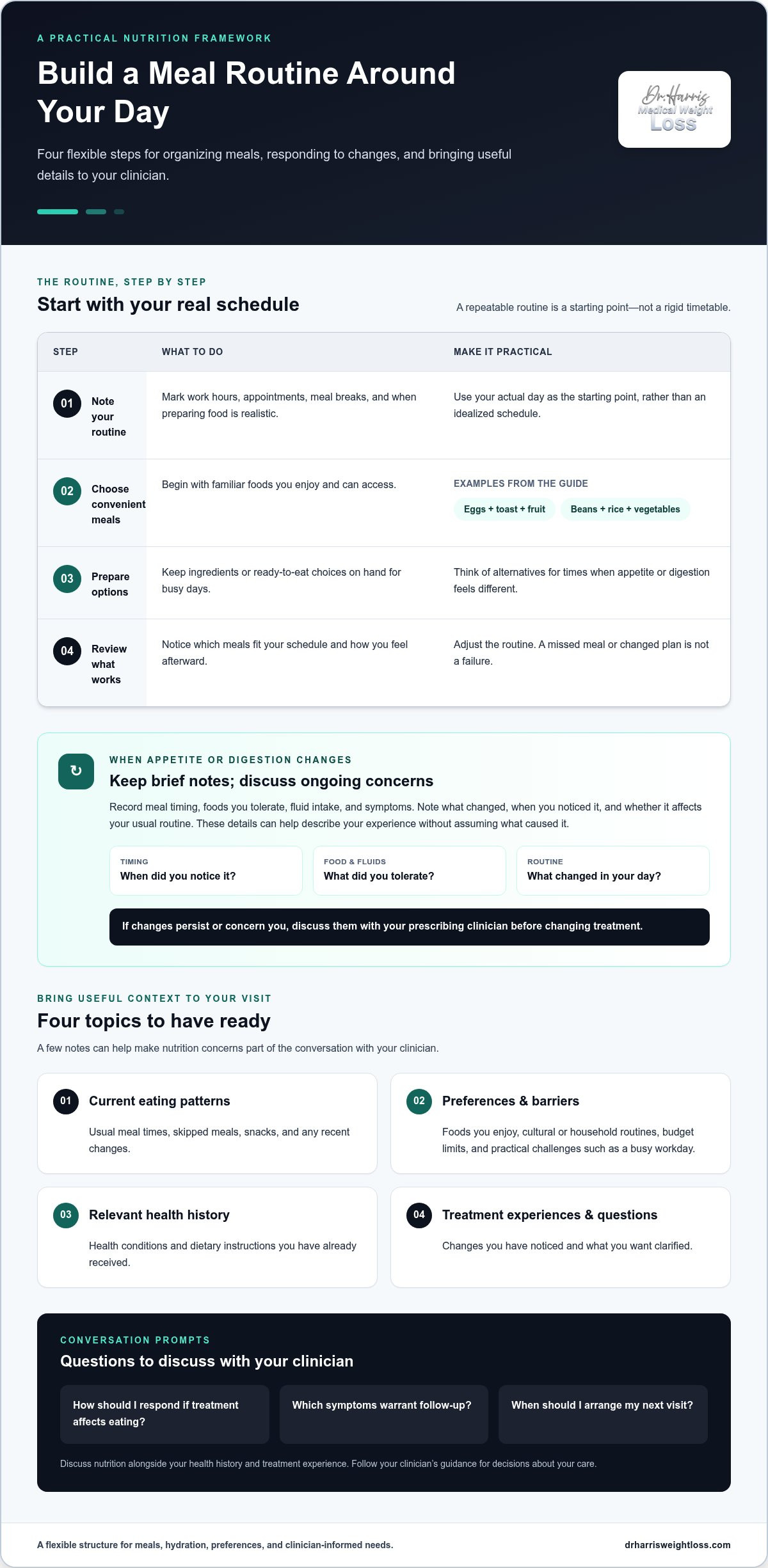
- Note your routine. Mark work hours, appointments, meal breaks, and the times when preparing food is realistic.
- Choose convenient meals. Start with familiar foods you enjoy and can access. Try simple combinations such as eggs with toast and fruit, or beans with rice and vegetables.
- Prepare options. Keep ingredients or ready-to-eat choices on hand for busy days. Think of a few alternatives for times when your appetite or digestion feels different.
- Review what works. Notice which meals fit your schedule and how you feel afterward. Adjust the routine instead of treating a missed meal or changed plan as failure.
“A repeatable meal routine is a starting point you can adapt to your preferences, schedule, and health needs.” The USDA and HHS Dietary Guidelines for Americans, 2025-2030 offer general food-group guidance, not a personal prescription. Your clinician can help you understand whether specific guidance fits your circumstances.
What can you do when appetite or digestion changes?
Keep brief notes on meal timing, foods you tolerate, fluid intake, and symptoms. For example, note what changed, when you noticed it, and whether it affects your usual routine. These details can help you describe your experience without assuming what caused it. If changes persist or concern you, discuss them with your prescribing clinician before changing treatment. Let your own experience and clinical guidance inform any adjustments to meal timing or food choices.
Bringing those notes to a conversation about clinician-supervised care can help connect nutrition concerns with your treatment plan.
How should you coordinate nutrition with clinician-supervised care?
Your eating patterns can give your clinician useful context for discussing treatment. Prepare a few notes before your visit so nutrition concerns become part of the conversation, rather than something you have to remember on the spot. A nutrition plan for medical weight loss patients should reflect both day-to-day realities and the health information your clinician considers when reviewing your care.
- Current eating patterns: Note usual meal times, skipped meals, snacks, and any recent changes.
- Preferences and barriers: Include foods you enjoy, cultural or household routines, budget limits, and practical challenges such as a busy workday.
- Relevant health history: Share health conditions and any dietary instructions you’ve already received.
- Treatment experiences and questions: Describe changes you’ve noticed and write down what you want clarified.
Your clinician can consider nutrition concerns within your treatment plan and discuss how they relate to your health history and treatment experience. Bring up changes in appetite, digestion, food tolerance, or hydration, even if you’re unsure whether they matter. Clear details make it easier to discuss appropriate next steps.
What should you discuss at a medical weight management visit?
Explain what makes your usual routine workable or difficult, including meal timing, food access, and any health-related dietary instructions. Ask how to respond if treatment affects eating, which symptoms warrant follow-up, and when to arrange your next visit. You can also ask which nutrition questions should guide your day-to-day choices.
Talk with your prescribing clinician before changing medication or making changes to your care plan. A conversation can help you understand the options and agree on next steps. Learn more about physician-led medical care and the treatment approaches available through Dr. Harris Medical Weight Loss.
Take a thoughtful next step with your care
The right nutrition plan for medical weight loss patients is one that can evolve alongside your health needs and treatment. Notice what fits your daily routine, and bring new questions or concerns to your prescribing clinician. You don’t need to have every detail figured out before starting a conversation.
Dr. Harris Medical Weight Loss is a physician-owned and operated practice led by Dr. Jacob Harris, MD. The practice serves Fort Lauderdale, Boca Raton, Broward County, and Palm Beach County, with medically supervised programs featuring Tirzepatide (Zepbound) and Semaglutide, as well as prescription Phentermine options. These programs include clinical oversight, with evaluation as part of the care process.
Explore physician-supervised care with Dr. Harris to discuss your nutrition questions and treatment options.
Frequently Asked Questions
What should I eat while receiving medical weight management?
Choose familiar foods that fit your preferences and any health-related dietary instructions. If you often eat away from home, for example, look for a meal with a mix of food types rather than relying on a single item. There’s no one menu that suits everyone. Your clinician can help you consider how health conditions may affect your food choices.
Do I need a special meal plan while taking prescribed weight-management medication?
Not necessarily. A prescription doesn’t automatically require a named diet or identical meal rules for every patient. A nutrition plan for medical weight loss patients can take treatment, health history, preferences, and daily constraints into account. Ask your prescriber whether your medication or medical conditions call for specific dietary guidance, and follow their advice rather than copying a plan made for someone else.
Can I follow a nutrition plan if my appetite or digestion changes?
Yes, but you may need to revisit the plan with your prescribing clinician. If eating becomes difficult, note when the change began and how it affects your daily activities so you can describe it clearly at follow-up. Don’t change your dose or stop prescribed medication on your own. Your prescriber can advise you on appropriate next steps based on your experience.
How can I make a nutrition plan easier to follow?
Reduce daily decisions: keep a short list of meals you enjoy, use ingredients across more than one meal, and choose a backup option for days when plans shift. For instance, save a few simple meal ideas on your phone and add their ingredients to your usual shopping list. Patients in Fort Lauderdale, Boca Raton, Broward County, and Palm Beach County can discuss practical barriers with their clinician.