
Medical care can make a weight loss journey more supported and responsive to your health needs. Weight loss journey support in Fort Lauderdale may include clinician oversight, nutrition and lifestyle guidance, and regular progress check-ins. Eligibility categories described for local programs include a BMI of 27 or higher with at least one weight-related health condition, or a BMI over 30; injectable medication requires evaluation and authorization by a licensed medical provider.
It’s understandable to want more than a plan to follow on your own. This guide to weight loss journey support in Fort Lauderdale explains how medical care can address health factors and treatment options, how practical nutrition and lifestyle guidance can fit daily routines, and what local access means for follow-up. The focus is on informed decisions and realistic support, not promises of a particular result.
Key Takeaways
- Understand which health factors a clinician considers when assessing whether medication may be appropriate.
- Learn how follow-up and progress reviews can guide treatment decisions over time.
- Explore practical ways to adapt nutrition and daily routines to personal preferences and lifestyle.
- See how access to a local clinic can support continuity and help you take the next step in care.
Why Choose a Medical Weight Loss Program?
Medical care connects treatment decisions with your health history, goals, and follow-up. In Fort Lauderdale, compare physician-led care with coaching or group support to decide what best fits your needs.
Initial Consultation and Medical Evaluation
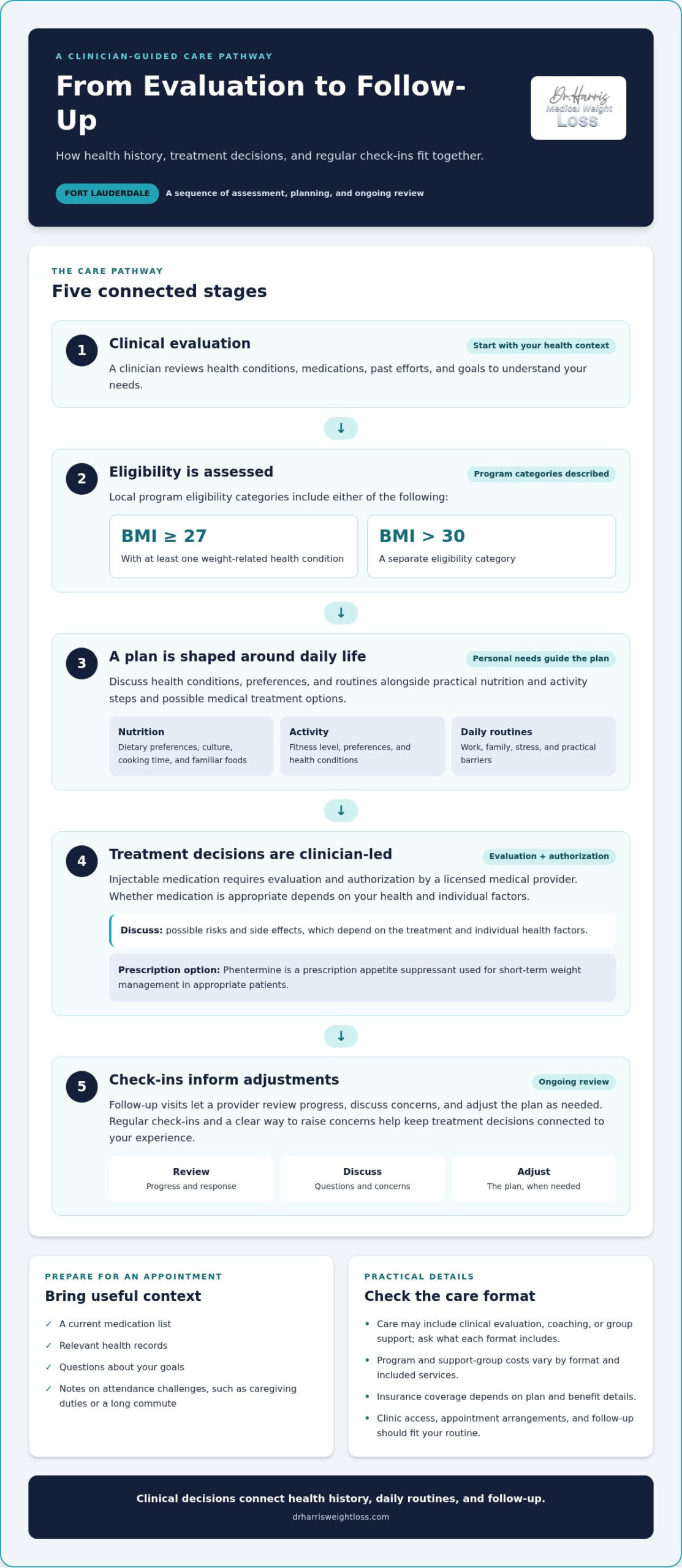
An initial consultation reviews health conditions, medications, past efforts, and goals. Group support offers shared discussion, coaching focuses on habits, and medical care adds clinical evaluation and treatment oversight. Local support options may include groups, coaching, or clinic-based care; ask what each format includes before enrolling.
Personalized Medical Weight-Loss Plans
A personalized plan takes health conditions, preferences, and daily routines into account. You can discuss practical nutrition and activity steps alongside medical treatment options. For safe medication decisions, choose physician-led care that evaluates your health and explains the plan rather than relying on coaching alone.
Medication Eligibility and Monitoring
Local program eligibility categories include a BMI of 27 or higher with at least one weight-related health condition, or a BMI over 30. Injectable medication requires evaluation and authorization by a licensed medical provider. Phentermine is a prescription appetite suppressant used for short-term weight management in appropriate patients. Possible risks and side effects depend on the treatment and individual health factors, so discuss them during evaluation.
Medical Check-Ins and Plan Adjustments
Follow-up visits let a provider review progress, discuss concerns, and adjust the plan as needed. Choose a program with regular check-ins and a clear way to discuss treatment response. Program and support-group costs vary by format and included services; ask for a quote. Insurance coverage for services depends on the plan and benefit details, so review those terms before enrolling.
Personalized nutrition and lifestyle guidance
Nutrition, movement, and behavior all shape daily routines. In Fort Lauderdale, fitness and wellness programs can tailor activity to a person’s fitness level, preferences, and existing health conditions.
Customized Nutrition Guidance
A useful nutrition plan accounts for dietary preferences, cultural background, and lifestyle constraints. Meal ideas can use familiar foods and fit the time you have for cooking, rather than expecting you to follow an unrelated menu. Discuss how guidance can translate into everyday choices, such as planning meals around work or family routines. Practical fit supports lasting lifestyle changes.
Nutrition Education and Lifestyle Coaching
Education can help connect food choices with daily energy and wellness. Coaching may address habits and psychological factors that affect progress. Set action goals that fit your routine, such as walking for 25 minutes each day or cooking dinner at home three nights a week. These examples make improving routines specific and trackable without defining success only by pounds.
Nutrition and Weight-Loss Counseling
Counseling can help identify patterns behind eating choices, including using food for comfort or stress relief. If that feels familiar, a healthcare professional or counselor can help you address emotional triggers alongside nutrition and activity. Discuss situations that disrupt your plan, then choose one manageable change to practice and review. This turns advice into a step you can use in daily life.
If you’re considering clinician-guided care alongside lifestyle changes, explore medical treatment options as one part of your decision.
A weight loss plan can bring together nourishing food, physical activity, and mental wellness strategies. If food becomes a source of comfort or stress relief, a healthcare professional or counselor can help you address the pattern.
Local clinic access in Fort Lauderdale and Broward County
Local access matters when appointments and follow-up need to fit work, family, and travel routines. For weight loss journey support in Fort Lauderdale, consider how easily you can reach a clinic from home or work, and whether its appointment process fits your schedule.
Before booking, consider your usual route and practical barriers such as traffic, parking, or transit. Ask how appointments are arranged and how to raise concerns between visits. Discuss challenges such as stress, changing habits, or finding ways to be more active so your care can reflect everyday circumstances.
Free or low-cost support in Broward County can include peer groups or community programs. Look for organizers who clearly explain whether meetings are free, low-cost, or offered on a sliding scale. Compare the meeting format and location with your routine, then choose an option you can attend consistently.
For a clinic appointment, bring a current medication list, relevant health records, and questions about your goals. These details help focus the visit and give the clinician useful context. Note any attendance challenges, such as caregiving duties or a long commute, so you can discuss workable follow-up arrangements.
Local support works best when it connects clinical visits with daily life. Note how work schedules, meals, and stress affect your habits between appointments. Share those observations at your next visit to make the conversation more practical than relying on memory alone.
If you’re ready to discuss medical care near Fort Lauderdale, explore clinic-based treatment options and consider how appointments could fit your routine.
Dr. Harris Medical Weight Loss: Tirzepatide (Zepbound) Program
Dr. Harris Medical Weight Loss provides medically supervised weight management programs featuring Tirzepatide (Zepbound) and Semaglutide. The clinic also offers Phentermine as a prescription option. A clinical evaluation helps determine whether a medication is appropriate for your health and needs.
For patients approved for treatment, prescriptions are dispensed through the clinic’s program. During your evaluation, discuss your health history, questions, and goals so you understand the treatment option and its role in your care. Medication is one part of a broader health journey, alongside everyday habits and medical guidance.
For information about treatment options, contact Dr. Harris Medical Weight Loss or visit drharrisweightloss.com.
Choose a next step that fits your life
Progress starts with a decision you can carry into your everyday routine. Before your appointment, write down what you want support to address, what has made change difficult, and what kind of follow-up feels manageable. These notes can help focus the conversation on your priorities rather than a one-size-fits-all plan.
For weight loss journey support in Fort Lauderdale, make your next step practical: identify the care questions you want answered and the habits you’re ready to work on. You don’t have to solve everything at once. A thoughtful conversation with a physician can help clarify which options align with your health needs and goals.
Start a conversation with Dr. Harris Medical Weight Loss when you’re ready to discuss a path forward. Each small, considered step can help you build care around the life you live.
Frequently Asked Questions
Can You Have Weight Loss Follow-Up Appointments Online?
Online follow-up appointments are possible at clinics that provide remote visits, though some assessments may require an in-person appointment. For a remote check-in, prepare your medication details, notes about changes in your routine, and questions for the clinician. This preparation helps keep the conversation focused and makes it easier to discuss what support you need next.
Who Is This Program For?
Dr. Harris Medical Weight Loss is for people seeking physician-led care and medication options as part of a weight management plan. Treatment decisions are considered alongside your health history and goals. Before an appointment, write down the changes you hope to make and the questions you want answered so the discussion can focus on your priorities.
Which Fort Lauderdale Clinics Offer Medical Weight Loss Programs?
Dr. Harris Medical Weight Loss serves Fort Lauderdale and Broward County, with offices in Tamarac and Boca Raton. The Tamarac office is at 4620 W. Commercial Blvd. #5, Tamarac, FL 33319. Consider which location best fits your regular travel routes.