
Treatment costs depend on more than medication alone. Financing options for treatment in South Florida may include insurance when eligible, self-pay, or financing. Medical visits and any required authorization can also affect out-of-pocket costs.
It’s sensible to understand the costs before starting care. Insurance coverage and authorization can affect what your plan pays, while self-pay or financing determines how you manage the remaining expense.
This guide explains what insurance eligibility may involve, why medical visits matter, how authorization fits into the process, and which financing paths can help organize expenses. You’ll also see what determines out-of-pocket estimates, so you can approach the decision with clearer expectations and understand the steps before choosing a path. It keeps the focus on practical planning rather than promises.
Key Takeaways
- Review your plan’s eligibility criteria and medical-visit requirements to understand what may qualify for coverage.
- Consider whether self-pay, medical financing, or eligible FSA or HSA funds could help organize treatment expenses.
- Before authorization, identify covered treatments, required documentation, deductibles, out-of-pocket costs, and exclusions.
- Build your estimate around the full course of care, including visits, medication, and any costs your plan does not cover.
Insurance eligibility and medical-visit requirements
The Centers for Disease Control and Prevention reports age-adjusted obesity prevalence of 40.3% among U.S. adults aged 20 and older. The NHANES data were collected from August 2021 through August 2023. The Centers for Disease Control and Prevention estimates obesity costs the U.S. healthcare system nearly $173 billion annually. These figures provide context, but an individual’s insurance eligibility depends on plan terms and clinical records.
Most medical programs use a BMI threshold of 30 or higher, or 27 or higher with a weight-related health condition. A medical visit helps assess BMI, health conditions, medical history, and previous treatment. Those details inform whether a treatment may be appropriate and what documentation an insurer may require. A BMI threshold is a screening criterion, not a promise that insurance will accept a claim.
For bariatric surgery, insurers typically assess medical necessity using records of unsuccessful diet, exercise, and medical attempts to lose weight for at least one year. A gastric procedure or other weight loss surgery may have separate requirements in the policy. The surgeon’s records and the insurer’s criteria both affect approval. Coverage for bariatric surgery may be available under an insurance policy even when the individual plan does not include it, so policy details matter.
Before estimating surgery costs, identify the procedure and review your insurer’s eligibility criteria. A practical first step is a medical evaluation, followed by gathering relevant health records and submitting the documentation required for authorization. Ask your insurer which records it needs and whether the procedure is covered under your plan. If coverage is denied, review the stated reason and whether an appeal is available. These steps can help clarify whether insurance may contribute or whether you need another way to pay.
Financing options for medical weight loss treatment
Financing options for medical weight loss that South Florida residents may consider include self-pay, eligible HSA or FSA funds, and personal or medical loans. Credit cards are another option, but interest can increase the total repayment. Some expenses may qualify for HSA or FSA reimbursement, depending on account rules. Review the terms and repayment obligations before setting your treatment budget.
National procedure averages can provide context, but they are not local quotes. These figures cover procedures, not medication programs. Financing surgery may also involve interest and repayment obligations. Any prescribed medication should be dispensed by a licensed pharmacy and used under physician supervision; financing alone does not determine whether a treatment is appropriate for you.
Financing options for medical weight loss that South Florida patients consider should account for treatment duration, not only the first appointment. Medical treatment typically has an active phase lasting 6 to 12 months, followed by maintenance. A budget can include the full treatment period and account for ongoing expenses instead of focusing only on initial costs.
In South Florida, affordability depends on your treatment plan and payment terms, not your city. You may consider self-pay, eligible account funds, or financing when planning expenses. Before borrowing, estimate repayments and assess how they fit your budget. This can help you understand potential out-of-pocket costs throughout care.
Affordability depends on the treatment plan and payment terms, not the city. Options may include self-pay, eligible HSA or FSA funds, personal or medical loans, and credit cards. Borrowing may add interest and repayment obligations.
Authorization requirements and out-of-pocket expense estimates
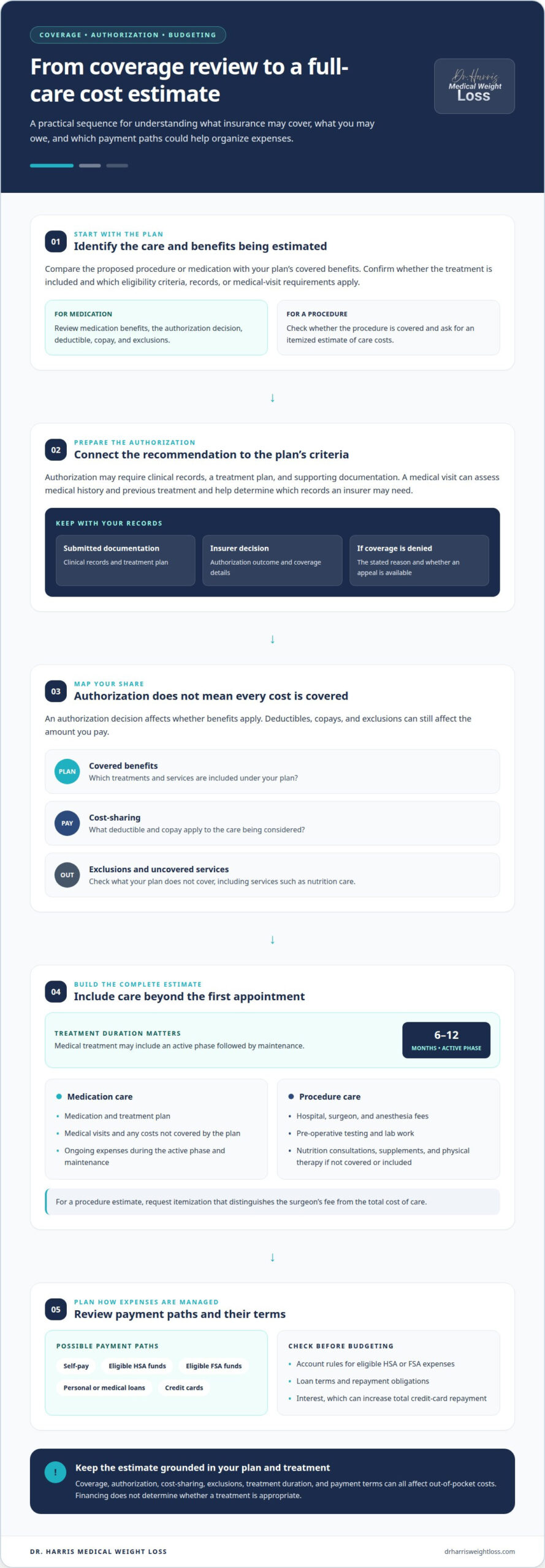
Authorization connects a physician’s treatment recommendation to an insurer’s coverage criteria. The submission may require clinical records, a treatment plan, and supporting documentation. The insurer’s decision affects whether benefits apply, but authorization does not eliminate deductibles, copays, or exclusions. Keep the decision and any explanation of denied coverage with your records to help clarify next steps.
In South Florida, coverage for Wegovy or Zepbound depends on your plan’s medication benefits, authorization decision, deductible, and copay. Without insurance coverage, the self-pay amount depends on the medication and treatment plan. Medication-specific pricing is provided after a quote request.
A surgery estimate may include hospital, surgeon, and anesthesia fees, along with pre-operative testing and lab work. Nutrition consultations, supplements, and physical therapy may add costs if insurance does not cover them or they are not included in the initial estimate. For a gastric procedure, ask for an itemized estimate that distinguishes the surgeon’s fee from the total cost of care.
To estimate costs, compare the proposed procedure or medication with your plan’s covered benefits. Then review the deductible, out-of-pocket expenses, and exclusions, including nutrition services. If you want to include lifestyle changes alongside treatment, discuss nutrition and exercise with your physician. This can help set realistic expectations without pressure to meet a particular weight-loss target or timeline.
Discuss treatment costs and coverage as part of your care planning.
With insurance, your cost depends on your plan’s medication benefits, authorization decision, deductible, and copay. Without coverage, self-pay costs vary by medication and treatment plan. Medication-specific pricing is provided after a quote request.
Dr. Harris Weight Loss
Dr. Harris Weight Loss provides physician-supervised medication programs for people considering medically guided care, including the Tirzepatide (Zepbound) Program, Semaglutide Medication Program, and Phentermine Medication. These prescription options are dispensed safely by licensed pharmacies under physician supervision. Which option to discuss depends on your health needs and care goals.
If insurance coverage, self-pay, or financing affects your decision, raise those questions during treatment planning. Understanding the medication being considered can help you discuss authorization, ongoing care, and potential out-of-pocket expenses without assuming a particular coverage decision or payment arrangement.
For a thoughtful conversation about medication care and your payment questions, contact Dr. Harris Weight Loss.
Choose a Next Step That Fits Your Plan
Turn what you’ve learned into a plan that reflects your health priorities and how you want to manage treatment costs. Financing options for medical weight loss in South Florida are best considered alongside your care plan, insurance coverage, and preferred way to pay. A conversation with Dr. Harris Medical Weight Loss can help connect these details; individual results vary and depend on genetics, lifestyle, adherence, and medical guidance.
Before contacting the clinic, note your questions about treatment choices, authorization, and costs over time. This gives the discussion a practical starting point and helps identify what information you still need. Dr. Harris Medical Weight Loss provides physician-led care in Fort Lauderdale, Boca Raton, Broward County, and Palm Beach County.
Contact Dr. Harris Medical Weight Loss to discuss your questions and plan a way forward that feels right for you.
Frequently Asked Questions
Are there self pay or financing options?
Yes. You may pay directly, use eligible HSA or FSA funds, or consider a personal or medical loan. Credit cards are another option, but interest can increase the total amount repaid. Compare the total repayment and due dates with your household budget before choosing how to pay.
Have Questions About Payment?
Organize payment questions around the treatment you’re considering, your insurer’s response, and any account funds or loan you may use. This helps clarify which expenses could remain your responsibility. Contact Dr. Harris Medical Weight Loss to discuss payment questions as part of physician-led care planning.
What medical weight loss programs are available in South Florida?
Dr. Harris Medical Weight Loss offers the Tirzepatide (Zepbound) Program, Semaglutide Medication Program, and Phentermine Medication. These are distinct prescription options, dispensed by licensed pharmacies and provided safely under physician supervision. Patients in Fort Lauderdale, Boca Raton, Broward County, and Palm Beach County can discuss treatment following clinical evaluation. Individual results vary and depend on genetics, lifestyle, adherence, and medical guidance.
What financing plans, payment plans, or medical loans do South Florida weight loss clinics offer?
Payment arrangements vary. A clinic installment plan, if available, differs from a third-party medical loan or credit card, where the lender sets repayment terms and interest. Before relying on a plan, distinguish the payment schedule from the total amount repaid, any fees, and due dates. These details help you understand the financial commitment across the treatment period.
How can patients use HSA or FSA funds for medical weight loss treatment?
Some treatment expenses may be reimbursable through a healthcare FSA or HSA. Review your account’s eligibility rules and documentation requirements before using funds, and keep itemized receipts and treatment records. Eligibility depends on the expense and account terms, so do not assume every medication, visit, or related service qualifies for reimbursement.