
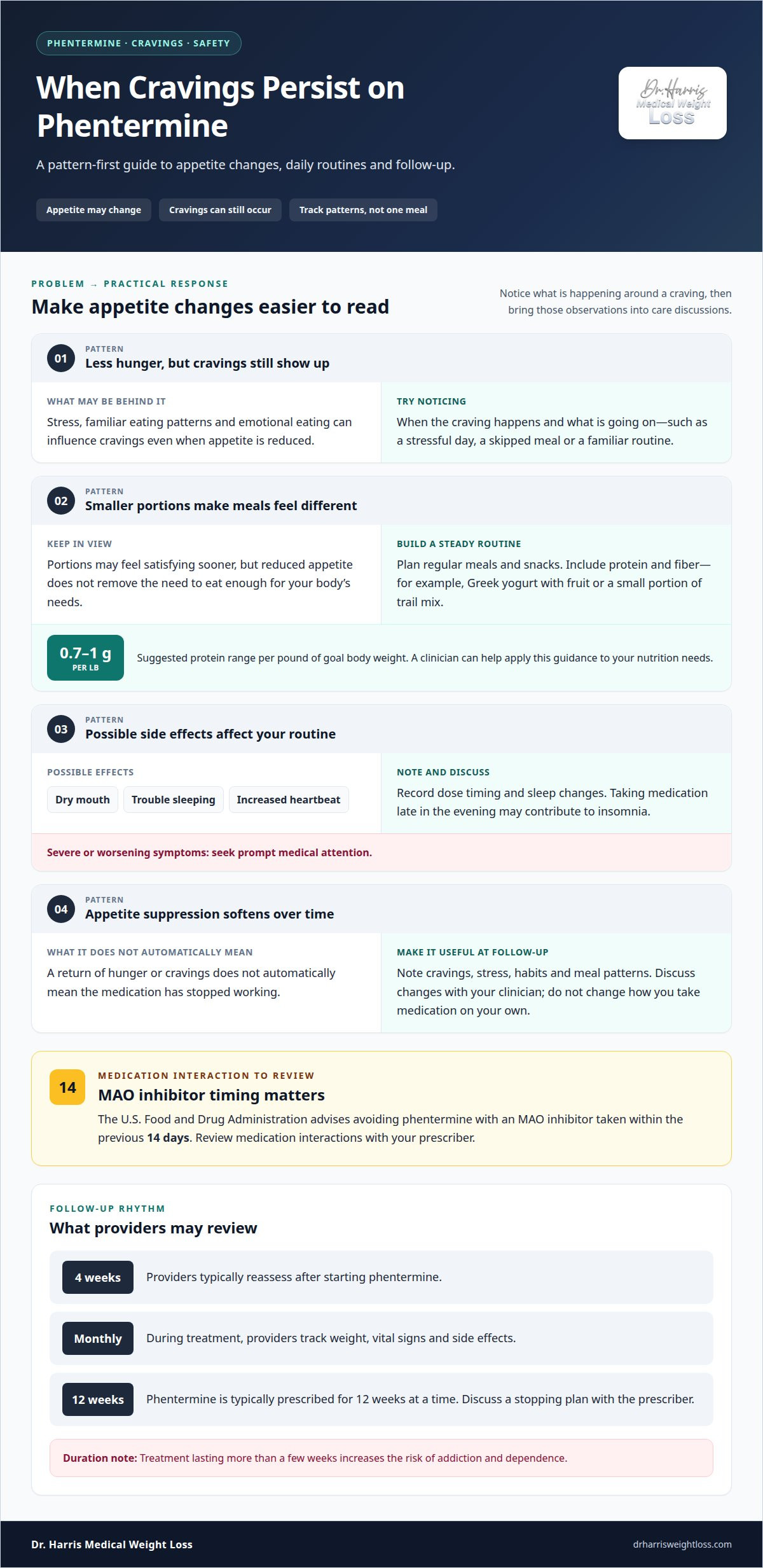
Many people notice less hunger after starting phentermine, but cravings can still occur with stress, familiar eating patterns, or changes in appetite. Managing cravings on phentermine means understanding these patterns, not expecting the medication to eliminate hunger. Dry mouth, trouble sleeping, and a faster heartbeat are possible side effects to discuss with your prescriber.
Reduced hunger can make food decisions feel different, yet routine and emotional eating may still influence cravings. This guide explains why appetite changes happen, which side effects deserve attention, and how phentermine’s daily oral approach differs from options such as weekly GLP-1-based injections. It also explores what may happen when appetite suppression fades, so you can better understand treatment conversations without treating cravings as a personal failure.
Key Takeaways
- Review medication interactions before treatment: the U.S. Food and Drug Administration advises avoiding phentermine with an MAO inhibitor taken within the previous 14 days.
- Notice how changes in appetite influence food thoughts, portions, and snacking, and look for patterns rather than judging a single meal.
- Understand how phentermine’s short-term role differs from other prescription treatment approaches before weighing which may suit your care plan.
- Explore medically supervised options, including phentermine medication, a Semaglutide Medication Program, or a Tirzepatide (Zepbound) Program.
How quickly will I notice apetite change?
Most patients notice reduced hunger within the first few days of taking phentermine. It can quiet appetite signals, but cravings may still arise from habits, stress, or emotional eating.
Appetite Suppression and Hunger Signals
Phentermine stimulates the hypothalamus, the brain region that regulates appetite, and helps suppress hunger signals. It also prompts norepinephrine release, which reduces activity of neuropeptide Y, an appetite-stimulating signal. Phentermine can slightly raise dopamine and serotonin levels as well. These effects may make portions feel satisfying sooner, but they don’t remove the need to eat enough to meet your body’s needs.
Appetite Changes Over Time
Appetite suppression may feel stronger at first and soften over time for some people. A return of hunger or cravings does not automatically mean the medication has stopped working. Stress, emotional eating, habits, and restrictive eating can also affect appetite. Note when cravings occur and what is happening around them, such as a skipped meal or a stressful day. These details can help your clinician discuss your treatment plan at follow-up.
When reduced appetite makes meals smaller, plan protein into the food you do eat. One suggested range is 0.7-1 gram per pound of goal body weight; a clinician can help apply that guidance to your nutrition needs. Phentermine is an FDA-approved prescription appetite suppressant and a Schedule IV controlled substance in the United States, according to the U.S. Drug Enforcement Administration. The U.S. Food and Drug Administration advises avoiding phentermine with an MAO inhibitor taken within the previous 14 days.
What side effects can this medication cause?
Phentermine may reduce thoughts about food, make smaller portions feel satisfying, and decrease between-meal snacking. To manage cravings on phentermine, keep a steady meal routine and notice whether cravings follow skipped meals, stress, or familiar habits.
Choose filling foods with protein and fiber, such as Greek yogurt with fruit or a small portion of trail mix. Plan meals and snacks around your usual routine rather than waiting until hunger feels intense. This can help you eat regularly and keep the focus on nourishment, not just calories.
Dry mouth, trouble sleeping, and a faster heartbeat are possible side effects. Seek prompt medical attention for severe or worsening symptoms. Taking medication late in the evening may contribute to insomnia, so note dose timing and sleep changes to discuss at follow-up.
Providers typically reassess patients four weeks after starting phentermine, then track weight, vital signs, and side effects monthly during treatment. The rate of weight loss is greatest during the first few weeks, and providers expect patients to lose weight by 12 weeks after starting treatment. Diet and exercise remain part of the plan.
Some patients experience less appetite suppression over time, and cravings may return as the medication’s effect softens. Phentermine is typically prescribed for 12 weeks at a time; treatment lasting more than a few weeks increases the risk of addiction and dependence. After stopping, appetite may change as suppression ends. Discuss a stopping plan with the prescriber rather than changing use on your own.
Before a follow-up, note changes in cravings, sleep, or meal patterns to make a discussion about phentermine medication care more focused.
Phentermine and other weight-loss treatments
Phentermine is a daily oral appetite suppressant prescribed for short-term use with diet and exercise to treat obesity. It affects hunger signals; it doesn’t burn fat or block calories. It may be considered for adults with a BMI of 30 or higher, or 27 or higher with a weight-related condition. Heart disease, uncontrolled high blood pressure, an overactive thyroid, or glaucoma can affect whether it is suitable. Treatment choice also depends on a person’s health history and goals.
Semaglutide is a weekly GLP-1-based injection used in weight management. The research summary reports 15-20% body weight loss with semaglutide. This figure describes reported outcomes, not an individual prediction. Its injection schedule and effects on appetite are distinct considerations to discuss as part of treatment planning.
Tirzepatide is a weekly injection that acts on GLP-1 and GIP pathways. The research summary reports up to 22% body weight reduction with tirzepatide. That figure is not a promise for any individual. A person’s medical history, treatment response, and care goals matter when considering this medication.
Phentermine is intended as one part of a plan that includes eating habits, physical activity, and behavior change. Its daily oral use and short-term role may suit a different care plan than a weekly injectable medication. The decision involves more than appetite suppression: health conditions, medication preferences, and the ability to follow the treatment approach all matter.
A clinician can help connect your goals and health history with medically supervised treatment options.
Dr. Harris Medical Weight Loss: Tirzepatide (Zepbound) Program
Dr. Harris Medical Weight Loss offers physician-led, medically supervised weight-management programs, including a Tirzepatide (Zepbound) Program. If cravings return or your goals change, a clinical evaluation can help determine whether this or another treatment option suits your needs.
The clinic also offers Semaglutide and Phentermine as prescription options within medically supervised care. Dr. Harris leads treatment directly, and the plan is based on medical evaluation and lab work.
To discuss your care options, contact Dr. Harris Medical Weight Loss.
Turn Your Observations Into a Clear Next Step
A useful next step is to notice how cravings fit into your day. Record when they arise, what you were doing, and whether food thoughts affect your routine. This can help you describe your experience clearly and focus a care discussion on what matters to you. Managing cravings on phentermine is not only about appetite; it can also mean understanding the patterns, concerns, and treatment goals you want to address.
Bring those observations into a conversation about your care. You can discuss how your current approach feels and what questions you have about treatment options. Start a conversation with Dr. Harris Medical Weight Loss when you’re ready to consider your next step. Each thoughtful observation can help you move forward with greater clarity and confidence.
Frequently Asked Questions
Can I combine it with other treatments?
Don’t combine phentermine with another prescription treatment or supplement without a medication review. Share a complete list of what you take, including nonprescription products, with your prescriber so potential interactions can be considered. Dr. Harris Medical Weight Loss is LegitScript Certified and serves people in Fort Lauderdale, Boca Raton, Broward County, and Palm Beach County.
Can I drink coffee or take other stimulants with it?
Tell your prescriber about coffee, energy drinks, and any other stimulant use while taking phentermine. Note how much you consume and when, and mention changes such as unusual restlessness or disrupted sleep. This context can help your care team review your medication routine and consider whether adjustments are appropriate.
Does phentermine stop working over time?
Phentermine’s appetite-suppressing effect may soften over time for some people. Track changes in hunger, cravings, meal patterns, and medication timing rather than increasing the dose yourself. At follow-up, these details can help your clinician consider whether the change relates to the medication or to factors such as stress or eating habits.
How does phentermine actually work in the body?
Phentermine affects brain pathways involved in appetite regulation. It does not directly burn fat or block calories, so eating patterns and activity remain relevant during treatment. You may notice less interest in food or feel satisfied with a portion that previously felt too small.
How soon does phentermine reduce appetite?
Most patients notice reduced hunger within the first few days of taking phentermine. The timing of appetite change is different from the time needed to assess treatment progress. Track when hunger shifts and whether cravings still arise around particular routines, such as late-evening snacking. Those observations can make follow-up conversations more specific and useful.