
The details behind lipotropic shots matter more than the label. Understanding what a formula contains, how it relates to your health history, and what care involves can help you make an informed decision. A clear explanation is a useful starting point.
Choosing a weight-management approach can raise practical questions about assessment, lab work, and ongoing care. This guide explains those steps and how a consultation can help you discuss your goals and options with a clinician. The aim is a thoughtful decision based on your health needs.
Key Takeaways
- Learn which ingredients may appear in these formulas and why the exact blend can differ.
- Get a clearer understanding of what B12 can and can’t tell you about weight change on its own.
- See how consultation, lab testing, and follow-up appointments can inform a care plan.
- Explore how Dr. Harris Medical Weight Loss’s medication programs may fit into medically supervised care.
Can vitamin B12 support weight management on its own?
No single nutrient should be treated as a stand-alone weight-loss method. A health assessment can help identify factors that may influence your weight and which parts of care deserve attention. Bring a list of your medicines, supplements, and relevant health concerns so the discussion starts with useful context.
Insurance coverage varies by policy and by how a service is classified. Before booking, review your benefits for the specific service and ask your insurer about coverage, exclusions, and required documentation. Keep the response with your policy information for reference.
When assessing a Palm Beach County clinic, identify the clinician responsible for care and look up their license through Florida’s official licensing resources. Ask how the practice explains ingredients, handles preparation, and documents follow-up. Clear answers help you understand who oversees care and what to expect at each step.
For a practical consultation, write down your goals and questions. For example, note changes in appetite, daily energy, or activity that you want to discuss. A clinician can consider those details alongside your medical history, rather than relying on a single measure.
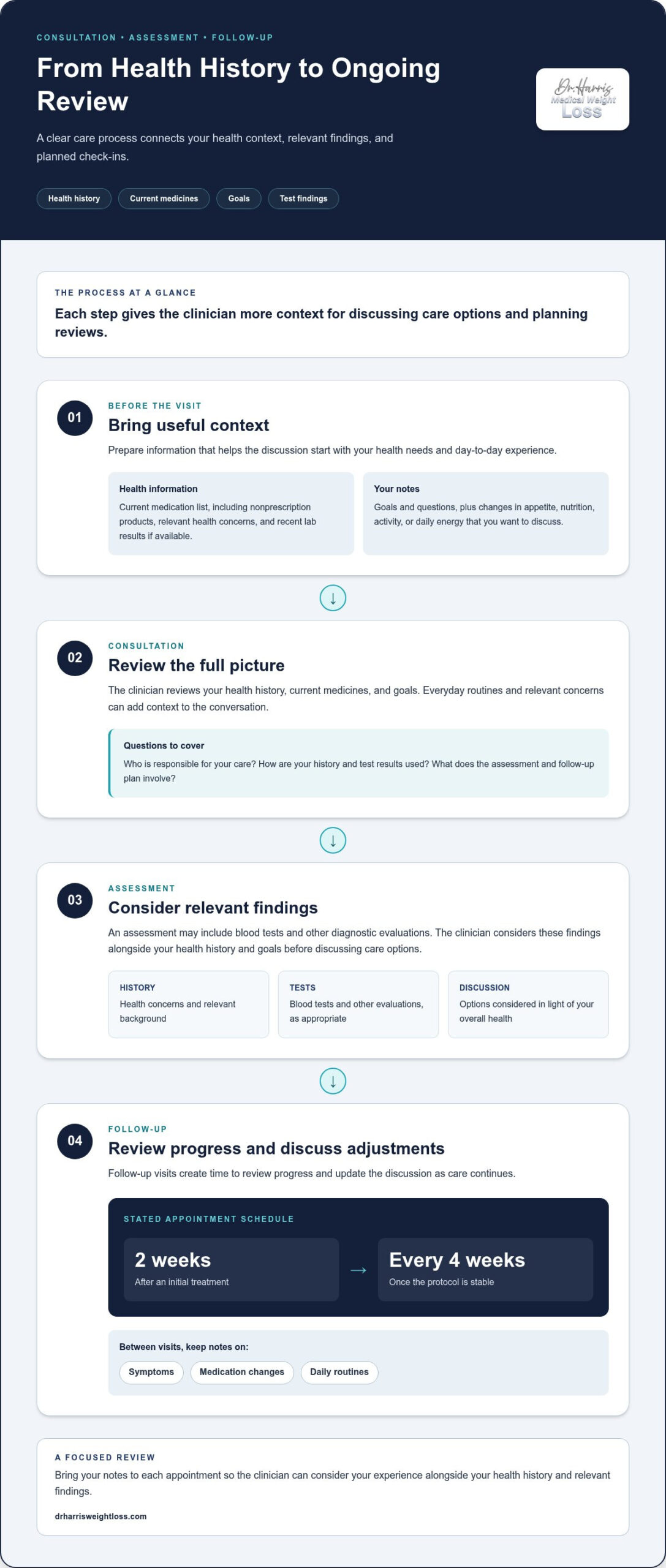
Bring a current list of medications, including nonprescription products. This gives the clinician a chance to review the full picture before discussing options. If you have recent lab results, bring them too, so the conversation can focus on relevant findings rather than repeating information you already have.
Consultation, lab testing, and follow-up process
A consultation begins with a review of your health history, current medications, and goals. An assessment may include blood tests and other diagnostic evaluations. These steps help the clinician consider your overall health and decide which care options to discuss.
For people in Palm Beach County, bringing a current medication list and describing changes in nutrition, activity, or energy levels can help make a consultation more useful. For example, noting a change in appetite gives the clinician helpful context. A balanced discussion considers everyday routines alongside your health history and lab findings.
Follow-up appointments create time to review progress and discuss adjustments. The stated schedule includes an appointment two weeks after an initial treatment, then visits every four weeks once a protocol is stable. Keep notes about symptoms, medication changes, and daily routines between visits; these details can make each review more focused.
When comparing clinics in Palm Beach County, look for a clearly identified care team, an explanation of the assessment process, and a defined follow-up plan. Ask how your history and test results inform decisions. These details help you understand a practice’s approach to care and communication.
Clinics in Palm Beach County differ in the care they provide. Review descriptions of consultation, assessment, and ongoing follow-up to see which approach addresses your needs. If you have complex health concerns or take medications that may affect treatment decisions, raise them during your consultation.
To learn about the consultation process, review the available care information and note the questions you’d like to discuss.
The clinic schedules follow-up appointments two weeks after an initial GLP-1 or lipotropic injection. Once an injection protocol is stable, visits transition to every four weeks.
What Do These Formulas Contain?
Ingredient blends vary, so the label matters. Common components include vitamin B12, methionine, inositol, and choline.
Core Ingredients
Lipotropic formulas may combine vitamins and nutrients, and recipes can differ. Methionine, inositol, and choline are often grouped as MIC. Review the ingredient list and amounts to understand what a formula contains before discussing its intended role in weight management.
MIC Components
MIC refers to methionine, inositol, and choline. Methionine is an amino acid, while inositol and choline are distinct nutrients. The names describe ingredients, not a guaranteed effect on metabolism or weight. Ask for the complete formula details, including amounts, to distinguish a MIC blend from one that also includes vitamins or other nutrients.
Additional Ingredients and Claimed Effects
Some listed formulas include vitamin B6, B1, B2, or carnitine. For example, one formula lists 2 mg of B6; another lists 50 mg of B1, 5 mg of B2, and 125 mg of carnitine. A separate blend lists 25 mg of methionine, 50 mg of inositol, 0.175 mg of B6, and 1 mg of B12. These amounts show why names alone aren’t enough to describe a blend.
These products are described as supporting metabolism and weight loss, but ingredients don’t establish an individual outcome. In Palm Beach Gardens, review the formula and its intended use with a qualified provider. To discuss ingredient details, request a treatment consultation.
Dr. Harris Medical Weight Loss: Tirzepatide (Zepbound) Program
Dr. Harris Medical Weight Loss offers a medically supervised Tirzepatide (Zepbound) Program for people considering medication as part of weight management in Palm Beach County and the wider local area, including Fort Lauderdale and Broward County. A clinical discussion can connect your health history and goals with an appropriate care plan.
The practice also offers a Semaglutide Medication Program and Phentermine medication. These are separate options, and the right next step depends on your individual health assessment. A conversation can help you understand which program may fit your needs and what ongoing care involves.
Medication is one part of a broader plan. Nutrition, activity, and follow-up can help keep care attentive to your progress and overall well-being. For a calm, informed next step, contact Dr. Harris Medical Weight Loss to discuss your goals and available treatment options.
Choose a Next Step That Fits Your Needs
Deciding how to approach weight management starts with identifying what you want from care and which questions remain. If you’re considering lipotropic shots in Palm Beach County, discuss your health goals, treatment options, and the follow-up that can support an informed decision with Dr. Harris Medical Weight Loss.
Dr. Harris Medical Weight Loss offers a Tirzepatide (Zepbound) Program, a Semaglutide Medication Program, and Phentermine medication. These are distinct options to discuss in light of your health history and preferences. A thoughtful conversation can help you understand which option aligns with your needs and what to ask at a consultation.
There’s no need to have every answer before starting that conversation. Contact Dr. Harris Medical Weight Loss to discuss your goals and take a considered next step toward care that feels right for you.
Frequently Asked Questions
Can Lipo-Slim formulas or vitamin treatments cause side effects?
Possible effects depend on the complete ingredient list and your health history. A formula with added prescription ingredients has different considerations from one containing nutrients alone. Before treatment, review ingredient names and amounts alongside your medication list with a clinician. If you notice a new or severe reaction afterward, seek medical guidance before another dose.
Who may benefit from vitamin B12?
People with a diagnosed vitamin B12 deficiency may benefit from treatment recommended for that deficiency. Fatigue alone doesn’t establish that B12 levels are low, since other health factors can affect energy. A clinician can consider symptoms, medical history, and lab results to determine whether supplementation is appropriate and whether another cause needs attention. For individuals dealing with complex chronic conditions or autoimmune issues that impact vitality, healthcare centers such as Sunridge Medical offer advanced alternative protocols to support comprehensive wellness.
Can I combine these treatments with other weight-management methods?
Nutrition and exercise can be part of a broader care plan, but disclose every medication, supplement, and treatment you use. For example, share a prescription change before adding another injectable or appetite-related medicine. A clinician can review possible overlaps and help coordinate care, rather than layering treatments without considering your health history.
Does treatment hurt?
An injection may cause a brief pinch or pressure, and the experience varies by person and injection site. Tell the administering clinician if you feel anxious or have previously fainted during injections. Following the clinician’s positioning and breathing instructions can make the appointment easier to manage. Report persistent discomfort or a reaction afterward.
How often are follow-up visits needed?
The schedule described for this care begins with a follow-up two weeks after the first treatment, then moves to visits every four weeks once the protocol is stable. Use each appointment to review how you’re responding, discuss any symptoms, and raise changes in medications, nutrition, or exercise that could affect your plan.