A pause on the scale doesn’t automatically mean Zepbound has stopped working. Understanding how Zepbound works for weight loss starts with tirzepatide, which activates GIP and GLP-1 hormone receptors involved in appetite, digestion, and blood sugar regulation. It may also slow how quickly food leaves the stomach, helping fullness last longer.
It’s understandable to expect changes in appetite and weight to happen in step, but they don’t always. Progress can slow or stall, which may leave you wondering whether Zepbound is still having an effect.
This article explains how Zepbound affects appetite and weight, what clinical studies found, and how side effects may be managed. It also explores why progress can slow or stall, so you can better understand what may be happening during treatment.
Key Takeaways
- Learn how tirzepatide’s hormone activity can influence appetite, digestion, and fullness.
- See what clinical trials measured and why results varied across doses and study groups.
- Understand how common digestive side effects may affect treatment and what steps can help manage them.
- Explore why progress may slow or stall, and which factors can shape changes over time.
What Are the Side Effects of Zepbound, and How Can I Prevent or Manage Them?
Tirzepatide activates GIP and GLP-1 receptors, affecting appetite, digestion, and blood sugar. These effects can change eating patterns, but digestive symptoms and safety precautions matter during treatment.
Common Gastrointestinal Side Effects
Common gastrointestinal side effects are digestive symptoms, especially nausea, diarrhea, constipation, indigestion, and vomiting. In clinical trials at 5 mg, nausea occurred in 25% of patients, diarrhea in 19%, constipation in 17%, indigestion in 9%, and vomiting in 8%. These effects can disrupt eating and hydration. Smaller meals and stopping when comfortably full may help; drink fluids if symptoms cause fluid loss. Persistent or severe symptoms need prompt medical attention because vomiting or diarrhea can lead to dehydration and kidney problems.
Effects on Appetite and Stomach Emptying
By activating GIP and GLP-1 hormone receptors, tirzepatide can influence appetite, fullness, and blood sugar regulation, including for people with diabetes. It may slow stomach emptying, so fullness after eating can last longer and food intake may decrease. Zepbound is injected under the skin once weekly. The usual starting dose is 2.5 mg for four weeks, followed by 5 mg once weekly; later increases are made only on the prescriber’s schedule. Inject into the abdomen or thigh, or have another person inject the back of the upper arm.
Digestive and Other Side Effects
Other effects include injection-site reactions and fatigue; at 5 mg, these occurred in 6% and 5% of trial participants. Serious risks include pancreatitis, gallbladder problems, severe stomach problems, and thyroid tumors, including cancer. People with a personal or family history of medullary thyroid carcinoma, MEN 2, or a serious tirzepatide allergy should not take Zepbound. U.S. cost depends on insurance and coverage varies by plan. After stopping, weight may return; participants switched to placebo regained 14% of body weight. Treatment is used with reduced-calorie eating and increased physical activity.
How Was It Studied for Weight Loss?
Tirzepatide was studied as a treatment acting on two hormone receptors: GIP and GLP-1. It activates both receptors, which participate in appetite control, digestion, and blood sugar regulation. This dual activity may help people feel full and reduce food intake. Researchers reviewed changes in body weight alongside side effects, using placebo groups to understand trial outcomes.
The SURMOUNT-1 and SURMOUNT-2 trials each lasted 72 weeks. SURMOUNT-1 enrolled 2,539 adults with overweight or obesity who didn’t have diabetes. SURMOUNT-2 included 938 adults, all with type 2 diabetes. Participants received tirzepatide or placebo, alongside reduced-calorie eating and increased physical activity. The studies therefore assessed treatment within a lifestyle program, not as an injection alone.
In SURMOUNT-1, average body weight reductions were 15% with 5 mg, 19.5% with 10 mg, and 20.9% with 15 mg. These results describe group averages, not an individual outcome. In the 5 mg group, 85% of participants reduced body weight by at least 5%; in the 15 mg group, 57% reached at least 20%. Some participants in placebo groups also lost body weight. Study participants were encouraged to exercise for at least 150 minutes a week.
Wegovy is a separate medication; this section focuses on tirzepatide’s clinical evidence rather than ranking the treatments. For context on how receptor activity relates to a prescription plan, explore tirzepatide treatment information.
Reasons for slow or stalled weight loss
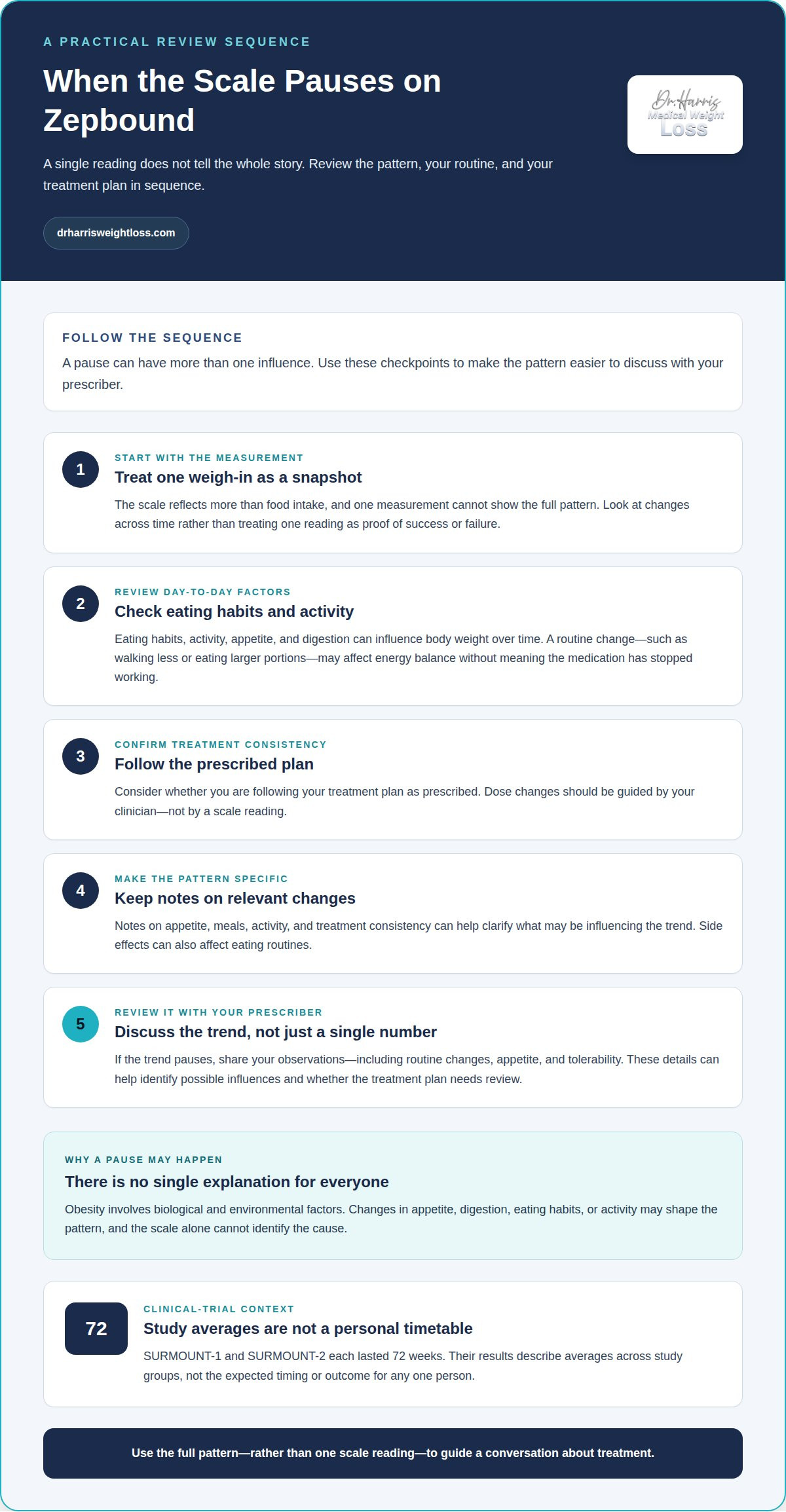
Weight can plateau even while treatment continues. The scale reflects more than food intake, and one measurement cannot show the full pattern. Eating habits, activity, appetite, and digestion can all influence weight over time. A change in routine, such as walking less or eating larger portions, may affect energy balance without meaning the medication has stopped working. Obesity also involves biological and environmental factors, so a plateau does not have one universal explanation.
Before drawing conclusions, consider whether you’re following your treatment plan as prescribed. Zepbound should be taken according to the prescription, and dose changes should be guided by your clinician, not by a scale reading. Appetite may affect how much you eat, but it does not determine every meal or activity. Side effects can also influence eating routines. Notes on appetite, meals, activity, and treatment consistency can make a conversation about a plateau more specific and useful.
Studies report averages across groups, not a timetable for each person. Look at the pattern across time instead of interpreting a single weigh-in as proof of success or failure. If the trend pauses, discuss the observations with the prescriber, including changes in routine, appetite, and tolerability. These details can help identify what may be influencing progress and whether the treatment plan needs review. For help discussing a tirzepatide plan, connect with the medical team.
Dr. Harris Medical Weight Loss: Tirzepatide (Zepbound) Program
Dr. Harris Medical Weight Loss offers a medically supervised Tirzepatide (Zepbound) Program. If you’re considering treatment or have questions about tolerability or a plateau, a physician-led evaluation can put medication use in the context of your health history and goals, rather than treating the scale as the only measure that matters. The practice serves patients in Fort Lauderdale, Boca Raton, Broward County, and Palm Beach County.
Zepbound is a prescription medication, and it isn’t appropriate for everyone. A discussion with a medical professional can help assess whether tirzepatide fits your circumstances and what questions to raise about treatment. If you’re ready to discuss the program, contact Dr. Harris Medical Weight Loss.
Make Your Next Treatment Decision With Clarity
Understanding how Zepbound works for weight loss can help you have a focused conversation about whether treatment fits your health needs. Consider what support you’re looking for, including guidance on appetite changes, tolerability, or a pause in progress. Discuss these concerns and the role of medical supervision with Dr. Harris Medical Weight Loss. Your next step should reflect your health history, priorities, and response to treatment, not pressure to match someone else’s experience.
Dr. Harris Medical Weight Loss offers a Tirzepatide (Zepbound) Program, a Semaglutide Medication Program, and Phentermine Medication. If you’d like to discuss care and possible next steps, contact Dr. Harris Medical Weight Loss. You can approach the conversation at your own pace and make an informed decision with guidance.
Frequently Asked Questions
How Does Zepbound Reduce Weight?
Zepbound is prescribed for adults with obesity or for some adults with overweight and a weight-related health condition. That treatment eligibility is based on health factors, not appearance alone. A clinician considers whether the medication fits the person’s health history and needs. The treatment goal should be discussed as part of an individual care plan, rather than assumed from someone else’s experience.
Does Zepbound burn fat?
No. Zepbound does not directly target or burn fat. A change on the scale also cannot show by itself how body composition has changed. For example, the number may not capture differences in fat and other components of body mass. Discussing health goals beyond a single scale reading can provide a fuller way to evaluate treatment.
How Do I Know if Zepbound Is Working?
Consider whether treatment is supporting the goals agreed on with your clinician, rather than relying on one day’s reading or sensation. Keep a record of missed doses, changes in daily routines, and symptoms that affect treatment. These details can make follow-up discussions more useful. Raise concerns about your prescription or treatment experience with your physician.
How does Zepbound help control appetite?
Appetite changes can make meal planning feel different from before treatment. Try serving a portion, eating at a comfortable pace, and pausing to notice whether you want more. This check-in can help you respond to your own hunger and fullness cues without treating every meal as a test. Share ongoing difficulty eating enough or comfortably with your clinician.
How does Zepbound (tirzepatide) work for weight loss?
Zepbound is the brand name for the prescription medication tirzepatide. Its role in weight management comes from the hormone-receptor activity described earlier, not from directly burning fat. Whether it fits depends on a person’s health history, treatment goals, and response. The medication supports a care plan; it doesn’t guarantee a particular outcome or timeline.