
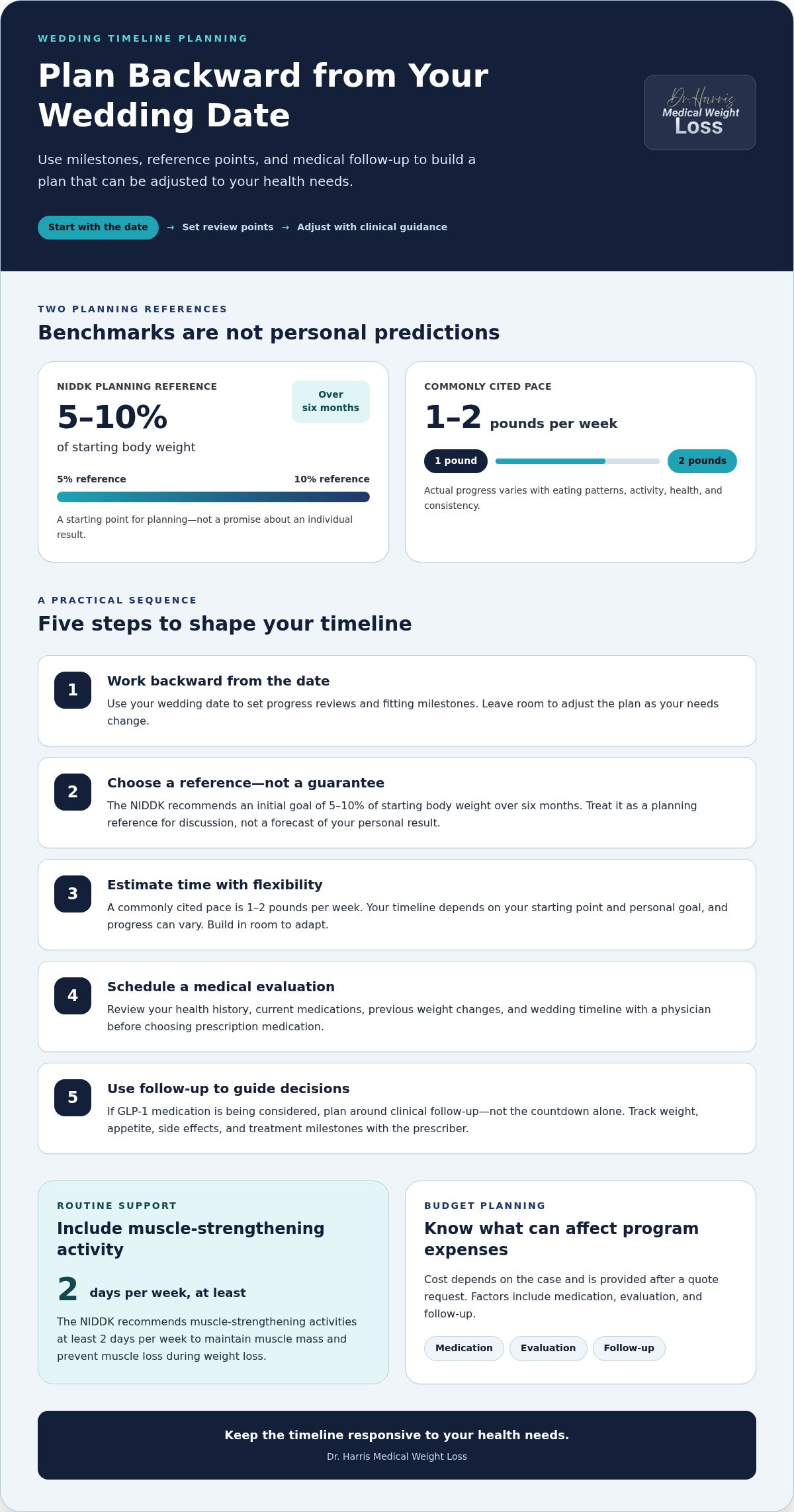
A practical starting target for weight loss is 5-10% of starting body weight over six months, according to the National Institute of Diabetes and Digestive and Kidney Diseases (NIDDK). A commonly cited pace is 1-2 pounds per week, so your timeline depends on your starting point and personal goal. Planning Boca Raton weight loss for an upcoming wedding means working backward from the date while leaving room for steady progress.
It’s understandable to want a clear answer before choosing a plan. But a wedding deadline doesn’t change how your body responds, and a timeline that respects your health is more useful than an aggressive target. This guide explains how to estimate the time you may need, what physician supervision can involve, and what to consider about FDA-approved and compounded medications. You’ll also find practical steps for building a plan around your date, so decisions can feel informed and manageable rather than rushed.
Key Takeaways
- Work backward from your wedding date and set milestones that leave room to adjust your plan as your needs change.
- Include muscle-strengthening activity in your routine: the National Institute of Diabetes and Digestive and Kidney Diseases recommends it at least 2 days per week to maintain muscle mass and prevent muscle loss during weight loss.
- Use physician supervision to review your health profile, goals, and whether medication may fit your plan.
- Learn what to consider when discussing FDA-approved and compounded medications, including the options available through Dr. Harris Medical Weight Loss.
FDA-approved and compounded medication information
- Choose a program that takes your wedding date, health history, and daily routine into account. Before starting, ask who oversees your care, how progress is monitored, and how your plan can be adjusted. A medically supervised program may offer clinical follow-up alongside routines you can maintain during wedding preparations.
- Ask the physician to explain the medication being considered, its intended use, and whether it is FDA-approved. Discuss how it relates to your health history, what effects to watch for, and how follow-up works. Medication should be considered as part of a broader plan, not as a substitute for understanding your care.
- For a compounded medication, ask what product is being prescribed, why compounding is being considered, and how dosing instructions will be explained. Clarify how the prescriber will review your response and address concerns. These details help you understand the choice and distinguish a specific treatment plan from a general promise.
- Build habits alongside any medication discussion. A do-it-yourself approach can start with planned meals and regular activity; a gym plan can add resistance exercises. The National Institute of Diabetes and Digestive and Kidney Diseases (NIDDK) recommends muscle-strengthening activities at least 2 days per week to maintain muscle mass and prevent muscle loss during weight loss.
- Avoid crash diets and supplements that promise dramatic results by your wedding date. Restrictive eating can be difficult to sustain around fittings, events, and workouts, while supplements may raise questions about ingredients and how they fit your health history. Dr. Harris Medical Weight Loss focuses on medically supervised programs, not over-the-counter diet supplements. Choose habits you can maintain after the celebration, and follow medical guidance if you are considering treatment.
How Long Does It Take To Lose Weight For A Wedding?
- Start with your wedding date, then work backward to set progress reviews and fitting milestones. The National Institute of Diabetes and Digestive and Kidney Diseases (NIDDK) recommends an initial goal of 5-10% of starting body weight over six months. Use this as a planning reference, not a promise about your personal result. Planning weight loss in Boca Raton for an upcoming wedding starts with the date and your health needs.
- Estimate the timeline using the amount you hope to lose and a commonly cited pace of 1-2 pounds per week. Actual progress can vary as eating patterns, activity, health, and consistency affect results. A Boca Raton plan for weight loss before your wedding should leave room to adapt.
- If you’re considering GLP-1 medication, build the plan around clinical follow-up rather than a wedding countdown alone. Track weight, appetite, side effects, and treatment milestones with the prescriber. Those observations help guide decisions about continuing care and whether the schedule still fits your health needs.
- Schedule a medical evaluation before choosing prescription medication. Review your health history, current medications, previous weight changes, and wedding timeline. Metabolic testing may be considered based on your history and clinical findings; results can help identify health factors that shape a care plan.
- Include program expenses in your planning before beginning treatment. Cost depends on the case and is provided after a quote request; factors include medication, evaluation, and follow-up. If medication is part of your plan, review prescription medication options as one component of a clinician-guided timeline.
Physician-supervised weight management
In Boca Raton, options include physician-supervised programs, nutrition-focused plans, gym coaching, and self-directed routines. Compare them by clinician involvement, nutrition guidance, exercise planning, and follow-up, not wedding promises.
-
Identify available Boca Raton programs
List local medical programs, nutrition plans, gym-based coaching, and routines you can manage independently. Then check which options include a physician’s review and ongoing follow-up. Medical weight management may be considered for people with a BMI of 27 or higher, depending on their health profile. Avoid choosing a program based only on a promised result or a wedding deadline.
-
Compare supervision, nutrition, and exercise
Compare who reviews health history, how nutrition guidance is provided, and whether exercise planning accounts for your needs. A UCSD case study found that 94% of total weight loss was fat among participants who stayed at least four weeks and received DEXA scans. Treat this as an example of body-composition tracking, not a forecast for your results. Look for a plan that coordinates these elements.
- Before starting, write down your current routine, medications, health concerns, and wedding milestones. Bring those details to a physician’s evaluation, then ask how progress will be reviewed and what could prompt a plan adjustment. This makes follow-up specific to your circumstances. To explore physician-supervised weight management, take the next step toward a plan shaped around your health and timeline.
Dr. Harris Medical Weight Loss: Tirzepatide (Zepbound) Program
Dr. Harris Medical Weight Loss offers a medically supervised Tirzepatide (Zepbound) Program for people considering medication as part of weight management. If you are planning a wedding in Boca Raton, discuss your health history, goals, and whether this option fits your needs with the clinic’s physician-led team. Individual results vary and depend on genetics, lifestyle, and adherence to the program.
The clinic also offers a Semaglutide Medication Program and Phentermine medication as options under medical supervision. A physician can discuss whether a particular program fits your health history and goals. Your plan should support your well-being beyond the wedding date, with monthly monitoring and medication adjustments.
Contact Dr. Harris Medical Weight Loss to discuss its medication programs and whether physician-supervised care fits your plans.
Choose a Next Step That Supports Your Health
Planning Boca Raton weight loss for an upcoming wedding can start with a simple decision: make your health part of the plan, not just the date on the calendar. Consider which routines you can maintain through fittings and celebrations and after the wedding. A physician-led plan can be adjusted as your health and circumstances evolve.
Before your appointment, write down questions about how treatment fits your health history, what follow-up involves, and how to keep your routine manageable during wedding preparations. Dr. Harris Medical Weight Loss reviews medication options and dietary requirements as part of its initial appointment, helping focus the conversation on your needs.
If you’re ready to discuss physician-supervised care, contact Dr. Harris Medical Weight Loss. Take the next step at a pace that respects your health and helps you feel prepared for the celebration ahead.
Frequently Asked Questions
What are the safest ways to lose weight before a wedding?
Build your plan around regular meals, physical activity, sleep, and medical guidance if you’re considering medication. Avoid crash diets and products promising dramatic changes; restrictive routines can be difficult to maintain through fittings and events. For example, plan meals and walks around appointments, then track your energy and consistency rather than making last-minute changes to your eating routine.
How much weight can you safely lose per week before a wedding?
A commonly cited pace is 1-2 pounds per week, but the scale may not move evenly from week to week. Treat that pace as a broad planning reference, not a deadline. Track progress over time rather than reacting to one fluctuation, and consider how food intake, activity, health, and medication affect your individual experience.
What are the prices of Boca Raton weight-loss clinics and programs?
Program pricing in Boca Raton varies by treatment plan, medication, and follow-up. The cost for a specific program is determined by the case and provided after a quote request. Before budgeting, identify whether the plan includes clinical evaluation, medication, monitoring, and nutrition or exercise guidance, since these elements shape the services being priced.
How far in advance should I start a wedding weight-loss plan?
Start discussing your plan when wedding planning begins, rather than waiting for dress fittings or the final weeks. This gives you time to review your health history, establish routines, and fit the plan around work, events, and appointments. Bring your wedding date and fitting schedule to your medical appointment, then follow your clinician’s guidance on monitoring and any adjustments.