A supplement isn’t the first place to look when metabolism changes after 40. Strength training at least two to three times a week can help preserve muscle, while higher-intensity exercise may add another useful challenge. If you’re wondering how to improve metabolism after 40, sustainable movement and nutrition are a stronger starting point than expecting a pill to do the work.
It’s understandable to seek extra support when your energy, body composition, or response to familiar routines changes. This article explains how resistance training and high-intensity exercise may help, what to know about supplements, and why changes can differ for men and women. You’ll also find a practical way to decide which approaches suit your health needs and when medical guidance may be useful.
Key Takeaways
- Build resistance training into your routine and increase the challenge gradually; cardio can complement strength work.
- Protect recovery as part of your exercise plan: the Centers for Disease Control and Prevention recommends at least 7 hours of sleep per night for U.S. adults ages 18-60.
- Plan meals around protein, vegetables, fruits, and whole grains, and consider how hydration and protein intake fit your needs.
- Learn how metabolism changes can differ for men and women, and explore whether a medically supervised medication program may suit your weight-management goals.
Resistance training and high-intensity exercise
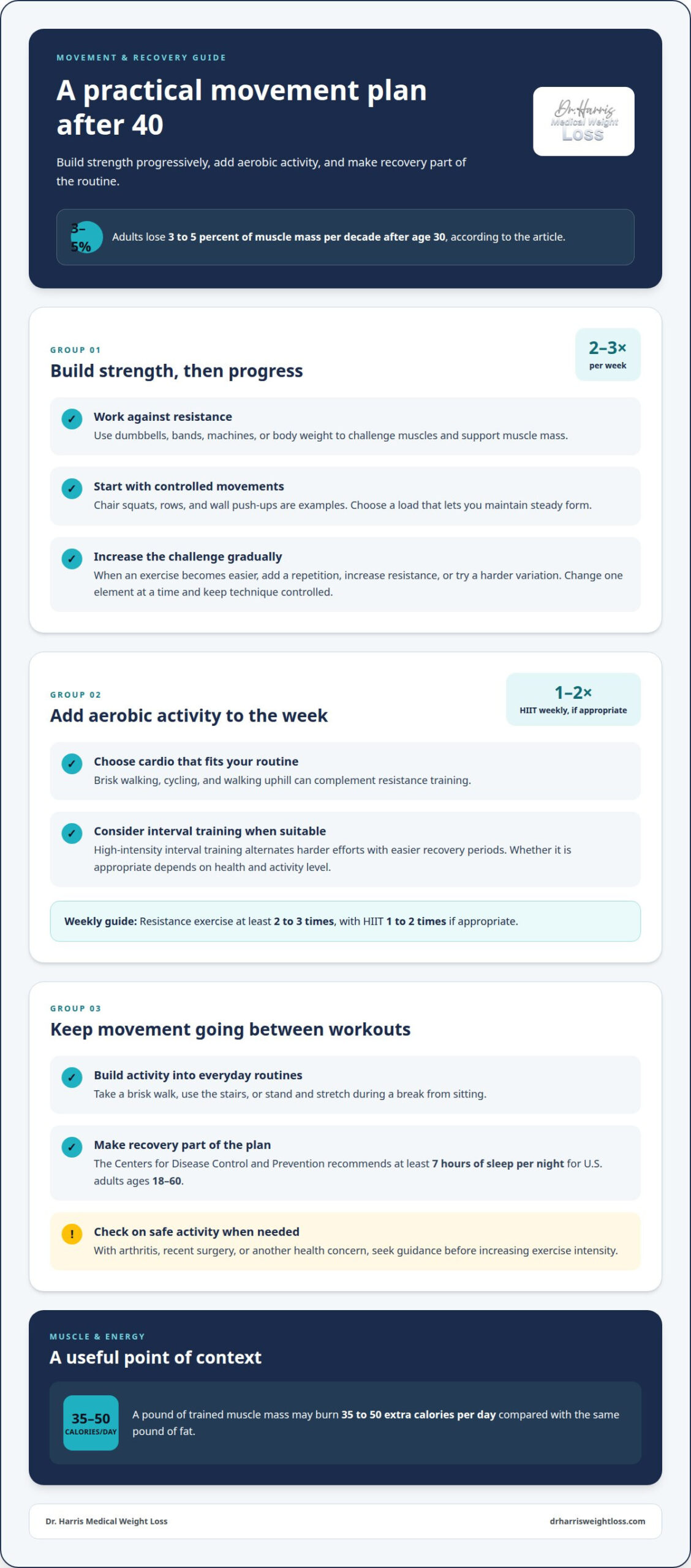
For readers wondering how to improve metabolism after 40, resistance training offers a practical way to challenge muscles and support muscle mass. It means working against resistance from dumbbells, bands, machines, or body weight. Adults lose 3 to 5 percent of muscle mass per decade after age 30. Start with controlled movements, such as chair squats, rows, and wall push-ups, using a load that allows steady form.
Progressive overload means gradually adjusting a workout as an exercise becomes easier. You might add a repetition, increase resistance, or try a more challenging variation. Change one element at a time and maintain controlled technique. For example, build confidence with chair squats before progressing to unassisted squats. The goal is a manageable increase in demand, not making every session exhausting.
A practical plan for how to improve metabolism after 40 can combine strength work with cardio. Brisk walking, cycling, and walking uphill add aerobic physical activity and can complement resistance training. High-intensity interval training alternates harder efforts with easier recovery periods. It may suit some people when appropriate to their health and activity level. A common recommendation is resistance exercise at least two to three times weekly, with HIIT one to two times weekly if appropriate.
Movement between workouts counts, too. Take a brisk walk, use the stairs, or stand and stretch during a break from sitting. These choices help build activity into daily routines without relying only on formal exercise. Recovery matters: the Centers for Disease Control and Prevention recommends at least 7 hours of sleep per night for U.S. adults ages 18-60. With arthritis, recent surgery, or another health concern, seek guidance on safe activity before increasing exercise intensity.
Muscle mass has a higher metabolic rate than fat and requires more energy to maintain; a pound of trained muscle mass may burn 35 to 50 extra calories per day compared with the same pound of fat.
Metabolism Slowdown Signs in Men and Women
For people considering how to improve metabolism after 40, meal planning can help support muscle and steady energy. Protein needs depend on body size, activity, and health. One suggested target for adults over 40 is 0.7 to 1 gram per pound of bodyweight daily. At 160 pounds, that equals 112 to 160 grams. Spread protein across meals, such as eggs at breakfast and beans or fish at lunch.
Build meals around protein, vegetables, fruit, and whole grains rather than cutting carbohydrates across the board. For example, a breakfast omelet with vegetables, whole-grain toast, and fruit brings several food groups together. At lunch, pair beans or chicken with leafy vegetables and brown rice. At dinner, try fish with roasted vegetables and a whole grain. Oats, lentils, berries, and leafy greens add fiber and variety. Adjust portions to your appetite and activity level.
Protein requires energy to digest, so the amount in a diet can affect metabolic energy expenditure. A 2019 study of 38 people found that participants consuming 25% of calories from protein burned more energy than those consuming 15%. This does not mean protein alone determines weight change or resting metabolic rate. For a practical approach to how to improve metabolism after 40, pair appropriate protein intake with resistance exercise and drink water regularly with meals and activity.
Changes in appetite, hormones, strength, and muscle can differ between men and women, and symptoms alone cannot explain their cause. Seek medical evaluation for persistent fatigue or unexplained weight gain. A clinician can consider thyroid function, medications, sleep, and hormonal changes. Make a note of when symptoms began and how they affect daily activities; that context can help guide an assessment.
Dr. Harris Medical Weight Loss
Dr. Harris Medical Weight Loss offers medically supervised weight-management programs for people seeking clinical guidance alongside nutrition and activity changes. After 40, shifts in muscle, appetite, energy, or health can make managing weight feel less predictable. A medical discussion can help put these changes in context and consider whether medication may be appropriate as part of an individual’s care.
Consider medical guidance if changes to eating and physical activity haven’t helped you reach your goals, or if health concerns affect your plan. A discussion can take into account your health conditions, medications, appetite, and weight history alongside daily habits. This gives a fuller picture than treating metabolism as a single number or assuming one approach works for everyone.
Dr. Harris Medical Weight Loss offers a Tirzepatide (Zepbound) Program, a Semaglutide Medication Program, and Phentermine Medication. Each is a distinct option within the clinic’s weight-management services. A physician-led assessment connects the discussion to your health and circumstances, rather than treating medication as a replacement for nutrition, movement, or other aspects of care.
A useful next step is to discuss your goals and the changes you’ve noticed with a clinician. Mention concerns such as shifts in appetite, difficulty maintaining routines, or health factors that affect activity. This can clarify what support may suit you and whether a medication program is relevant to your needs. Medication isn’t the right approach for everyone, so your health context matters.
For a conversation about your options, contact Dr. Harris Medical Weight Loss.
Frequently Asked Questions
Supplements to Increase Metabolism After 40: What Actually Helps?
Green tea or green tea extract may have modest effects on energy expenditure and body weight, but neither is a dependable metabolism treatment. A supplement may help address a dietary gap, but it is not a substitute for meals or exercise. Individual results vary and depend on genetics, lifestyle, adherence, and medical guidance. Discuss supplements with a clinician if you have a health condition or take medication.
What are some ways that I can help boost my metabolism?
Support metabolic health through repeatable habits and by identifying barriers. Keep a brief log of sleep, movement, meal timing, appetite, and energy, then look for patterns across workdays and weekends. Adjust one routine at a time to see what helps, rather than chasing a universal booster. Readers in Fort Lauderdale, Boca Raton, Broward County, and Palm Beach County can discuss persistent concerns with a clinician.
What is metabolic rate?
Metabolic rate is the energy your body uses over time. This includes energy used at rest for essential functions, as well as energy used for movement and processing food. Resting metabolic rate describes the energy needed while resting, not the total energy used throughout the day. It varies with factors such as body composition, age, and activity.
Why does the metabolism start to slow down after the age of 30?
Age 30 isn’t a switch that suddenly changes metabolism. The gradual shifts associated with aging can reflect changes in muscle mass, activity, and hormones, which affect how much energy the body uses. The timing and degree differ between people. Changes in appetite, strength, or energy can also have causes beyond age, so consider the broader pattern rather than assuming one explanation.
Do I burn energy if I’m not being active?
Yes. Your body uses energy at rest to keep essential processes going, including breathing and maintaining your heartbeat. This baseline use is called resting or basal metabolic rate. Sleeping or sitting still doesn’t stop it; movement adds to the energy your body uses. Resting energy needs vary between people, so one daily estimate may not describe everyone’s energy use.