An online phentermine prescription in Florida isn’t automatically blocked by the state’s telehealth restriction on Schedule II drugs: Florida classifies phentermine as Schedule IV. Federal temporary rules allow DEA-registered prescribers to prescribe Schedule II through V medications by telemedicine without a prior in-person visit through December 31, 2026. Still, a 90-day supply isn’t automatic. Florida requires an initial evaluation before a weight-loss drug is prescribed, and a clinician must assess whether phentermine is appropriate for you.
It’s reasonable to wonder whether an online visit is enough, especially when federal and state rules both apply. Understanding how to get a 90-day phentermine prescription in Florida means looking at more than the telehealth appointment: your Florida ID and location, blood pressure, health history, and other medications all matter. This article explains how those details affect prescribing, what medication interactions to disclose, and how federal rules shape telehealth access, so you can understand the process and the limits of a 90-day prescription.
Key Takeaways
- A 90-day supply isn’t automatic; an initial evaluation is required before prescribing a weight-loss drug in Florida.
- Heart disease and uncontrolled high blood pressure can make phentermine unsuitable, so medical history and blood pressure matter.
- Disclose all medications: phentermine should not be used if you’ve taken an MAO inhibitor within the past 14 days.
- Florida classifies phentermine as Schedule IV, while federal telemedicine rules for DEA-registered prescribers allow remote prescribing through December 31, 2026.
Florida ID, in-state location, and blood pressure requirements
A Florida ID is an identity document, not a prescription approval. Share accurate identifying details during intake, and clarify where you are physically located for a telehealth visit. According to the Florida Legislature, a Florida telehealth provider may evaluate a patient remotely and, if the evaluation is sufficient to diagnose and treat, is not required to research the patient’s medical history or conduct a physical examination first. The clinician still needs enough information to assess whether treatment is appropriate.
Blood pressure is the force of blood against artery walls. Uncontrolled hypertension and heart disease are reasons not to take phentermine. Your doctor considers blood pressure alongside your health history because phentermine can affect the cardiovascular system. Florida classifies phentermine as a Schedule IV controlled substance under section 893.03.
Eligibility also depends on starting BMI, a measure based on height and weight. The phentermine FDA label covers a starting BMI of 30 or more, or 27 or more with another risk factor. These criteria guide the clinician’s assessment; a 90-day prescription is not automatic. Phentermine can reduce appetite, but evaluation also considers diet and exercise and your treatment goals.
Tell the clinician about every prescription, over-the-counter product, supplement, and herbal remedy you use. This information can help identify potential interactions and side effects before treatment begins. If prescribed phentermine, take it only as directed and attend follow-up visits to assess how it is working and whether it is causing adverse effects. The visit schedule depends on your clinical needs.
Medication interactions
A medication interaction occurs when one medicine changes another medicine’s effects. Before prescribing phentermine, a clinician reviews your prescriptions, over-the-counter products, supplements, and herbal remedies. Mention diabetes medicines and any changes to your eating patterns, as these details can inform your treatment plan. Do not stop or change another medicine without medical guidance.
A monoamine oxidase inhibitor, or MAOI, is a medicine used for certain conditions, including depression. Phentermine should not be used if you’ve taken an MAOI within the past 14 days. Alcohol is also listed as something to avoid while taking phentermine. Tell the prescriber about recent MAOI use and alcohol consumption before treatment or a refill.
Contraindications are conditions or circumstances that can make a medicine unsuitable. Phentermine can cause side effects such as dry mouth and may be unsuitable for people with conditions such as glaucoma, hyperthyroidism, a history of stroke, or uncontrolled high blood pressure. It should not be used during pregnancy or breastfeeding. Tell the clinician about these conditions and any history of drug abuse before treatment.
Stop taking phentermine and call your doctor if you have difficulty breathing, severe chest pain, fainting, or leg swelling. These symptoms need prompt medical attention. A decrease in appetite may occur, but severe symptoms should not be treated as routine effects. Follow the prescribed directions, and do not change the dose on your own.
For a clinician-led review of phentermine and your current medicines, explore phentermine medication care.
Florida telehealth rules for prescribing phentermine
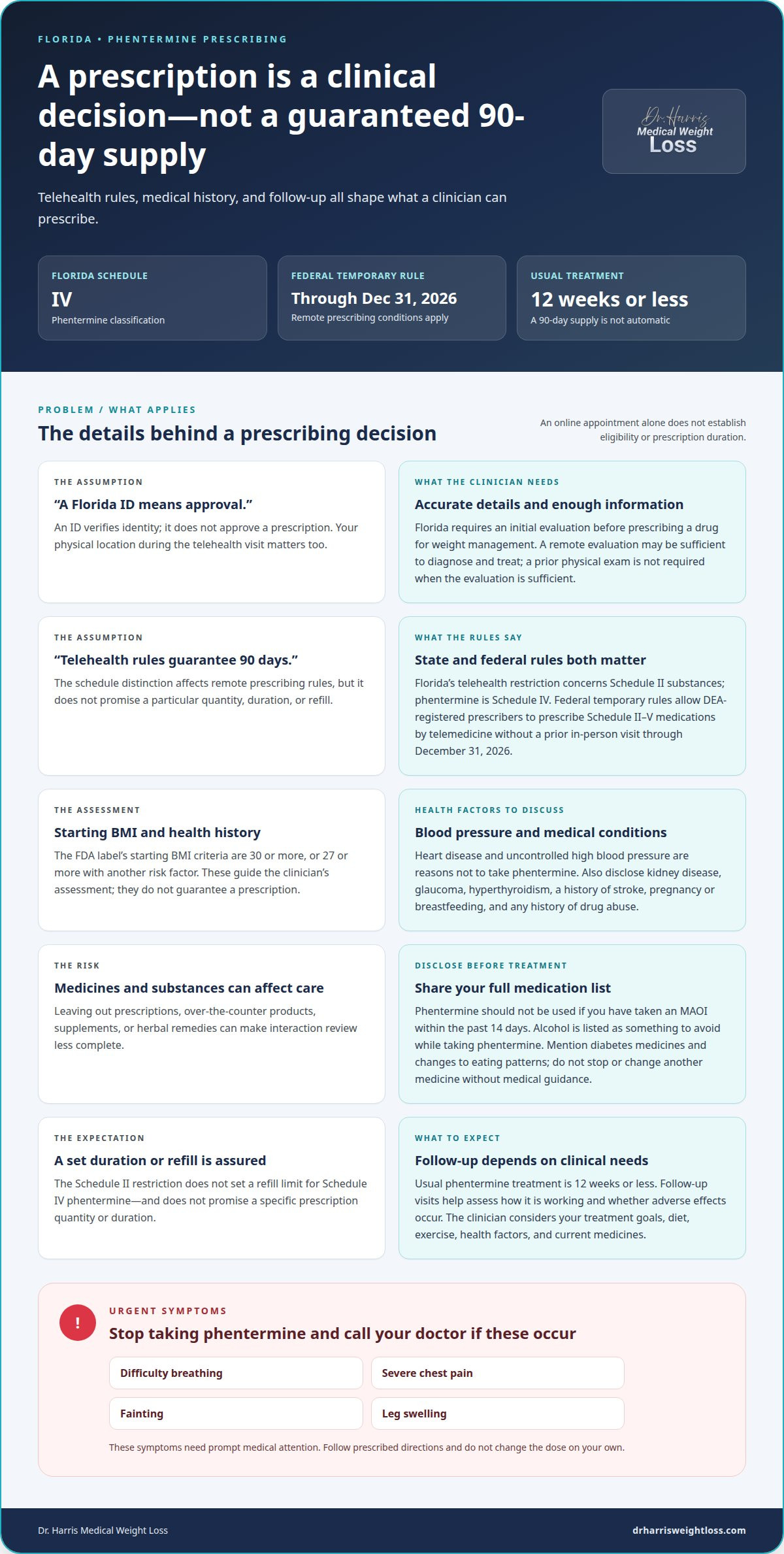
Florida and federal rules affect remote prescribing, but they don’t automatically establish a 90-day quantity. The key is how phentermine’s controlled-substance schedule applies to telehealth.
Prescription Duration
Prescription duration is the period a prescription covers. If you’re learning how to get a 90-day phentermine prescription in Florida, note that Florida’s telehealth restriction concerns Schedule II substances, while phentermine is Schedule IV. That distinction doesn’t guarantee a 90-day prescription.
Usual phentermine treatment is 12 weeks or less. Florida rule 64B8-9.012 requires an initial evaluation before a drug is prescribed for weight loss. According to the Florida Legislature, a telehealth provider may evaluate a patient remotely; if the evaluation is sufficient to diagnose and treat, a prior physical exam isn’t required.
Refill Rules
Refill rules govern whether and when a prescription may be renewed. The Schedule II restriction in Florida Statutes section 456.47 doesn’t establish a refill limit for Schedule IV phentermine. It also doesn’t promise a particular prescription quantity or duration.
Federal temporary rules allow DEA-registered prescribers to prescribe Schedule II through V medications by telemedicine without a prior in-person visit through December 31, 2026. Understanding how to get a 90-day phentermine prescription in Florida also means considering telehealth eligibility and clinical assessment, not simply completing an online form. Blood pressure, kidney disease, heart disease, side effects, and exercise may inform that assessment. You can request a phentermine evaluation to discuss these factors and follow-up, including any over-the-counter medicines you use.
Dr. Harris Medical Weight Loss: Phentermine Medication
Dr. Harris Medical Weight Loss offers Phentermine Medication as part of medically supervised weight management in the Fort Lauderdale area and Boca Raton. If you are considering phentermine after reviewing Florida’s prescribing rules, the next step is a clinical evaluation of your health history, current medications, and treatment needs. This assessment helps determine whether phentermine is appropriate and how it may fit with diet and exercise.
Phentermine is not the right option for everyone, and a 90-day prescription is not assured. The prescribing clinician considers relevant risks and follow-up needs before recommending a plan. For approved patients, prescriptions and treatment programs can begin immediately.
If you’d like to discuss phentermine care, contact Dr. Harris Medical Weight Loss.
Choose a Care Path That Fits Your Next Step
Understanding how to get a 90-day phentermine prescription in Florida can help you prepare for a focused conversation about your care. The next step is to discuss your health priorities, concerns, and preferences with a clinician, then consider a treatment plan grounded in your circumstances. A prescription is one part of care, not a substitute for ongoing clinical judgment.
Dr. Harris Medical Weight Loss offers Phentermine Medication, a Tirzepatide (Zepbound) Program, and a Semaglutide Medication Program. These are separate treatment options. A clinical discussion can help clarify which approach may suit your needs and what questions to consider before moving forward.
Connect with Dr. Harris Medical Weight Loss to discuss your next step. A thoughtful conversation can help you move forward with clarity and care.
Frequently Asked Questions
Do federal rules allow online phentermine prescriptions too?
Yes. A federal temporary exception allows DEA-registered prescribers to prescribe Schedule II through V medications by telemedicine without a prior in-person visit through December 31, 2026. This permits online prescribing but doesn’t require a clinician to prescribe phentermine or determine a 90-day supply. The clinician’s assessment and applicable Florida requirements still matter for patients in Broward and Palm Beach Counties.
What should you look for when choosing a legitimate online phentermine provider?
Look for a clinician-led evaluation, physician supervision, and medication safely dispensed by a licensed pharmacy. Dr. Harris Medical Weight Loss is LegitScript Certified, and care is directly led by Dr. Harris, not a sales team or an automated program. For people in Fort Lauderdale, Boca Raton, Broward County, and Palm Beach County, this means the prescribing process includes medical oversight rather than relying on an online questionnaire alone.
Is phentermine a controlled substance?
Yes. Phentermine is a federally controlled substance, and Florida classifies it as Schedule IV under section 893.03. Federal control reflects the potential for abuse or drug dependence. Phentermine is available only by prescription in the United States. Its controlled status is distinct from a clinician’s decision about treatment duration, prescription quantity, or whether ongoing care is appropriate.
What does Florida law say about prescribing phentermine by telehealth?
Florida Statutes section 456.47 restricts telehealth prescribing of Schedule II controlled substances, not all controlled substances. Because phentermine is Schedule IV in Florida, that specific Schedule II restriction doesn’t cover phentermine. Florida rule 64B8-9.012 requires an initial evaluation before prescribing a weight-loss drug. A remote evaluation may be sufficient when it supports diagnosis and treatment.
What other information should I know?
Phentermine should be used only for the duration and in the manner prescribed. At Dr. Harris Medical Weight Loss, the first-appointment package includes an EKG, a comprehensive metabolic blood panel, a medication overview and assessment, dietary requirements, and the first week of medication. Medications are safely dispensed by licensed pharmacies under physician supervision. Individual results vary and depend on genetics, lifestyle, adherence, and medical guidance.