
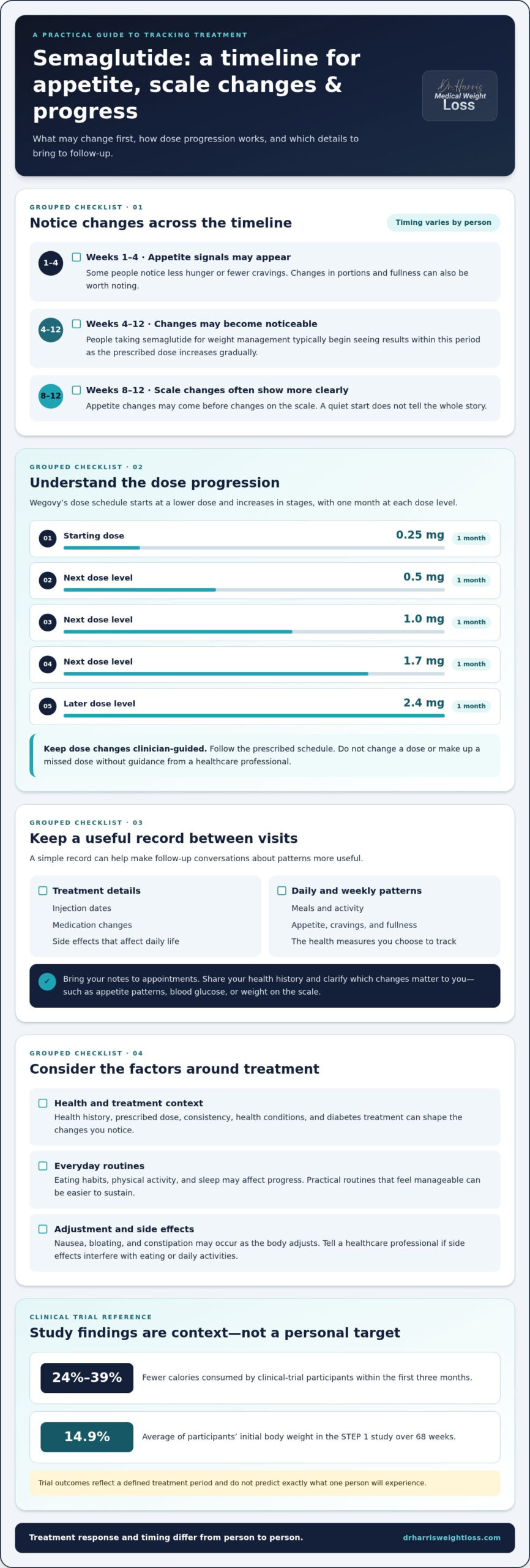
Appetite changes may begin within the first 1-4 weeks, while weight loss often takes 8-12 weeks to show on the scale. That’s the practical answer to how quickly you see results with semaglutide: changes in appetite can come before changes in body weight. The timeline also reflects gradual dose increases and how each person responds.
It’s understandable to look for early signs that treatment is working, especially when you’re making a meaningful change to your health routine. Semaglutide’s effects build over time, so a quiet start doesn’t tell the whole story.
This article explains when appetite and scale changes may appear, what clinical trials suggest about weight loss, and which factors can shape individual responses. You’ll also learn why dose progression and consistent treatment matter when assessing progress.
Key Takeaways
- Appetite changes may come before scale changes; weight loss often becomes more visible around weeks 8-12.
- Gradual dose increases allow the body to adjust, so early progress should be viewed in the context of the treatment timeline.
- Your response can depend on consistent use, eating habits, physical activity, and individual factors.
- Learn what clinical trial results can tell you about potential changes over time, and how a medically supervised program can support treatment.
How much weight can I lose with semaglutide?
Semaglutide affects appetite and fullness, but changes in weight develop over time. Some people notice less hunger or fewer cravings within the first 1 to 4 weeks. The medicine slows stomach emptying, which can help a meal feel satisfying for longer. In clinical trials, participants consumed 24% to 39% fewer calories within the first three months. That finding describes trial results, not a personal target.
For a longer-term reference, participants in the STEP 1 study lost an average of 14.9% of their initial body weight over 68 weeks. Wegovy is a brand of semaglutide used for weight management. Trial outcomes reflect a defined treatment period and don’t predict exactly what one person will experience. Semaglutide is also used for type 2 diabetes, where blood sugar changes and weight changes are separate measures to discuss with a healthcare professional.
Common side effects include nausea, bloating, and constipation. These may occur as the body adjusts to treatment; gradual dose changes are used to support that adjustment. Tell your healthcare professional about side effects that interfere with eating or daily activities, rather than changing your dose on your own.
As your appetite shifts, notice how portions, cravings, and fullness change across meals. You might feel satisfied sooner at lunch or find that evening snacking happens less often. Balanced eating and regular activity can help build sustainable habits alongside treatment. Sleep, health conditions, diabetes treatment, and individual response may also affect progress. Semaglutide does not simply switch metabolism on; its effects on appetite and fullness may make everyday routine changes more manageable.
How long does it take for semaglutide to work?
Semaglutide results typically begin within 4-12 weeks, while the prescribed dose increases gradually. This schedule shapes the treatment timeline and gives the body time to adjust.
Gradual Dose Increases
Dose titration means starting at a lower dose and increasing it in stages. Wegovy’s schedule begins at 0.25 mg, then progresses through 0.5 mg, 1.0 mg, 1.7 mg, and 2.4 mg, with one month at each dose level. This means the introductory phase comes before reaching later doses, and changes may unfold during that progression.
Wegovy is used for weight management, while Ozempic was originally approved for managing type 2 diabetes. Both contain semaglutide, but their prescribed treatment goals and dosing plans differ.
Titration and Treatment Adherence
Titration is the planned increase from an introductory dose toward a maintenance dose. Following the prescribed schedule gives your body time to adjust and helps healthcare professionals assess appetite, side effects, and response at each step. Don’t change your dose or make up a missed dose without guidance from your healthcare professional.
People taking semaglutide for weight management typically begin seeing results within 4-12 weeks. For people prescribed tirzepatide, results may be noticed in 3-4 weeks; its response is assessed within its own treatment plan.
For type 2 diabetes, blood glucose can begin decreasing within 1-2 weeks of starting semaglutide. HbA1c reflects average blood glucose over the previous three months, so changes in that test may take around 12 weeks to appear. Tracking glucose readings can help distinguish day-to-day measurements from longer-term changes.
Factors affecting treatment response
Response to semaglutide depends on more than the medication alone. Health history, prescribed dose, consistency, and everyday routines can all shape the changes you notice.
Individual Treatment Response
Individual response means the way a person’s health and treatment circumstances influence outcomes. It matters because one measure may not tell the full story. For example, someone managing type 2 diabetes may track blood glucose with body weight, while another person may focus on appetite patterns and meal routines.
To make follow-up useful, keep a record of injection dates, medication changes, and the outcomes you’re monitoring. Bring it to appointments so the clinician can consider your treatment pattern and health history. Asking how quickly you may see results with semaglutide is more useful when you explain what “results” means for you, such as changes in appetite, blood glucose, or weight. A discussion of semaglutide treatment support can help connect your questions with your treatment goals.
Lifestyle Changes and Results
Lifestyle changes are eating and activity routines that support treatment. Healthy eating and exercise can support progress, while routines that are difficult to maintain may be harder to sustain. Choose practical changes, such as planning meals or setting a regular time for movement, and note what feels manageable.
Keep a simple weekly record of meals, activity, and the health measures you choose to track. This can help you and your healthcare professional discuss patterns instead of relying on memory. If you’re wondering how quickly you may see results with semaglutide, bring your observations and questions to a follow-up discussion.
Dr. Harris Medical Weight Loss: Tirzepatide (Zepbound) Program
Dr. Harris Medical Weight Loss offers a medically supervised Semaglutide Medication Program, as well as a Tirzepatide (Zepbound) Program and Phentermine medication. For people in Fort Lauderdale, Boca Raton, Broward County, and Palm Beach County, these programs provide options to discuss medication as part of weight management.
These programs offer a medically supervised way to discuss medication options. Your health history, treatment goals, current medications, and response to care all matter when considering a plan. Share questions about expected progress or side effects so they can be included in the discussion.
For a conversation about whether a medication program fits your needs, contact Dr. Harris Medical Weight Loss.
Choose a next step that fits your goals
Understanding how quickly you see results with semaglutide can help frame expectations, but a useful next step is deciding what progress means for your health. Consider which measures matter most, such as appetite patterns, daily energy, or health goals, and bring those priorities into a conversation about care. A plan is easier to evaluate when you know what you’re tracking and why. Individual results vary based on genetics, lifestyle, and adherence, so focus on decisions grounded in your needs, not someone else’s timeline.
Before taking the next step, write down questions about treatment, follow-up, and how progress will be reviewed. A thoughtful discussion can help turn general information into choices that reflect your health history and priorities. If you’re ready to explore care, connect with Dr. Harris Medical Weight Loss. Keep your focus on informed decisions and steady support as you move forward.
Frequently Asked Questions
How long does it take to see results from semaglutide?
Weight changes often become noticeable within 4-12 weeks, though appetite or eating patterns may shift earlier. If you’re tracking progress, weigh under similar conditions each time and note changes in clothing fit or meal portions. These extra observations can help you recognize changes that a day-to-day scale reading may not show.
Do I need to take semaglutide for the rest of my life?
Not everyone follows the same treatment duration; decisions about continuing depend on health goals, response, and medical guidance. A systematic review found that people could maintain weight loss while taking a GLP-1 medication for two years or more. Weight regain is common after stopping, so discuss a long-term plan before changing or ending treatment.
How soon does semaglutide begin working?
Semaglutide can begin having effects during the first week, but reaching peak concentration isn’t the same as noticing a change. Appetite or blood-glucose changes, for example, may be noticed before weight changes. Keep taking it as prescribed and track the outcome that matters to your treatment goal.
How long does it take semaglutide to suppress appetite?
Appetite suppression may begin within the first 1-4 weeks, and some people notice a change within 1-3 days. The timing and degree of reduced hunger differ between individuals. Notice practical signs, such as feeling satisfied sooner or having fewer cravings, and tell your healthcare professional if appetite changes make it difficult to eat adequately.
Is semaglutide safe?
Semaglutide isn’t appropriate for everyone, and safety depends on individual health factors and how the medication is used. Nausea, bloating, and constipation can occur as the body adjusts. Review your medical history and other medications with a healthcare professional before treatment, and report symptoms that persist or interfere with daily activities.