If you’re dealing with fatigue from weight loss medication, it’s understandable to wonder whether the medicine is responsible. Low appetite, nausea, or other stomach symptoms can make it harder to eat and drink, and these changes may affect your energy. Medication may be one factor, but hydration, nutrition, sleep, blood sugar, and other health concerns can also contribute.
You don’t have to guess or change your dose on your own. This guide covers possible contributors and practical ways to track symptoms, support food and fluid intake as tolerated, and decide when to discuss persistent or disruptive fatigue with a clinician. We’ll also explain how physician-led care at Dr. Harris Medical Weight Loss in South Florida can support a conversation about your treatment plan.
Key Takeaways
- Dealing with fatigue from weight loss medication starts with considering several possible contributors, including reduced food or fluid intake and stomach symptoms.
- Notice when fatigue occurs, support regular nourishment and fluids as you’re able, and track how you feel.
- Adjust rest and gentle activity to your symptoms and usual abilities rather than pushing through fatigue.
- Contact your prescribing clinician if fatigue persists, worsens, or disrupts daily activities. Seek urgent care for severe or sudden symptoms such as fainting, confusion, chest pain, or difficulty breathing.
Why Can Weight Loss Medication Leave You Feeling Fatigued?
Feeling drained can make ordinary tasks, from concentrating at work to preparing a meal, harder to manage. Fatigue doesn’t point to one cause on its own. Appetite changes may mean you eat less than your body needs for everyday energy, while nausea, vomiting, or diarrhea can make eating and drinking more difficult. These factors can overlap, so how tired you feel may not reveal the cause.
Fatigue during treatment can have medication-related or other health-related causes.
Medication effects and other possible contributors to fatigue
Some medications may be associated with fatigue. It can also occur alongside treatment when food and fluid intake change. If gastrointestinal symptoms make it difficult to keep fluids down, fluid loss may contribute to dehydration and low energy. A broad overview of weight loss drugs and their side effects describes how effects can vary across medications.
Other factors may include an existing health condition, a change in blood sugar, disrupted sleep, or another medicine. This doesn’t mean any one factor is responsible for your symptoms. To understand what may be contributing, consider when the fatigue began, how your eating and drinking have changed, whether you have other symptoms, and how your overall health has been.
If you’re dealing with fatigue from weight loss medication, note when it began and whether it followed a dose change, appetite shift, or stomach symptoms. This timeline can help your prescribing clinician assess possible contributors without assuming the medication is the only cause. Don’t change your treatment plan on your own.
What Can You Do About Fatigue While Taking Weight Loss Medication?
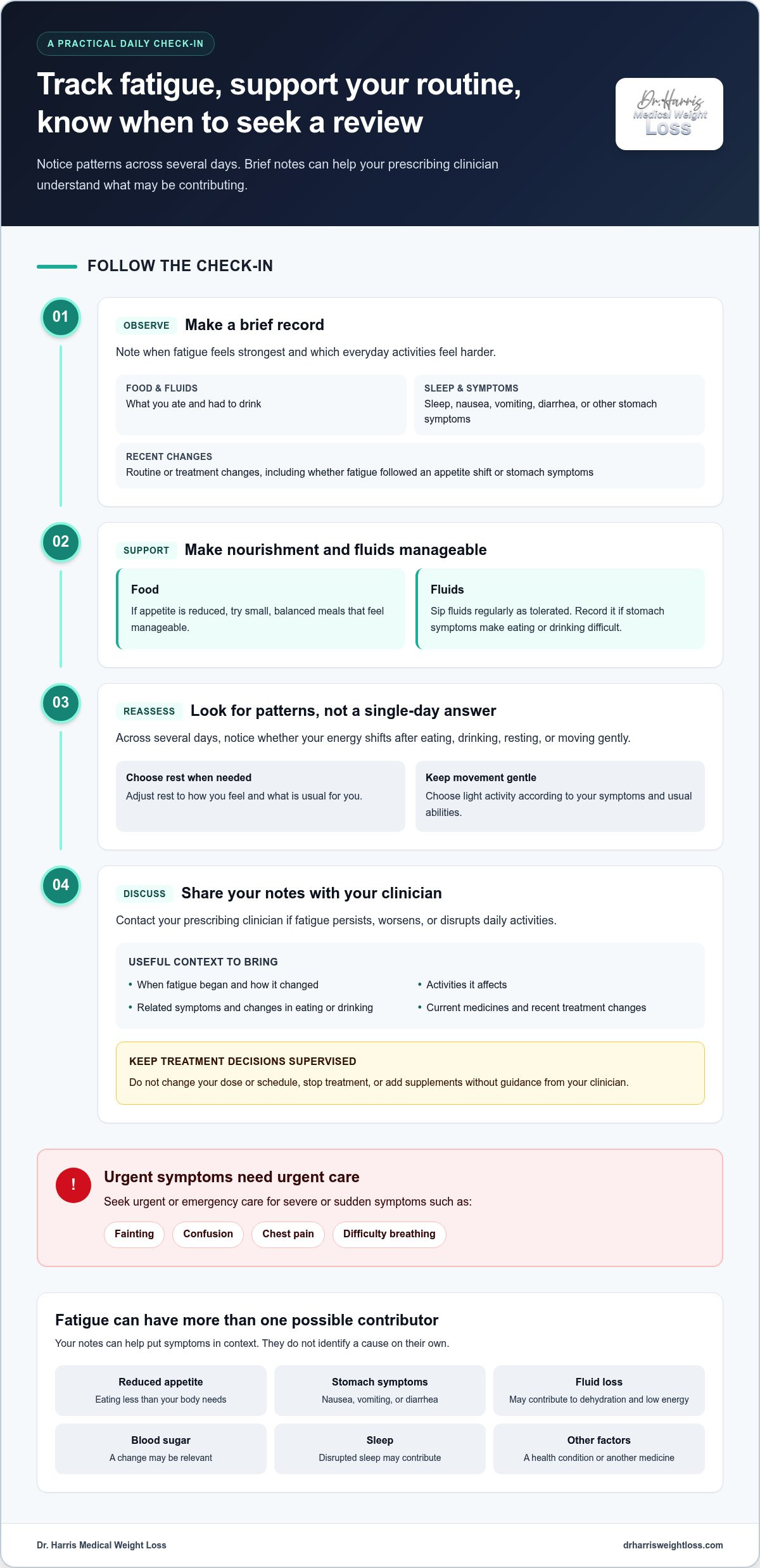
A simple routine can help you spot patterns and support your energy without guessing at the cause. Observe what’s happening, make food and fluids manageable, and then reassess. Brief notes can also give your prescribing clinician useful context if you discuss your symptoms.
A simple daily check-in for energy, food, fluids, and symptoms
Record when fatigue feels strongest, what you’ve eaten and had to drink, how you slept, and whether you’ve had nausea, vomiting, diarrhea, or other stomach symptoms. Include any recent changes in your routine or treatment. Look for patterns across several days rather than judging by one day alone. The common side effects of weight-loss medications can vary, so these details can help put your experience in context.
- Observe. Keep your notes brief. Include when fatigue occurs, any recent changes, and which everyday activities feel harder.
- Support nourishment and fluids. If your appetite is reduced, try small, balanced meals that feel manageable, and sip fluids regularly as tolerated. If stomach symptoms make it hard to eat or drink, record that as well.
- Reassess. Notice whether your energy shifts after eating, drinking, resting, or moving gently. Choose rest or light activity according to how you feel and what’s usual for you.
Don’t change your dose or schedule, or add supplements, without guidance from your clinician. Persistent fatigue deserves a review, not unsupervised medication changes. Dr. Harris Medical Weight Loss provides physician-supervised medication care, including Tirzepatide (Zepbound) and Semaglutide programs. If symptoms continue to affect daily life, discuss what you’re experiencing with the clinician overseeing your care.
When Should Fatigue Lead to a Medication Review?
Contact your prescribing clinician if fatigue persists, gets worse, or interferes with routine activities such as working, preparing meals, or caring for yourself. A review can help assess whether medication, reduced intake, another medicine, or a separate health concern may be contributing. Don’t stop or adjust treatment on your own while waiting for guidance.
Some symptoms need urgent attention rather than a routine medication review. Seek urgent or emergency care for severe or sudden symptoms such as fainting, confusion, chest pain, or difficulty breathing.
What to share with a clinician in South Florida
Bring brief notes about when the fatigue began, how it has changed, and which activities it affects. Include related symptoms, changes in eating or drinking, and relevant medication information, such as your current medicines and any recent treatment changes. These details can help the clinician assess possible causes and discuss your treatment plan with you.
If you receive care through a physician-led Tirzepatide program or Semaglutide program in Fort Lauderdale, share your notes with the clinician overseeing your care. Each treatment plan should be reviewed in its own context, without assuming fatigue has a single explanation.
Dealing with fatigue from weight loss medication can feel unsettling, but you don’t have to sort through persistent symptoms alone. Dr. Harris Medical Weight Loss provides physician-supervised medication programs for people in Fort Lauderdale, Boca Raton, Broward County, and Palm Beach County.
Take Your Next Step With Support
Dealing with fatigue from weight loss medication can feel discouraging, but you don’t have to decide alone what it means for your treatment. Use your notes as a starting point for a conversation with a clinician, especially if tiredness continues to affect your routine. A review can help you consider your options with your health and everyday needs in view.
Dr. Harris Medical Weight Loss provides physician-supervised medication programs and is a LegitScript-certified dispensing office, serving Fort Lauderdale, Boca Raton, Broward County, and Palm Beach County. Explore physician-led medical weight management with Dr. Harris.
When fatigue continues or disrupts daily life, take the next step by discussing your symptoms and treatment plan with Dr. Harris Medical Weight Loss.
Frequently Asked Questions
How long can fatigue from weight loss medication last?
There isn’t one timeline that applies to everyone. Fatigue may be connected to treatment, changes in eating or drinking, stomach symptoms, or another health factor. Notice whether your energy is returning or staying low, and whether particular times of day feel harder. If fatigue persists, worsens, or limits daily activities, discuss it with your prescribing clinician.
Can I drive if I feel unusually tired while taking weight loss medication?
Don’t drive or operate equipment if fatigue makes you less alert or affects your reactions. Even a familiar trip can become unsafe if you’re struggling to focus, so arrange another way to travel if needed. If unusual tiredness continues, contact your clinician to discuss your symptoms and medication plan rather than trying to push through.
Could another medication contribute to fatigue during treatment?
Yes, another medicine or a health condition could contribute, but tiredness alone can’t identify the cause. Share a complete, current list of prescription medicines and nonprescription products with your clinician, including anything you take only occasionally. If you receive care in Fort Lauderdale, Boca Raton, Broward County, or Palm Beach County, this review can be part of a conversation with your care team. Don’t stop or change prescribed medicines on your own.
Can caffeine or energy drinks fix fatigue from weight loss medication?
Caffeine may make you feel more alert for a while, but it doesn’t reveal or treat the reason for fatigue. It can also affect sleep and may not suit everyone’s health needs. If you’re dealing with fatigue from weight loss medication, discuss persistent symptoms and any plan to use caffeine or energy drinks with your clinician instead of relying on stimulants to get through the day.