
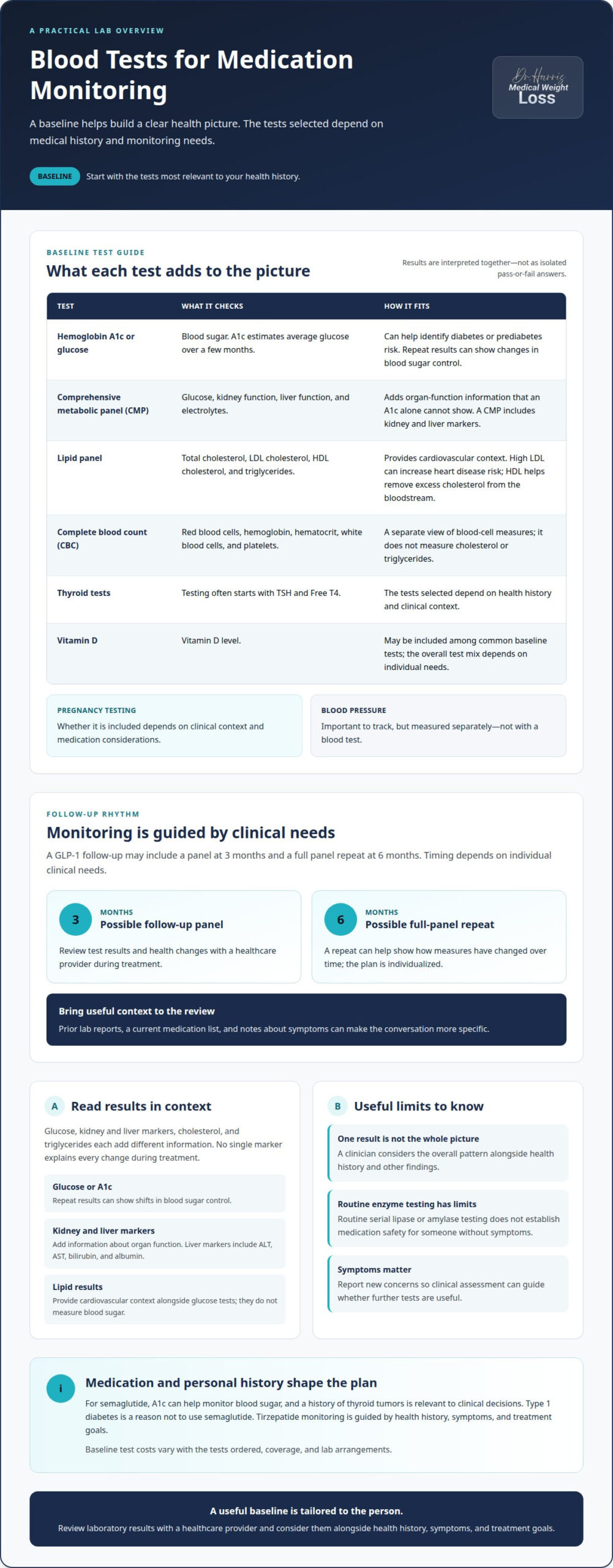
The most useful blood-test list isn’t necessarily the longest; it’s the one that creates a clear baseline. To understand what blood tests are needed for weight loss medication, common starting tests include hemoglobin A1c or a glucose test, a comprehensive metabolic panel (CMP), a lipid panel, a complete blood count (CBC), thyroid tests, and vitamin D. The mix depends on your health history and monitoring needs.
It’s understandable to want more than a list of abbreviations: you want to know what your results could mean for your health and treatment. This guide explains how blood sugar, kidney and liver markers, thyroid results, cholesterol, and triglycerides help build that picture, and why results are interpreted together rather than in isolation. You’ll also learn how baseline tests can support GLP-1 monitoring and what to discuss with your clinician.
Key Takeaways
- Baseline tests can include A1c or glucose, a metabolic panel, blood count, thyroid tests, vitamin D, and a lipid panel. The right selection depends on your health history and treatment goals.
- Cholesterol and triglyceride results offer clues about cardiovascular health, while LDL and HDL provide different parts of the picture.
- Comparing results over time can help track metabolic health during GLP-1 treatment; each test is most useful when interpreted in context.
- Learn how the Tirzepatide (Zepbound) Program at Dr. Harris Medical Weight Loss may fit into a medically supervised treatment plan.
What blood tests are used for metabolic health, weight loss, and GLP-1 monitoring?
People asking what blood tests are needed for weight loss medication usually want a useful baseline, not a pass-or-fail panel. The tests selected depend on health history and monitoring needs.
Baseline Tests and Health Checks
Common baseline tests include hemoglobin A1c or glucose, a comprehensive metabolic panel (CMP), lipid panel, complete blood count (CBC), thyroid tests, and vitamin D. A CMP assesses kidney and liver function; thyroid testing often starts with TSH and Free T4. Pregnancy testing depends on clinical context and medication considerations.
Provider-Guided Monitoring
Monitoring means reviewing test results and health changes with a healthcare provider during treatment. Bring prior lab reports, your medication list, and notes about symptoms to make the conversation specific. GLP-1 follow-up may include a panel at 3 months and a full panel repeat at 6 months; clinical needs help guide timing.
Tracking Treatment Changes and Adverse Effects
Repeat glucose or A1c tests can show changes in blood sugar control; kidney and liver markers add information about organ function. Routine serial lipase or amylase testing doesn’t establish medication safety for someone without symptoms. Report new concerns so clinical assessment can guide whether further tests are useful.
Monitoring Across Medication Types
The answer to what blood tests are needed for weight loss medication depends on the medication and personal health factors. For semaglutide, A1c can help monitor blood sugar, and thyroid tumor history is relevant to clinical decisions. Tirzepatide monitoring is guided by health history, symptoms, and treatment goals. Baseline test costs vary with tests ordered, coverage, and lab arrangements. A CMP checks kidney and liver function; thyroid testing and pregnancy testing depend on clinical context. Type 1 diabetes is a reason not to use semaglutide.
Cholesterol and triglyceride testing
A lipid panel measures total cholesterol, LDL cholesterol, HDL cholesterol, and triglycerides. These results add cardiovascular context to glucose tests, but don’t measure blood sugar themselves. Blood pressure is also important to track, although it is measured separately, not with a blood test.
LDL and HDL show different parts of the picture: high LDL can increase heart disease risk, while HDL helps remove excess cholesterol from the bloodstream. A lipid panel also measures triglycerides, another type of blood fat. A clinician considers the overall pattern alongside health history and other findings, rather than treating one result as the whole picture.
Changes in these measures can add context during treatment. Labcorp reports reductions in several cholesterol measures among patients who lost 5-10% of their body weight. That finding doesn’t predict an individual’s results; a repeat lipid panel shows how a person’s own numbers change. A complete blood count (CBC) serves a different purpose, measuring red blood cells, hemoglobin, hematocrit, white blood cells, and platelets, not cholesterol or triglycerides.
After stopping semaglutide, providers should monitor blood pressure, blood sugar, and cholesterol. Changes in these cardiometabolic measures after withdrawal can help guide decisions about treatment. Share new symptoms and medication changes during follow-up, since they help put test results in context. A clinician can review how lipid results fit into a broader medical weight management plan.
GLP-1 medication and metabolic health
GLP-1 medicines are used primarily for type 2 diabetes, and some are approved for weight management. That makes metabolic markers useful context, not a complete measure of how treatment is working. Hemoglobin A1c estimates average glucose over a few months and can help identify diabetes or prediabetes risk.
If A1c is elevated, a metabolic plan often prioritizes glucose control. A clinician can interpret that result alongside fasting glucose, medical history, and treatment goals. A comprehensive metabolic panel adds information about glucose, kidney function, liver function, and electrolytes. These results help describe aspects of health that an A1c alone cannot show.
Cholesterol and triglycerides provide cardiovascular information, while liver markers such as ALT, AST, bilirubin, and albumin reflect other aspects of health. No single marker explains every change during treatment. Comparing results over time can show whether glucose or other measures are shifting and which concerns to discuss.
Body composition matters, too. Changes in body composition may be relevant during GLP-1 treatment, so discuss nutrition, strength, and daily function alongside laboratory results. Blood tests don’t measure muscle directly, so discuss nutrition, strength, and daily function alongside laboratory results. Protein intake is one topic to raise when reviewing a plan, especially if appetite or food intake changes.
Semaglutide treatment for type 2 diabetes makes A1c a relevant measure to discuss during follow-up. To explore whether a Semaglutide Medication Program fits your goals, review your health markers and treatment questions with the clinical team.
Dr. Harris Medical Weight Loss: Tirzepatide (Zepbound) Program
Dr. Harris Medical Weight Loss offers a physician-led Tirzepatide (Zepbound) Program as part of medically supervised weight management in Fort Lauderdale and Boca Raton, serving Broward and Palm Beach Counties. Blood test results can help frame a conversation about your health markers, treatment goals, and monitoring needs.
Bring recent results and a list of your current medications to discuss how glucose, kidney and liver function, and cholesterol relate to your health. Dr. Harris reviews these alongside your medical history, rather than treating one result as a complete measure of suitability. This context can help you prepare questions before starting a program and understand what follow-up may involve.
For guidance on the Tirzepatide (Zepbound) Program and how it may fit your care, contact Dr. Harris Medical Weight Loss.
Make Your Next Conversation Count
Knowing what blood tests are needed for weight loss medication can help you arrive with focused questions. The next step is to consider each result alongside your health history, current medications, and priorities, rather than viewing a lab value on its own.
Before your appointment, gather recent test results and a medication list. Note any changes in symptoms, energy, or daily function since testing. Ask which results matter most to your treatment plan, what changes would prompt follow-up, and how you’ll review progress together. A clear record makes it easier to spot patterns and discuss concerns.
If you’re ready to talk through your options and next steps, contact Dr. Harris Medical Weight Loss. A thoughtful conversation can help you move forward with clarity and care.
Frequently Asked Questions
What will my results tell me?
Results offer clues about glucose regulation, blood fats, and organ function, but they don’t provide a complete picture on their own. For example, an A1c and a fasting glucose result may tell different parts of the blood sugar story. Your clinician can interpret differences alongside symptoms, diagnoses, medications, and previous results to decide what deserves follow-up.
What Blood Tests Should You Get Before Starting Semaglutide?
Common baseline testing may include A1c or glucose, a comprehensive metabolic panel, lipid panel, CBC, thyroid tests, and vitamin D. Existing results can help your clinician decide whether repeat testing adds useful information. Bring recent lab reports and a current medication list to your appointment, especially if you have diabetes or a history of kidney, liver, or thyroid concerns.
What baseline blood tests are recommended before starting weight loss medication?
A starting panel may cover blood sugar, kidney and liver markers, cholesterol and triglycerides, and blood counts. Thyroid tests or vitamin D may also be considered based on your health profile. The goal is to understand relevant health factors before treatment, not to order every possible test. Symptoms, diagnoses, medications, and prior results help shape the selection.
Are blood tests required before GLP-1 medications like Wegovy or Zepbound?
There isn’t one universal blood-test panel for everyone considering a GLP-1 medication. Clinical evaluation may use baseline tests to understand metabolic health and guide monitoring, with additional testing chosen for individual history or concerns. If you’re discussing Wegovy or Zepbound with a healthcare provider in Fort Lauderdale or Boca Raton, bring prior lab reports for review.
Should A1C or fasting glucose be checked before weight loss medication?
Either test can help assess blood sugar before treatment. A1c reflects average glucose over a few months, while fasting glucose measures blood sugar at the time of the test. If those results don’t explain concerns, fasting insulin may be considered. Your clinician can interpret the pattern with your health history and diabetes risk.