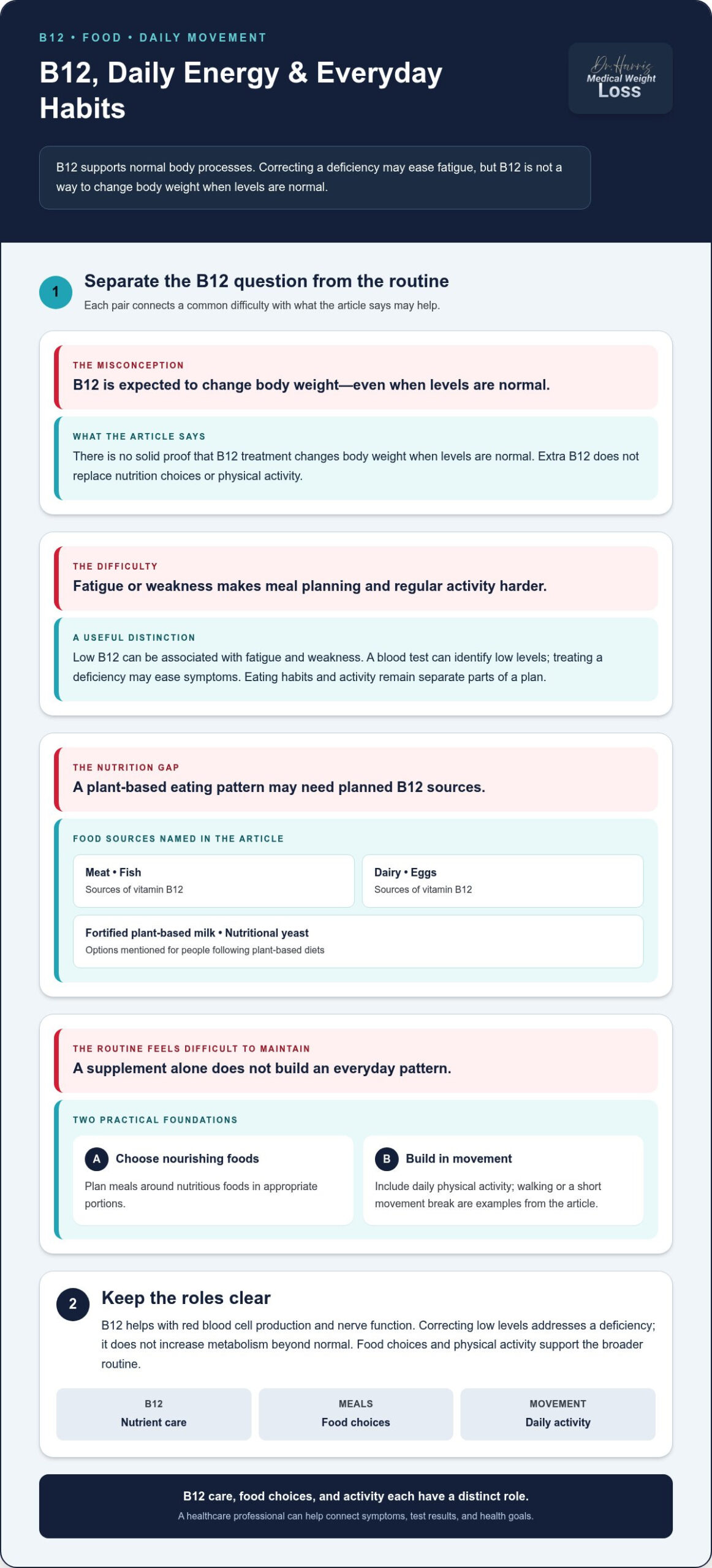
B12 doesn’t cause weight loss in people whose levels are normal, and there’s no solid proof that B12 treatment leads to weight loss. If a deficiency is causing fatigue, treating it may help restore energy and make regular activity feel more manageable.
It’s understandable to look for support when dieting feels harder than expected. This article explains what B12 can and can’t do for weight loss and metabolism, when low levels may matter, and how balanced eating and physical activity contribute to progress.
Key Takeaways
- Correcting a B12 deficiency may ease fatigue, which can make regular activity more manageable.
- When B12 levels are normal, extra B12 isn’t a proven way to change body weight or metabolism.
- Learn how eating patterns and physical activity contribute to a weight-management plan.
- Explore how medically supervised medication options may fit into a broader plan for weight management.
Does vitamin B12 help with weight loss?
Vitamin B12 doesn’t cause weight loss when a person’s levels are normal. Correcting a deficiency may ease fatigue or weakness, which can make everyday activity and meal planning easier. Any benefit while dieting comes from addressing the deficiency, not from directly changing body weight.
Correcting Deficiency While Dieting
Vitamin B12 helps the body form red blood cells and maintain nerve function. A deficiency can cause megaloblastic anemia, fatigue, weakness, numbness, or memory trouble. These symptoms may disrupt routines, such as preparing meals or taking regular walks. Treating a deficiency can address those symptoms, but it doesn’t replace eating habits or activity as part of a plan to manage weight.
Pernicious anemia can prevent the body from absorbing enough vitamin B12. The National Institutes of Health Office of Dietary Supplements notes that very high oral doses may be effective for some people with pernicious anemia. A blood test can help identify low B12 levels and inform care.
Oral B12 Supplements and Deficiency
Oral supplements deliver vitamin B12 through the digestive system. Whether they’re suitable depends on the cause of low levels and how well the body absorbs the vitamin. People following strict vegan diets, taking metformin, or living with gastrointestinal conditions may want to discuss deficiency risk with a healthcare professional.
There’s no single supplement dose or schedule for everyone. Symptoms, test results, and the reason levels are low all matter. B12 supplements aren’t a proven way to cause weight loss when levels are normal. For people without a deficiency, getting extra B12 doesn’t replace nutrition choices, physical activity, or a broader plan for managing body weight.
B12 levels, weight, and metabolism
Vitamin B12 doesn’t cause weight loss when levels are normal. Correcting low levels supports normal body processes, but doesn’t directly change body weight. That distinction helps separate nutritional care from other approaches to managing weight.
B12 and Weight
Vitamin B12 supports red blood cell production and the conversion of food into usable energy. Restoring low levels addresses a nutrient deficiency; it doesn’t increase metabolism beyond normal. A B12 level alone also doesn’t determine whether someone should consider medication to manage weight. A doctor considers health history, eating patterns, and activity together.
For example, a person may need to address nutrition while also discussing other health factors that affect their goals. Each part of a care plan serves a different purpose, so one nutrient shouldn’t stand in for broader medical guidance.
B12 and Metabolism
GLP-1 receptor agonist medications act on appetite and how the body regulates blood sugar. Their role differs from vitamin B12’s role in normal cell function. Medication decisions should account for a person’s health and goals, rather than an assumption that extra B12 increases calorie use.
Food choices and physical activity remain important parts of managing weight. Fortified foods can provide B12 for people following plant-based diets. For guidance on medication and everyday habits, explore medical care for weight management.
Diet and physical activity alongside injections
Eating patterns and movement provide a practical foundation for managing weight. Mayo Clinic recommends choosing nutritious foods in appropriate portions and getting daily physical activity. Plan meals around nourishing foods and make a walk part of your routine. The goal is a sustainable pattern, not a temporary change centered on a supplement.
Food choices also affect vitamin B12 intake. Meat, fish, dairy, and eggs are sources of the vitamin. People following plant-based diets can use fortified plant-based milk and nutritional yeast to help meet their needs. Including these foods in meals can support adequate nutrient intake while making food choices more intentional.
Fatigue can make daily activity harder. If tiredness continues, consider whether food intake, sleep, health conditions, or a vitamin B12 deficiency may be contributing. A blood test can identify low B12 levels. Addressing an underlying deficiency may help with symptoms, while regular activity and eating habits remain distinct parts of a plan to manage weight.
Choose activities that suit your current routine, such as walking for transport or taking a short movement break during the day. Pair that with meals that include suitable B12 sources or fortified foods. A healthcare professional can help connect nutrition concerns with broader health goals. For support with a medical plan and daily habits, explore medical weight-management care.
A diet and exercise plan can support weight management, but B12 injections should not be treated as a weight-loss method. Aiming for weight loss of 1 to 2 pounds each week offers a gradual target. Sustainable fat loss involves a consistent caloric deficit, movement, sleep, stress management, and, when appropriate, medical support.
Hydration can complement these habits. Aim to drink at least eight glasses of water daily.
Dr. Harris Medical Weight Loss: Tirzepatide (Zepbound) Program
Dr. Harris Medical Weight Loss offers a medically supervised Tirzepatide (Zepbound) Program for people considering medication as part of weight management. It may be worth discussing when nutrition and activity changes are being considered alongside medical treatment. A clinician can assess whether a medication program fits your health needs and goals.
The clinic also offers Semaglutide and Phentermine as medication options. Each is considered as part of a broader discussion about your health and approach to weight management. Medication does not replace nutritious food choices or physical activity.
If you’re considering medication as part of your plan, contact Dr. Harris Medical Weight Loss to learn more.
Choose a Next Step That Fits Your Health
A useful next step is to discuss what makes your current routine difficult to maintain. Note patterns such as changes in energy, challenges with meal planning, or difficulty staying active. Sharing these details can make a conversation about care more relevant to your daily life and health goals.
Medical treatment is one part of a broader plan, not a substitute for habits you can sustain. A clinician can discuss whether a medication program fits your circumstances and how it may work alongside your nutrition and activity choices. If you’re ready to explore that possibility, contact Dr. Harris Medical Weight Loss to discuss your next step. Keep your focus on steady, informed decisions that support your well-being over time.
Frequently Asked Questions
What are vitamin B12 shots?
Vitamin B12 shots deliver the vitamin into a muscle or deeply under the skin. A healthcare professional may use them to treat or prevent deficiency, including when a person cannot absorb enough B12 from food. They’re a treatment for a nutrient deficiency, not a method that directly reduces body weight.
Are B12 shots safe?
B12 shots can cause redness or swelling where the dose is given. Rare reactions can include itching, rash, or a severe allergic response with breathing difficulty. Serious problems have also been reported. Share your medicines and health history with a healthcare professional before treatment, and seek urgent medical help for severe breathing problems after a shot.
Can B12 shots help with weight management?
B12 shots don’t directly support weight management when vitamin B12 levels are normal. If a deficiency contributes to fatigue, treating it may make daily movement easier, but the shot doesn’t replace eating habits or physical activity. For example, a person whose fatigue improves may find it easier to return to regular walks, while still following a broader plan.
How quickly does a B12 shot work?
How quickly energy may change depends on the reason for treatment and the symptoms being addressed. Some people notice a difference within a day or two, while others may take several days. A change in energy does not mean body weight will change. Tracking symptoms and discussing them with a healthcare professional can help assess your response.
What are B12 injections?
B12 injections are another name for vitamin B12 shots. They deliver the vitamin without relying on absorption through the digestive system, which can matter for people with certain absorption problems. A healthcare professional determines whether this route suits the deficiency and the person’s circumstances; it isn’t a substitute for assessing the cause of low levels.