Phentermine is a prescription medication for short-term weight management, and eligibility depends on more than interest in taking it. For doctor-prescribed phentermine in Florida, clinicians generally consider adults with a BMI of 30 or higher, or a BMI of 27 or higher alongside a weight-related health condition, then assess medical history and potential risks.
It’s reasonable to want a clear picture of how doctor-prescribed phentermine in Florida works and whether it may fit your health needs. This article explains what phentermine is, how a clinician evaluates suitability, and which side effects may occur. It also describes how to discuss a prescription with Dr. Harris Medical Weight Loss in Fort Lauderdale, Boca Raton, Broward County, and Palm Beach County.
Key Takeaways
- Learn which health factors, including blood pressure, medical history, and current medications, can shape a clinician’s suitability assessment.
- Know which possible side effects to discuss and why they matter when considering treatment.
- Understand what a prescription evaluation in Orlando may involve and how medical oversight supports safer decisions.
- Explore how Dr. Harris Medical Weight Loss’s Phentermine Medication offering may fit into a clinician-guided care plan.
How do weight loss clinics determine if phentermine is right for you?
A clinic considers BMI, health history, current medicines, and treatment goals before prescribing phentermine. The consultation helps a physician weigh potential benefits against risks and discuss other medication options.
Side Effects and Medication Interactions
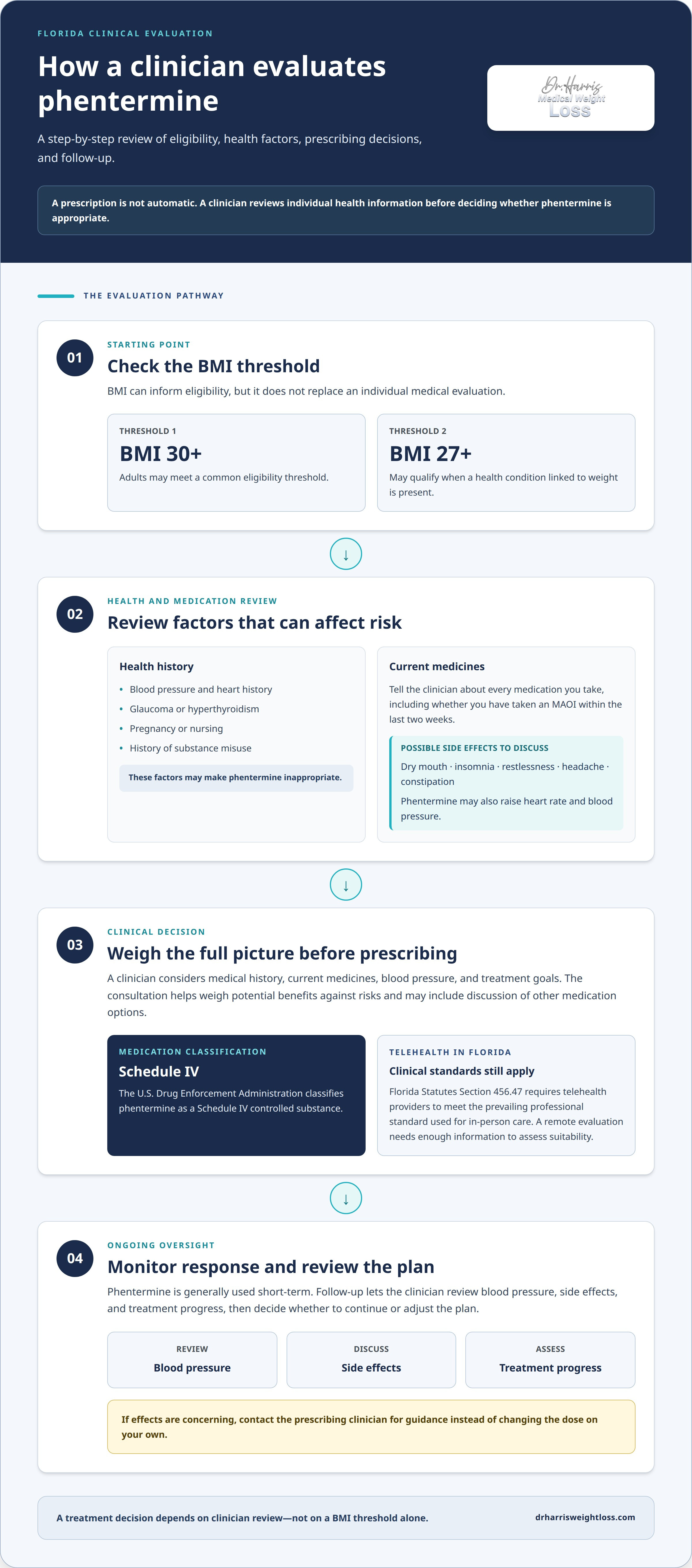
Adults with a BMI of 30 or higher may meet a common eligibility threshold. A BMI of 27 or higher may also qualify when a weight-related condition is present. These thresholds guide assessment; they don’t replace a medical evaluation.
Phentermine can cause dry mouth, insomnia, restlessness, headache, or constipation. It may also raise heart rate and blood pressure. Tell the physician about every medication you take, especially if you have taken an MAOI within the last two weeks. The U.S. Drug Enforcement Administration classifies phentermine as a Schedule IV controlled substance.
Monitoring and Personalized Treatment
Follow-up care allows a clinician to review blood pressure, side effects, and treatment progress. The physician may consider your health history and how the medication affects daily life when deciding whether to continue or adjust the plan. An evaluation, including one conducted through telehealth when appropriate, requires a meaningful review of relevant health information.
Phentermine is generally used short-term. Semaglutide is another prescription option available through a separate medication program. Effects and suitability vary by individual, so there is no single outcome that applies to everyone. A clinician should determine whether medications can be combined rather than assuming phentermine and semaglutide should be taken together.
A consultation evaluates whether a prescription is appropriate; medication is not prescribed automatically. Ask what the visit includes, how follow-up monitoring works, and how medication costs are determined. These questions help you understand the care plan before treatment begins.
What side effects can occur?
Phentermine may cause dry mouth, insomnia, restlessness, headache, or constipation. It can also raise heart rate and blood pressure. These effects matter when assessing whether the medication fits your health history and weight-management goals. The clinician will review your other medications, including whether you have taken an MAOI within the last two weeks.
Who can prescribe phentermine in Florida? A clinician authorized to prescribe medication in Florida may prescribe it after evaluating the patient. Phentermine is a Schedule IV controlled substance, according to the U.S. Drug Enforcement Administration. A BMI of 30 or higher, or 27 or higher with a weight-related condition, can inform eligibility, but does not replace an individual assessment.
Some health conditions may increase the risks of phentermine. Heart disease, uncontrolled high blood pressure, glaucoma, hyperthyroidism, pregnancy, nursing, or a history of substance misuse may make it inappropriate. Share these details during your evaluation, along with the medications and supplements you take. Because phentermine can affect cardiovascular measures, blood pressure and medical history help guide the decision.
For telehealth, Florida Statutes Section 456.47 requires providers to meet the prevailing professional standard used for in-person care. A remote evaluation still needs enough information for a clinician to assess suitability. Identity verification may be part of the process; keep identification available for the clinic’s intake procedure. Telehealth does not make a prescription automatic.
Patients considering medical weight management may also discuss ongoing care and other options, including tirzepatide. A clinician assesses each treatment separately rather than assuming medications should be combined. If phentermine causes concerning effects, contact the prescribing clinician for guidance instead of changing the dose on your own.
Phentermine prescriptions in Orlando, Florida
A phentermine prescription requires medical evaluation and care that goes beyond discussing appetite. A clinician reviews your health history, blood pressure, medications, and treatment goals. For patients in Fort Lauderdale, Boca Raton, Broward County, and Palm Beach County, this information helps shape a supervised plan and its follow-up.
A Florida-licensed physician or other clinician authorized to prescribe medication may assess you and prescribe phentermine when appropriate. Florida Statutes Section 456.47 requires telehealth providers to meet the professional standard used for in-person care. The same focus on clinical judgment applies whether the visit takes place remotely or in person.
Look for care that includes a clear explanation of the evaluation and how progress will be monitored. Ask how blood pressure, side effects, and changes in appetite will be reviewed. The assessment should consider obesity-related conditions and whether other medications affect the treatment decision.
Personalized care considers your individual circumstances rather than treating BMI as the only factor. Share relevant diagnoses, current medications, and health concerns during your evaluation. Heart disease or uncontrolled high blood pressure, for example, can affect whether phentermine is appropriate.
For people in the clinic’s service areas, visits may take place in person or through telehealth when appropriate. Either format requires clinician oversight and a meaningful medical evaluation. The takeaway is to seek a clear explanation of the treatment decision and monitoring plan.
Request a phentermine evaluation with Dr. Harris Medical Weight Loss to discuss whether supervised care may suit your needs.
Dr. Harris Medical Weight Loss: Phentermine Medication
Dr. Harris Medical Weight Loss offers Phentermine Medication as part of its medically supervised weight-management programs. If you’re considering a prescription, the next step is a clinical evaluation of your health history and current medications to determine whether phentermine may be appropriate. A prescription is not automatic; treatment depends on the clinician’s assessment.
Dr. Harris Medical Weight Loss is a LegitScript-certified dispensing office. For approved patients, prescriptions can be provided as part of treatment programs. The care team can discuss how phentermine may fit your needs and what medical supervision involves, so you understand the plan before deciding how to proceed.
For guidance about phentermine treatment, contact Dr. Harris Medical Weight Loss.
Choose a Next Step That Fits Your Health
Deciding whether to use medication is a personal health choice, and a thoughtful conversation can help you move forward with clarity. If you’re considering doctor-prescribed phentermine in Florida, look for a care plan that takes your health history, priorities, and need for ongoing guidance into account.
Dr. Harris Medical Weight Loss offers Phentermine Medication, a Tirzepatide (Zepbound) Program, and a Semaglutide Medication Program. Each option requires its own clinical assessment. Discussing doctor-prescribed phentermine in Florida with a clinician can help you understand whether it may fit your health needs. Take the time you need to make an informed decision.
Contact Dr. Harris Medical Weight Loss to begin that conversation. You deserve care that treats your questions with respect and supports your health goals.
Frequently Asked Questions
What is phentermine?
Phentermine is a prescription appetite suppressant used for weight management as part of clinician-supervised care. It is FDA-approved for short-term use in appropriate patients. The medication is generally taken by mouth once daily, following the prescriber’s directions. Because it can affect heart rate and blood pressure, its use involves a medical assessment rather than self-directed dosing.
How much weight can I expect to lose using phentermine?
One research fact summary reports an average reduction of 5-8% over 12 weeks, but that figure isn’t a personal forecast. Individual results vary, as Dr. Harris Medical Weight Loss states. Your starting health, response to medication, and treatment plan all affect outcomes. A clinician can discuss a realistic goal with you without promising a particular result.
What are Florida’s rules for prescribing phentermine, a Schedule IV controlled substance?
The U.S. Drug Enforcement Administration classifies phentermine as a Schedule IV controlled substance. It requires a prescription. For telehealth, Florida Statutes Section 456.47 requires providers to meet the prevailing professional standard used for in-person care. These facts describe prescribing and care standards, not automatic approval; a prescriber still evaluates whether treatment is appropriate for the individual.
What medical criteria are commonly used to prescribe phentermine for weight loss?
Common criteria include a BMI of 30 or higher, or a BMI of 27 or higher with a weight-related condition. Clinicians also consider medical history, blood pressure, and current medications. Heart disease, uncontrolled high blood pressure, glaucoma, hyperthyroidism, pregnancy, nursing, or a history of substance misuse can weigh against prescribing. An MAOI taken within the previous two weeks should be disclosed.
What should I expect at a Florida phentermine consultation, and what tests may be required?
Expect a review of your medical history, medications, blood pressure, and treatment goals. Any testing depends on the clinical evaluation. Dr. Harris Medical Weight Loss lists an EKG and blood work among the components of a first appointment. Its offices serve patients in the Fort Lauderdale and Boca Raton areas, including Tamarac. Bring a list of your medications and relevant diagnoses to support the discussion.