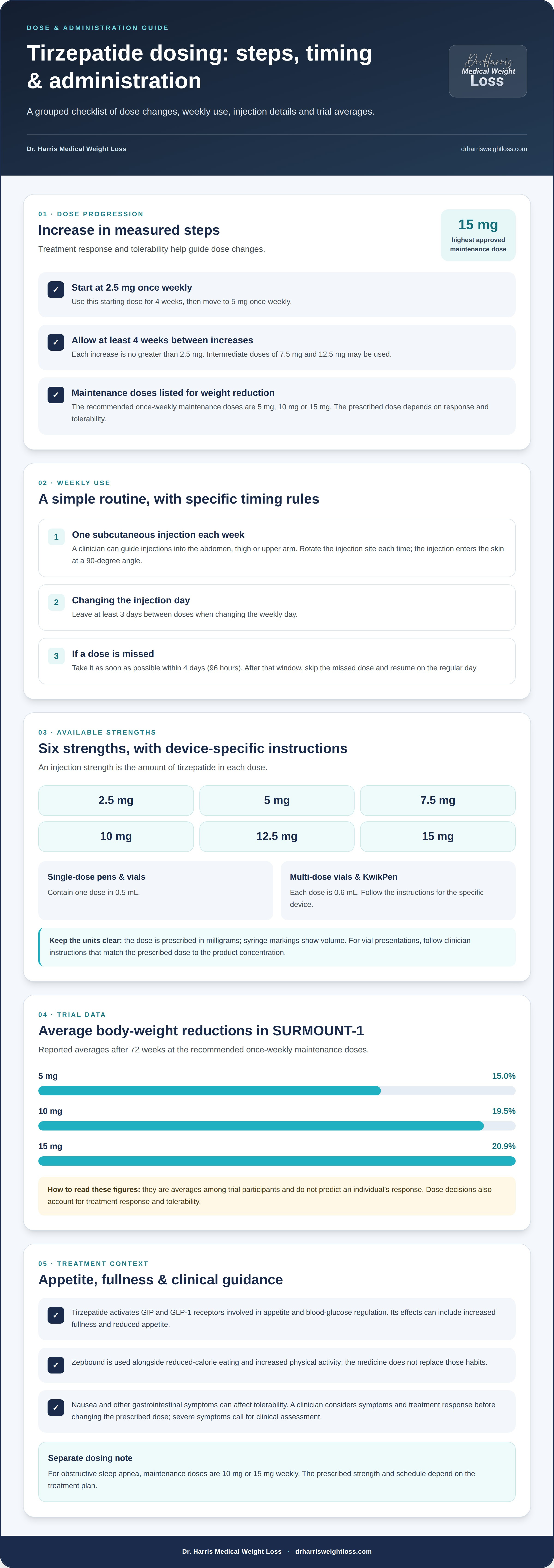
The highest dose isn’t automatically the right dose. The tirzepatide dosage for weight loss is not the same for everyone: Zepbound starts at 2.5 mg once weekly for 4 weeks, and the maximum approved maintenance dose is 15 mg once weekly. Increases are limited to 2.5 mg at a time, with at least 4 weeks between increases.
It’s reasonable to wonder whether a higher dose also means more side effects. Tirzepatide affects appetite and fullness, while gradual dose increases give the body time to adjust. Treatment response and tolerability help guide the maintenance dose. This article explains how the medicine supports weight loss, outlines available injection strengths, and describes how dose changes can affect side effects, helping you understand the treatment plan.
Key Takeaways
- Understand how treatment response and tolerability help guide maintenance-dose decisions.
- Learn what the available injection strengths mean and how clinicians guide injection timing and site selection.
- See how tirzepatide’s effects on appetite and fullness can support changes in eating patterns.
- Explore how a medically supervised tirzepatide program can help guide treatment planning and follow-up.
What’s the typical Zepbound (tirzepatide) dosage for weight loss?
Zepbound dosing follows gradual steps, with treatment response and tolerability guiding increases.
Maximum Weekly Dose
Maximum weekly dose means the highest approved maintenance amount. According to the U.S. National Library of Medicine, Zepbound’s recommended maintenance doses for weight reduction and long-term maintenance are 5 mg, 10 mg, or 15 mg once weekly. The highest maintenance dose is 15 mg once weekly. Eli Lilly and Company states Mounjaro is indicated to improve glycemic control in adults and pediatric patients 10 years of age and older with type 2 diabetes, and to reduce major cardiovascular event risk in certain adults with type 2 diabetes.
Weekly Dose Escalation
Weekly dose escalation means raising the amount in steps. Treatment starts at 2.5 mg once weekly for 4 weeks, then moves to 5 mg. Later increases are no greater than 2.5 mg and separated by at least 4 weeks. Intermediate 7.5 mg and 12.5 mg doses may be used; tolerability helps guide further changes.
Weekly Administration and Injection Sites
Weekly administration is one subcutaneous injection each week. Clinicians guide injections into the abdomen, thigh, or upper arm, rotating sites. To change injection day, leave at least 3 days between doses. A missed dose can be taken within 4 days; after that, skip it and resume the scheduled day.
Weight Loss Across Trial Doses
The 72-week SURMOUNT-1 trial reported average body-weight reductions of 15.0% at 5 mg, 19.5% at 10 mg, and 20.9% at 15 mg, the recommended maintenance doses taken once weekly. These figures describe trial participants’ averages; they do not predict an individual’s response. Dose decisions also account for tolerability and the person’s response during treatment.
Available injection strengths
An injection strength is the amount of tirzepatide in each dose. Zepbound is available in six strengths: 2.5 mg, 5 mg, 7.5 mg, 10 mg, 12.5 mg, and 15 mg. Single-dose pens and vials contain one dose in 0.5 mL. Each dose from a multi-dose vial or KwikPen is 0.6 mL, so the device instructions matter.
Subcutaneous injection means medicine is delivered under the skin. A clinician guides administration into the abdomen, thigh, or upper arm, and the injection site should rotate each time. The injection enters the skin at a 90-degree angle. Site selection and instructions can account for the device used and help support consistent administration while monitoring side effects.
Weekly timing means taking the prescribed dose once each week. A clinician can help set a regular injection day and explain how to change it: doses must be separated by at least 3 days. If a dose is missed, take it as soon as possible within 4 days, or 96 hours. After that window, skip the missed dose and take the next dose on the regular day.
Zepbound’s use for obesity and obstructive sleep apnea involves different treatment considerations. For obstructive sleep apnea, maintenance doses are 10 mg or 15 mg weekly. The strength and schedule prescribed depend on the treatment plan; don’t adjust the dose or timing without clinical guidance.
How tirzepatide supports weight loss
Tirzepatide activates GIP and GLP-1 receptors, which are involved in appetite and blood-glucose regulation. Its effects can include increased fullness and reduced appetite, helping some people consume less. Zepbound is approved for adults with obesity, or overweight with a weight-related condition, alongside reduced-calorie eating and increased physical activity. The medicine supports that plan; it doesn’t replace those habits.
Clinical dosing starts at 2.5 mg once weekly, then may increase in steps. A clinician considers the treatment response and side effects before changing the prescribed dose. Nausea and other gastrointestinal symptoms can affect tolerability, so dose escalation isn’t simply a matter of pursuing the highest amount. Severe symptoms call for clinical assessment rather than an unsupervised increase.
The dose is prescribed in milligrams; syringe volume markings describe volume, not the amount of medicine by themselves. For vial presentations, the clinician’s instructions should match the prescribed dose to the product concentration. Tirzepatide is also used for obstructive sleep apnea in adults with obesity, with a separate maintenance-dose range. Its approved uses and dosing depend on the condition being treated; Mounjaro has a type 2 diabetes indication.
Dr. Harris Medical Weight Loss: Tirzepatide (Zepbound) Program
Dr. Harris Medical Weight Loss offers a medically supervised Tirzepatide (Zepbound) Program for people considering prescription weight-management treatment. After learning about injection strengths and dosing, you can discuss with a clinician whether this treatment fits your health needs and goals.
The program centers on tirzepatide treatment for patients who receive a prescription after clinical evaluation. Dosing decisions take treatment response, tolerability, and side effects into account. The highest available dose is not automatically the right maintenance dose for everyone. Clinical supervision makes dose decisions part of your care rather than a self-directed adjustment.
Consider discussing the program if you’re weighing whether to begin treatment, have questions about dose increases, or want guidance on side effects. Share relevant health conditions and medications during your appointment, since these details can inform the clinician’s assessment. You can also ask how the weekly schedule may fit your routine before starting.
Learning about tirzepatide dosage for weight loss can clarify the available steps, but a treatment plan also needs to account for your individual response. The program offers a medically supervised way to explore tirzepatide treatment and discuss next steps with a clinician. It doesn’t replace emergency care for urgent symptoms.
Contact Dr. Harris Medical Weight Loss to discuss the Tirzepatide (Zepbound) Program.
Frequently Asked Questions
How Does Dose Affect Side Effects?
Clinicians consider side effects, including nausea, alongside treatment response when reviewing a dose. Note when symptoms occur and how they affect meals or daily routines; these details can help guide a follow-up discussion. Tell your clinician about persistent or concerning effects before a planned dose change, and don’t adjust your prescribed amount on your own.
Why Is the Tirzepatide Dose Increased Gradually?
Gradual increases give clinicians time to assess tolerability and response before another dose change. For example, if nausea continues after an increase, that information can inform whether to hold the current dose or consider another step. Dose increases are no greater than 2.5 mg and separated by at least 4 weeks; the schedule is guided by treatment response and tolerability.
What should you do if you miss a dose or need an adjustment?
For a missed dose, take it as soon as possible within 4 days, or 96 hours. If more than 4 days have passed, skip it and take the next dose on your regular day. Don’t take an extra dose to make up for the missed one. If you’ve missed doses for more than 2 weeks, discuss restarting with your clinician before injecting.
How can a clinician assess dosage adjustments for health conditions or interactions?
A clinician reviews your health conditions and medicines before considering an adjustment. Zepbound requires no dosage adjustment for renal impairment, including end-stage renal disease, or hepatic impairment. It shouldn’t be used with another tirzepatide product or a GLP-1 receptor agonist. Tell the clinician about pregnancy or a personal or family history of medullary thyroid carcinoma or MEN2.
Finding your maintenance dose: How does a clinician determine whether you need the maximum?
The maximum isn’t automatically the right maintenance dose. A clinician considers your response and tolerability, then weighs whether an increase is appropriate. If a maintenance dose isn’t tolerated, a lower maintenance dose may be considered. Dr. Harris Medical Weight Loss provides medically supervised treatment through a LegitScript-certified dispensing office for patients in Fort Lauderdale, Boca Raton, Broward County, and Palm Beach County.