
A number on the scale tells only part of the story. Fort Lauderdale weight loss success stories can show how progress may also involve health, activity, and everyday habits. Patient experiences help make those changes easier to picture, while reminding readers that every journey is different.
The stories ahead share individual experiences and reported health changes, from lab results and activity to habits built over time. Sarah’s journey offers another perspective: after regaining weight, she received medically supervised care tailored to her needs. During a family trip to Fort Lauderdale, she hiked, ran, and swam without overheating or becoming short of breath. Her account shows one way care can connect with daily life, but it does not predict another person’s experience.
Key Takeaways
- See how patient experiences include changes in health, activity, and daily habits, not just scale readings.
- Learn how family support and manageable routines have shaped different people’s journeys.
- Explore reported health improvements, including changes in A1C results, stamina, and BMI.
- Understand how Sarah’s experience illustrates the role of individualized recommendations in a care plan.
Fort Lauderdale weight-loss patient testimonials
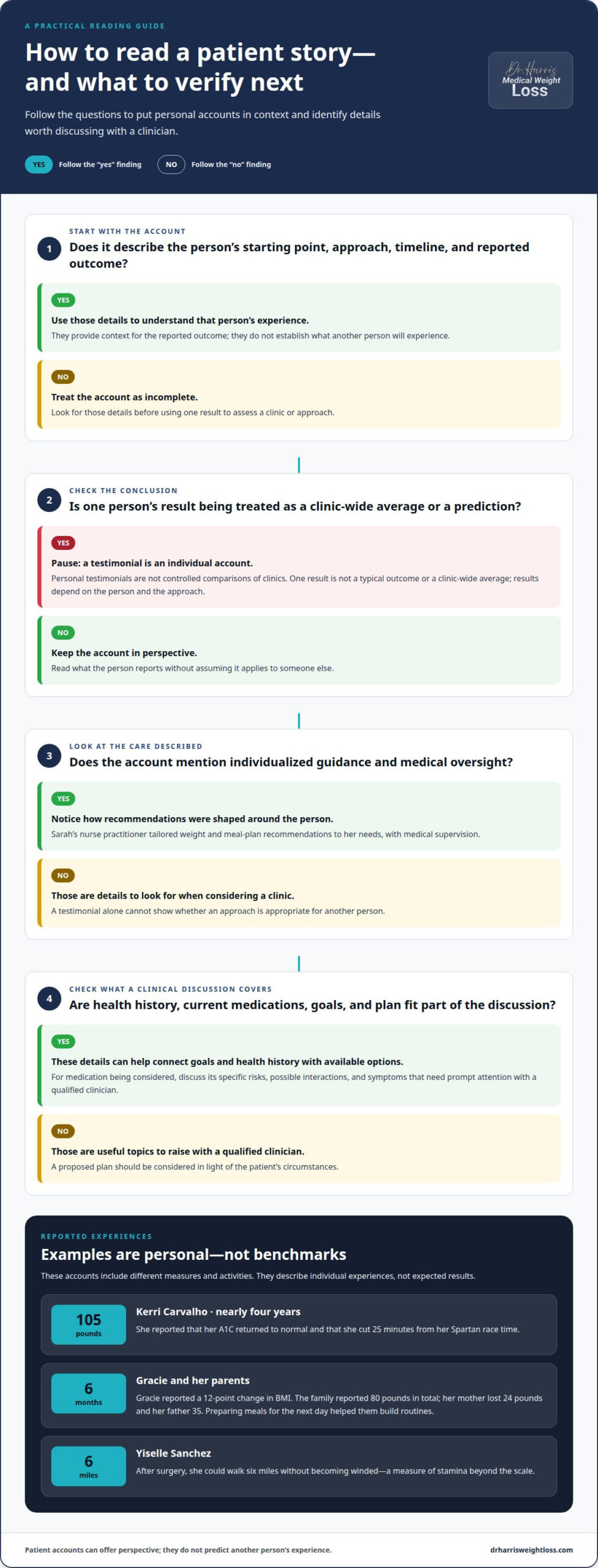
Kerri Carvalho, 42, lost 105 pounds during a journey that lasted nearly four years. Her A1C returned to normal, and she cut 25 minutes from her Spartan race time. Her story connects a change in weight with health measures and an activity she valued.
Sarah first lost weight after surgery, then regained some during menopause. Her family and a peer who had undergone bariatric surgery supported her. Her experience illustrates that surgery stories can involve ongoing adjustments, not just an initial result. Family and peers may offer practical support, though each person’s needs differ.
Read Fort Lauderdale weight loss clinic comparison reviews with care: personal testimonials describe individual experiences, not a controlled comparison of clinics. Look for details about the person’s starting point, approach, timeline, and reported outcome instead of judging a clinic by one result.
When considering a clinic, look for individualized guidance and medical oversight. Sarah’s nurse practitioner tailored recommendations to her needs rather than relying on a one-size-fits-all plan. A testimonial can illustrate one person’s experience, but it cannot show whether the same approach is appropriate for someone else.
How much weight do people lose at Fort Lauderdale weight loss clinics? Kerri’s reported loss was 105 pounds over nearly four years, but her story is one example, not a typical outcome or clinic-wide average. Results depend on the person and the approach.
Consultation steps depend on the treatment being considered. A useful clinical discussion reviews health history, current medications, goals, and whether a proposed plan fits the patient’s circumstances.
Medical treatments can cause side effects and may not suit every patient. Before treatment, discuss medication-specific risks, possible interactions, and symptoms that require prompt attention with a qualified clinician.
Weight loss and health improvements
Gracie and her parents started working on changes as a family. After six months, Gracie had dropped 12 BMI points. Together, they lost 80 pounds: her mother lost 24, and her father lost 35. Preparing meals for the next day helped them turn their plans into routines. Their story shows how family involvement can make each step forward more practical.
After surgery, Yiselle Sanchez could walk six miles without becoming winded. Her example highlights an outcome beyond the scale: stamina can shape everyday activities. Anyone considering surgery can discuss which personal health measures matter to them and how progress will be followed. This can help clarify what they hope to regain or do more comfortably.
Megan lost 270 pounds through gastric sleeve surgery and lifestyle changes. Her case combines a medical procedure with changes in daily routines. Surgery is one path in patient stories, but individual experiences do not predict another person’s outcome. The details that matter include the approach taken and the changes a person sustains afterward.
Obesity-related health concerns can also shape a person’s decision to seek care. Jamie was diagnosed as an insulin-dependent diabetic between ages 50 and 54, and had pneumonia four times during that period. Her experience illustrates why health history matters when someone plans to lose weight. A clinician can consider existing conditions, medications, and goals when discussing options and monitoring progress.
Other experiences show that weight changes can continue to evolve. Sarah regained some weight within the past few years due to menopause after initially losing weight following surgery. Christina Puckett lost 175 pounds after metabolic bariatric surgery, while Kerri Carvalho expected to lose between 50 and 70 pounds after surgery.
Kellie completed a few dozen marathons after gastric bypass surgery. Kayla Mills lost almost 70 pounds after 21 months and later gained about 10 to 15 pounds. Rachel Saintfort lost 121 pounds after cutting highly processed food and soda from her life. These accounts reflect different outcomes and goals, and weight change may involve both health gains and later adjustments.
Sarah’s weight-loss journey
Sarah’s care team provided medical supervision as she worked toward her recommended weight after regaining weight. Her nurse practitioner tailored weight and meal-plan recommendations to her needs. That detail matters: nutrition guidance can reflect a person’s circumstances rather than rely on one eating template. Sarah’s account offers a practical lesson: recommendations should fit daily routines and personal health goals.
During a trip to Fort Lauderdale, Sarah hiked, ran, and swam with her family without overheating or becoming short of breath. Her experience shows how progress can be reflected in what someone feels able to do, not only in a number on the scale. For Sarah, joining family activities gave her a personal measure of change.
Sarah’s journey also shows why a plan may need adjustment over time. A clinician can consider health history, eating patterns, and goals when shaping recommendations. If you’re thinking about your own goals, start by identifying activities you want to return to, then discuss how nutrition and care may support them. Sarah’s hiking, running, and swimming offer specific examples to mention.
Her story does not prescribe one path for every patient. It shows how individualized recommendations and support can connect health goals with everyday life. If you’re considering structured guidance, explore medically supervised care as a next step in planning your own journey.
The writer tried a weight loss spa in 2010. Sarah’s account, by contrast, describes recommendations shaped by her individual needs and goals, with medical supervision guiding her return to her recommended weight.
Dr. Harris Medical Weight Loss
Dr. Harris Medical Weight Loss offers medically supervised weight management programs for people considering clinical support. Patient stories can provide perspective, but they cannot determine which approach is right for someone else. A clinical evaluation can connect health goals and medical history with available options. Care is directly led by Dr. Harris, not a sales team or an automated program.
Options include the Tirzepatide (Zepbound) Program, Semaglutide Medication Program, and Phentermine Medication. These are distinct prescription options, provided by licensed pharmacies and dispensed safely under physician supervision. The appropriate choice depends on individual circumstances and clinical assessment. Individual results vary with genetics, lifestyle, adherence, and medical guidance.
If you’re ready to discuss your goals and available care, contact Dr. Harris Medical Weight Loss.
Make Your Next Step Personal
Use these stories as a starting point for defining what you want your health to support. Consider the daily activities, health priorities, and routines that matter to you. Those priorities can guide a more useful conversation than comparing yourself with someone else’s outcome.
Fort Lauderdale weight loss success stories offer personal perspectives, not a template for your care. Bring your goals and relevant health history to a conversation with a clinician. Together, you can discuss what support may fit your circumstances and how progress could matter in everyday life. Individual results vary with genetics, lifestyle, adherence, and medical guidance.
You don’t need to have every answer before taking the next step. A conversation with a clinician can help you identify what matters and consider a practical direction for your life.
Contact Dr. Harris Medical Weight Loss to discuss your goals. Your next step can begin with a thoughtful conversation.
Frequently Asked Questions
What can Fort Lauderdale weight loss success stories before and after show?
Before-and-after accounts may describe changes in measurements, health markers, daily activities, and routines, not just appearance. To understand a story, look for the person’s starting point, approach, and timeframe. Treat each account as one person’s experience: individual results vary with genetics, lifestyle, adherence, and medical guidance.
How should I interpret Fort Lauderdale weight loss clinic patient testimonials and results?
Patient testimonials describe individual experiences. They can offer context, but they cannot predict your results. Notice whether an account explains the care approach, follow-through, and changes the person valued. For a practical discussion, bring your health history, current medications, and goals to a clinician. This helps frame which measures may be relevant to your care.