There’s no evidence of a direct interaction between alcohol and semaglutide, but drinking can affect how you feel and your weight-loss goals. If you’re asking whether you can drink alcohol on semaglutide, no specific alcohol limit has been established for people taking it.
It’s understandable to want a clear answer, especially when managing medication side effects or diabetes alongside social plans. Alcohol may worsen stomach discomfort or affect blood sugar. Its calories can also work against your goals.
This article explains what’s known about alcohol use on semaglutide, how drinking may influence weight management, and which personal factors to discuss with your healthcare provider. These practical points can help you consider how drinking fits your health and treatment plan.
Key Takeaways
- Factor alcohol’s calories into your eating pattern and consider how drinking may affect your progress toward weight loss goals.
- Notice how alcohol affects you on semaglutide; changes in appetite or stomach symptoms may shape your experience.
- Discuss your drinking habits, diabetes status, symptoms, and other medicines with your healthcare provider to understand personal risks.
- Learn how Dr. Harris Medical Weight Loss’s Semaglutide Medication Program may fit into a medically supervised approach to weight management.
Alcohol calories and weight loss goals
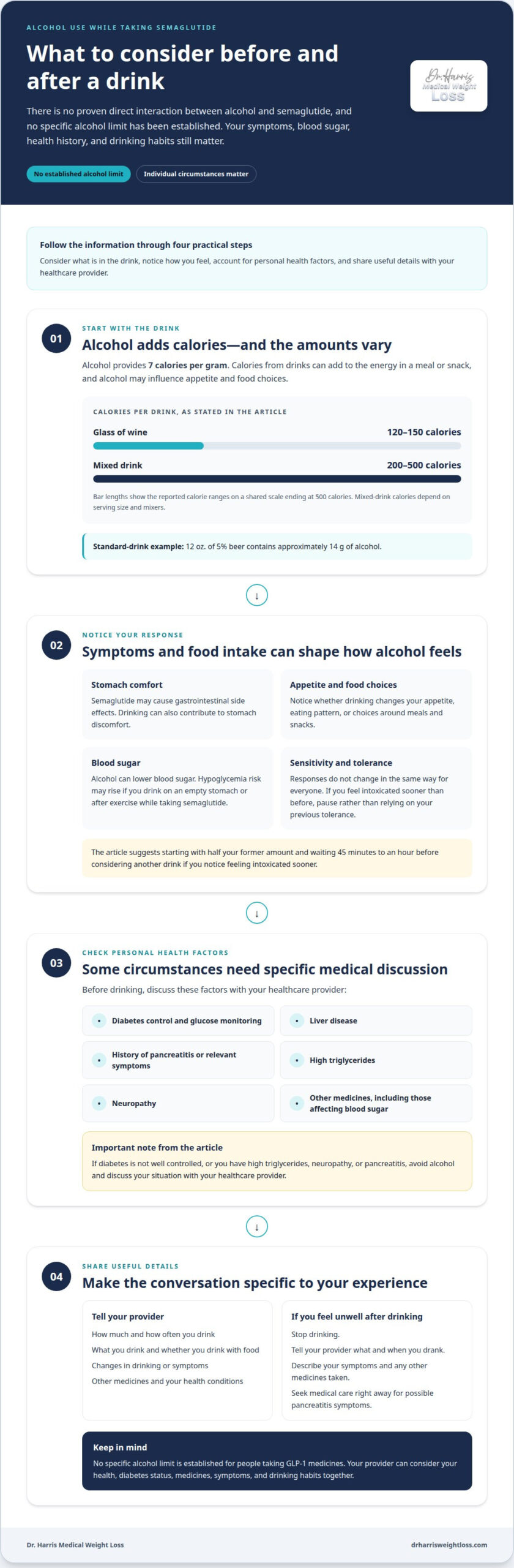
Alcohol provides 7 calories per gram, adding energy without necessarily reducing food intake. According to the National Institute on Alcohol Abuse and Alcoholism, 12 oz. of 5% beer is a standard drink containing approximately 14g of alcohol. A glass of wine may contain 120 to 150 calories, while mixed drinks can range from 200 to 500, depending on serving size and mixers.
Alcohol calories can make it harder to stay within an energy target, especially when drinks accompany meals or snacks. Alcohol may also influence appetite and food choices, so consider the whole occasion, not just the drink. For example, a mixed drink with a meal adds its own calories as well as any extra food you choose.
Can alcohol increase the risk of low blood sugar with semaglutide? Alcohol can lower blood sugar, and the risk of hypoglycemia may rise if you drink on an empty stomach or after exercise while taking semaglutide. If you have diabetes, discuss alcohol, glucose monitoring, and other medicines with your healthcare provider. There’s no proven direct interaction between alcohol and semaglutide, but your personal circumstances still matter.
Semaglutide may affect appetite and cause gastrointestinal side effects, which can change how food and alcohol feel. Drinking can also contribute to stomach discomfort. Pancreatitis is another concern to discuss if you have a relevant history or symptoms. To support your weight goals, notice how alcohol affects your eating pattern and progress, then share those observations with your provider. Consider not only the drink’s calories, but also how it fits your overall routine.
Do you get drunk sooner on GLP-1 drugs like Ozempic?
There’s no evidence of a direct interaction between alcohol and GLP-1 drugs such as semaglutide. Still, symptoms and drinking habits can shape how alcohol feels while you’re taking semaglutide.
Alcohol Sensitivity and Tolerance Changes
Alcohol sensitivity describes how strongly alcohol affects you; tolerance is how your response changes with repeated drinking. Neither is known to shift in the same way for everyone taking a GLP-1 medicine. Nausea or other side effects may make alcohol less appealing, while changes in appetite or food intake can affect the experience. If you find yourself feeling intoxicated sooner than before, pause rather than relying on your previous tolerance. Start with half your former amount, then wait 45 minutes to an hour before considering another drink. This can help you notice your response and the combined effects of alcohol and symptoms.
Alcohol Recommendations Across Semaglutide Brands
No specific alcohol limit is established for GLP-1 medicines, and no official guidelines prohibit drinking while taking Wegovy. These points don’t establish separate alcohol limits for Ozempic or Rybelsus. Recommendations can still depend on your health, diabetes status, other medicines, and how you feel. If alcohol while taking semaglutide worsens nausea or stomach symptoms, that experience matters more than assuming every brand will affect you identically. Follow the instructions for your prescribed medicine, and discuss individual concerns with your healthcare provider.
Pay attention to changes in how much you drink and how alcohol affects you. For information about semaglutide treatment options, explore the program details.
Discussing alcohol use with a healthcare provider
Tell your healthcare provider honestly how much and how often you drink, what you drink, and whether you drink with food. Mention any changes, such as drinking less because of nausea or other symptoms. This context can help your provider consider how alcohol may affect your medicine, blood sugar, and weight-management goals.
Before drinking, discuss diabetes control, liver disease, a history of pancreatitis, high triglycerides, neuropathy, and medicines that affect blood sugar with your healthcare provider. Alcohol can raise or lower blood sugar depending on how much and how often you drink. If your diabetes isn’t well controlled, or you have high triglycerides, neuropathy, or pancreatitis, avoid alcohol and discuss your situation with your provider.
What should you do if you feel unwell after drinking alcohol on semaglutide? Stop drinking and tell your healthcare provider what and when you drank, what symptoms you have, and any other medicines you took. Seek medical care right away for possible pancreatitis symptoms.
For a useful conversation, write down your usual intake and note when symptoms occur, such as after a drink on an empty stomach. Ask whether your health conditions or medicines change the advice for you, and what symptoms require prompt care. There are no specific alcohol limits for people taking GLP-1 medicines, so general moderate-drinking guidance may not address your individual risks. A clear account of your experience gives your provider practical details for discussing safer choices.
Dr. Harris Medical Weight Loss: Semaglutide Medication Program
Dr. Harris Medical Weight Loss offers a medically supervised Semaglutide Medication Program. If you’re considering semaglutide or already taking it, you can discuss alcohol as part of a conversation about your treatment and health. Share how often you drink, what you typically choose, whether you drink with meals, and any symptoms you notice. This helps make the discussion specific to your circumstances.
Alcohol may affect blood sugar, stomach comfort, appetite, and food choices. Your health history and other medicines matter, too. A clear account of your alcohol use and symptoms can help you discuss how they relate to semaglutide and your weight-management goals. If drinking leaves you feeling unwell, say what you drank and when your symptoms began.
The program may suit people seeking medical oversight while using semaglutide for weight management. It can be a next step if you want to explore treatment or discuss how semaglutide fits your health goals. Be open about alcohol, side effects, diabetes, and changes in your routine. Clear communication supports an informed discussion of your care.
If you’d like to discuss the Semaglutide Medication Program and your questions about alcohol, contact Dr. Harris Medical Weight Loss.
Make your next treatment conversation count
If you’re still asking whether you can drink alcohol on semaglutide, raise the question when discussing your health and treatment goals. Your drinking habits, medical history, and medicines can help shape a discussion specific to you. You don’t need to have every answer before speaking with a healthcare professional. An honest account of what you drink and how you feel is a useful place to begin.
Dr. Harris Medical Weight Loss offers a Semaglutide Medication Program, a Tirzepatide (Zepbound) Program, and Phentermine medication as options for medically supervised weight management. A conversation can help you understand whether a treatment fits your needs and what questions to ask about alcohol.
For guidance on your options, contact Dr. Harris Medical Weight Loss. Taking time to make an informed decision is a meaningful step toward care that works for your life.
Frequently Asked Questions
Ozempic and Alcohol: Is It Safe to Mix?
There’s no evidence of a direct interaction between alcohol and semaglutide, the medication in Ozempic, but that doesn’t make drinking risk-free for everyone. Diabetes, other medicines, and your health history can affect the risks. If you use Ozempic, discuss your drinking pattern and health conditions with your healthcare provider before deciding what’s appropriate for you.
Can you drink alcohol while taking semaglutide?
No specific alcohol limit has been established for people taking semaglutide, so the answer depends on personal health factors. If you’re wondering, “Can I drink alcohol on semaglutide?”, discuss your usual intake, diabetes status, and other medicines with your healthcare provider. For medically supervised care in Fort Lauderdale, Boca Raton, Broward County, or Palm Beach County, share these details with your treating clinician.
Does alcohol interact with semaglutide or affect how well it works?
No direct interaction between alcohol and semaglutide has been established, and available information here doesn’t indicate that alcohol cancels the medication’s effect. However, drinking adds calories and may influence food choices, which can affect progress toward your goals. Tell your healthcare provider if drinking changes your eating pattern or makes it harder to follow your treatment plan.
What are the risks of drinking alcohol with semaglutide, including nausea and vomiting?
Alcohol may add to nausea, vomiting, diarrhea, or stomach discomfort that can occur with GLP-1 medicines. The combined effects may also leave you feeling unwell and make it harder to eat or drink normally. If symptoms start or worsen after drinking, stop, note what you drank and when symptoms began, and contact your healthcare provider for advice.
Can alcohol increase pancreatitis risk while taking semaglutide?
Alcohol is a risk factor for pancreatitis, and semaglutide carries a pancreatitis warning. Drinking doesn’t mean pancreatitis will occur, but discuss any history of pancreatitis with your healthcare provider before drinking. If you notice symptoms that may indicate pancreatitis while taking semaglutide, seek medical care right away rather than waiting for a routine appointment.