
Evidence matters more than promises. Studies indicate that most programs help people lose weight in the short term compared with no program, while differences among diets are often small. To decide how to choose a medical weight loss clinic, look for care grounded in scientific evidence, qualified clinicians, a plan suited to your health and medications, and follow-up that supports ongoing adjustments.
It’s reasonable to want clear answers about whether a program may help and how it could fit your life. A conversation with a healthcare professional can clarify which options may suit your health needs. This article explains how to choose a medical weight loss clinic by reviewing credentials, treatment planning, communication, and the questions to ask before getting started.
Key Takeaways
- Bring your health conditions and current medicines into the discussion before considering a program.
- Review clinicians’ credentials and clinic accreditation as part of assessing medical oversight.
- Look for a treatment plan shaped around your health, preferences, and daily routine.
- Clarify how the clinic follows your progress and communicates with your regular healthcare professional.
1. Consulting a healthcare professional before starting a program for weight loss
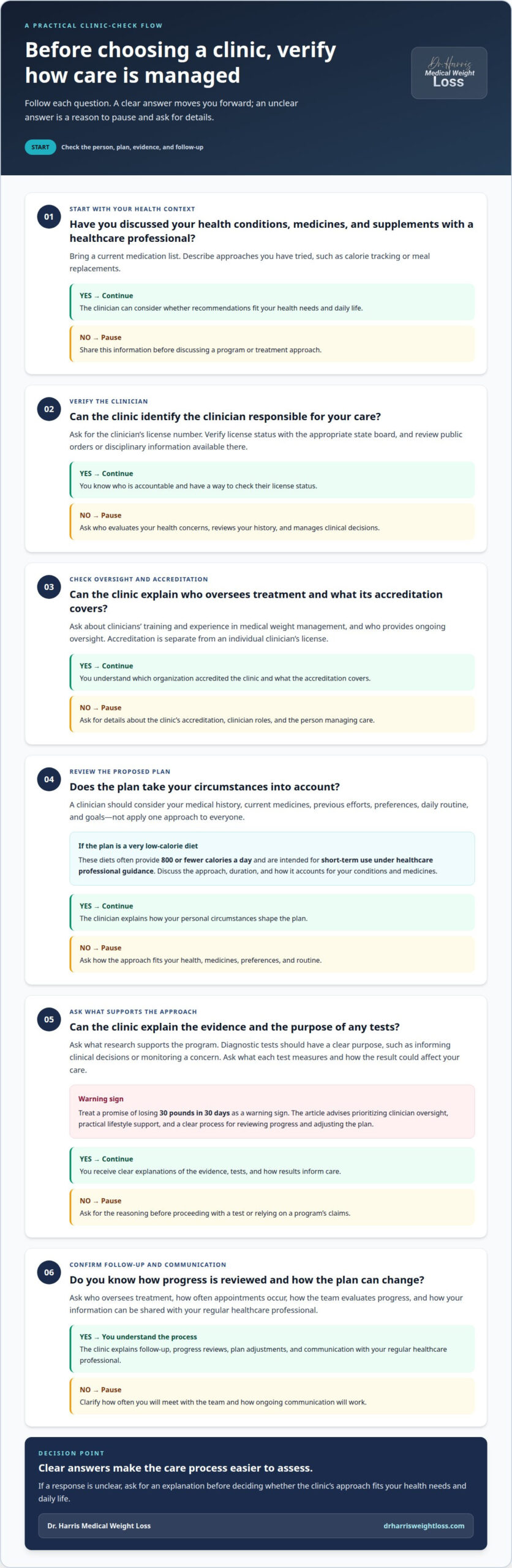
Before starting a program, discuss your health conditions, medicines, and supplements with a doctor. Bring a current medication list and describe approaches you’ve tried, such as calorie tracking or meal replacements. This helps the clinician assess whether recommendations fit your health needs and daily lifestyle. In 2024, an estimated 35 million children under the age of 5 years were overweight (2), according to the World Health Organization. This figure places weight in a broader health context, while each person’s care still requires individual consideration.
Programs differ in structure and intensity. A meal-replacement plan may replace 1 or 2 meals a day with products, while other approaches focus on food choices, habits, and physical activity. Very low-calorie diets often provide 800 or fewer calories a day and are intended for short-term use under healthcare professional guidance. Discuss the approach, its duration, and how it accounts for your conditions and medicines. Studies find that most programs lead to weight loss in the short term compared with no program, while differences between diets are often small.
Assess the evidence behind each program, not just its marketing claims. Ask what research supports its methods and whether it sets realistic goals, builds lasting habits, and includes follow-up. Structured guidance can help people change eating patterns and activity, especially when previous attempts have felt difficult to sustain. Treat a promise of losing 30 pounds in 30 days as a warning sign. Prioritize clinician oversight, practical lifestyle support, and a clear process for reviewing progress and adjusting the plan.
2. Checking clinic accreditation and provider credentials
To verify whether a clinic is licensed and reputable, identify the clinicians responsible for care, then verify their license status with the appropriate state board. Ask for each clinician’s license number and review public orders or disciplinary information available through that board. These steps help you distinguish a clinician’s standing from the clinic’s marketing claims.
Credentials help show who evaluates health concerns and manages treatment. Ask about clinicians’ training and experience in medical weight management, and confirm who reviews your medical history, discusses your care plan, and provides ongoing oversight. Different professionals have different training and roles, so look beyond titles to understand who will make and manage clinical decisions.
Accreditation is separate from an individual clinician’s license. Ask which organization accredited the clinic and what the accreditation covers. Also ask what evidence supports the clinic’s approach, rather than relying on testimonials or promises about weight loss. Dr. Harris Medical Weight Loss is LegitScript Certified, and care is led directly by Dr. Harris.
Part of learning how to choose a medical weight loss clinic is matching credentials to the care provided. If treatment includes prescription medication, ask which licensed clinician evaluates whether it fits your health history. DEA registration is needed when prescribing controlled medications. Clear explanations of license status, scope of practice, and clinical oversight help you judge whether care meets your needs.
Knowing how to choose a medical weight loss clinic also means understanding who guides your care. The clinic’s medical weight management options provide a starting point for considering what care may involve.
3. Assessing personalized treatment plans and communication
A useful consultation connects your health history with a plan you can follow. Ask: “How will you tailor care to my health conditions, preferences, and goals?” Also ask who will oversee treatment, how often appointments occur, and how the team evaluates progress. The answers should explain the next steps in plain language.
A clinician should consider your medical history, current medicines, previous weight-loss efforts, daily routine, and goals. People have different needs, so a care plan should reflect your individual circumstances rather than apply the same approach to everyone. This discussion helps the clinician assess which treatment options may be appropriate.
Ask how medical assessments guide decisions and which diagnostic tests are relevant to your history. Testing should have a clear purpose, such as informing clinical decisions or monitoring a concern. Ask what each test measures and how the result could affect your care. A certified clinician should explain the reasoning and discuss your questions before proceeding.
Include preferences, appointment access, and affordability in the conversation. Share practical constraints, such as work schedules or difficulty maintaining a particular eating routine. Ask whether follow-up visits are regular and how the team adjusts the plan as your health or circumstances change. Virtual programs should explain how online sessions support your personal goals; weekly sessions are one model described for virtual care.
To assess communication, ask how your progress can be shared with your regular healthcare professional. Clear coordination can help keep your care team informed throughout your journey. Discuss care options for your needs.
Dr. Harris Medical Weight Loss
Dr. Harris Medical Weight Loss offers medically supervised weight management in Fort Lauderdale and Boca Raton, serving Broward County and Palm Beach County. Programs may include Tirzepatide (Zepbound), Semaglutide, or Phentermine, based on medical evaluation. Dr. Harris leads care directly, with lab work and clinical oversight to guide treatment.
If you’re considering medication, ask about the proposed treatment, how your progress will be assessed, and what follow-up care involves. A suitable plan should reflect your health needs and support ongoing communication, not promise a particular outcome. Contact Dr. Harris Medical Weight Loss to discuss your needs and arrange a medical evaluation.
Choose a next step that feels right for you
Choosing a clinic doesn’t mean committing to a particular treatment. It gives you a chance to understand what may suit your health, priorities, and daily life. As you decide how to choose a medical weight loss clinic, consider whether you can speak openly, understand the reasons for recommendations, and raise concerns without pressure. A clear conversation can help you make an informed choice.
Before reaching out, note the outcomes that matter to you, the questions you still have, and practical needs that could shape your care. Use the discussion to explore whether available treatment options align with your circumstances and what ongoing communication may involve. You deserve to feel heard and respected throughout the process. Contact Dr. Harris Medical Weight Loss to discuss your care needs and consider a next step at a pace that feels right for you.
Frequently Asked Questions
Do studies show that your program works?
Evidence can inform treatment, but it cannot guarantee an individual outcome. Ask how a proposed treatment will be monitored and how your response will be assessed over time. Dr. Harris Medical Weight Loss describes its programs as evidence-based. Individual results vary; weight loss results can vary based on individual factors like genetics, lifestyle, and adherence to the program.
Does medical supervision mean a physician conducts every visit?
Medical supervision should include clear responsibility for clinical decisions and follow-up. At Dr. Harris Medical Weight Loss, care is led directly by Dr. Harris, not a sales team or an automated program. Ask how routine follow-ups are handled and how the medical team responds to questions as your plan progresses.
Should I accept insurance or go self-pay only?
Consider both options based on your coverage and expected out-of-pocket responsibility. Ask your insurer whether clinician visits and prescribed medications are covered, and review any plan conditions before enrolling. Coverage can depend on your policy and the service involved, so distinguish medication benefits from visit benefits when reviewing what your plan may pay.
Should I choose the clinic with the lowest first-visit price?
Don’t make price the only deciding factor. Consider what the visit includes, who provides clinical oversight, and how follow-up care is handled. Pricing depends on the case and is provided after a quote request; cost factors include the clinical evaluation and treatment selected. A clear explanation of care can help you assess value beyond the initial charge.
What are the choices?
Dr. Harris Medical Weight Loss offers Tirzepatide (Zepbound), Semaglutide, and Phentermine as distinct treatment options, not a ranking. A medical evaluation helps determine which, if any, may suit your circumstances. The practice serves Fort Lauderdale, Boca Raton, Broward County, and Palm Beach County. Contact the clinic to arrange an evaluation and discuss your care.