
Progress is best measured through consistent habits, not a dramatic drop on the scale. Habits that support weight management alongside medication include attention to food quality, regular movement, behavior changes, and medical supervision rather than relying on a prescription alone. The aim is progress that supports health and can be maintained over time.
It can be frustrating when effort doesn’t lead to lasting change. Medication may support appetite and eating changes, but it works alongside sustainable weight loss habits with medication and a broader daily routine. This article explains how to recognize meaningful progress, build nourishing meals, and understand medically supervised treatment. You’ll also see how small, repeatable choices can make everyday habits more manageable and support your health over time.
Key Takeaways
- Build routines around manageable food choices and activity, and focus on health progress rather than day-to-day scale changes.
- Choose meals centered on whole, plant-forward foods, and avoid drastic calorie cuts or eliminating entire food groups.
- Pair medication with lifestyle habits and medical supervision; discuss side effects with your care team so support can fit your needs.
- Learn how medically supervised medication options may fit into a broader plan for eating, movement, and behavior change.
1. What does progress in weight management mean?
Weight management focuses on health, daily function, and routines you can maintain. Progress can also include lifestyle changes that support energy, nutrition, and regular activity. The scale is one measure, not the whole picture.
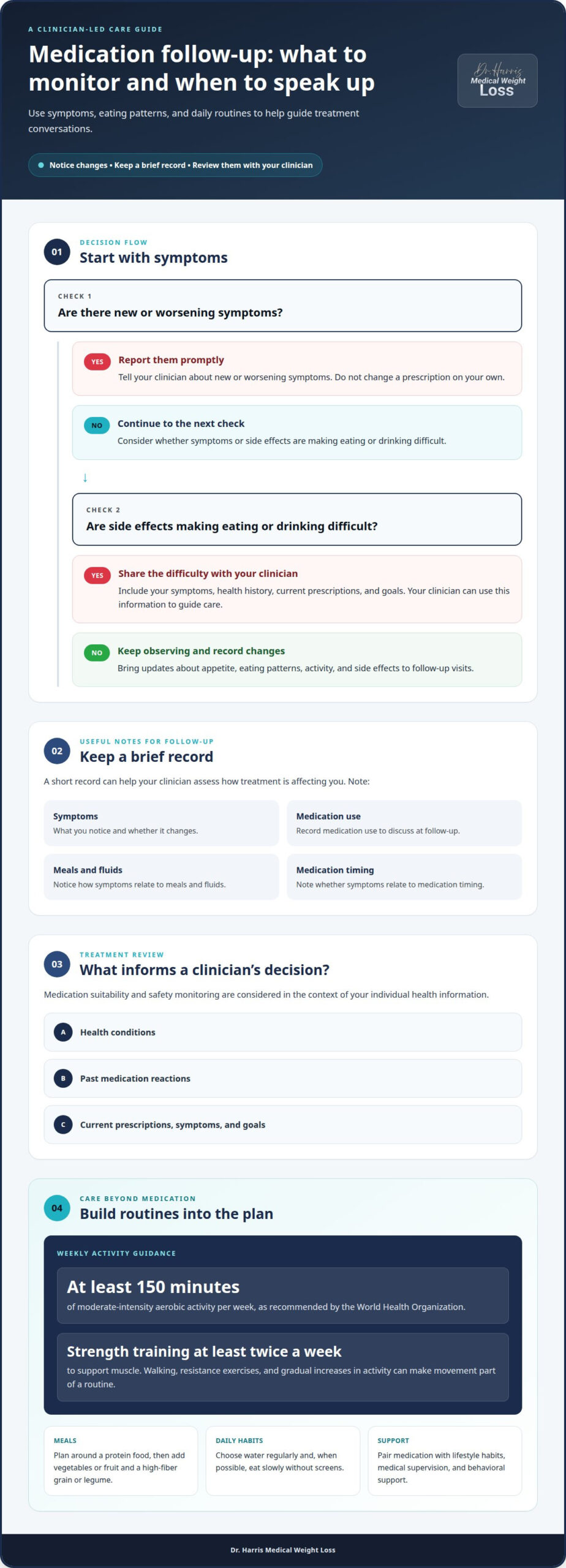
Medication can affect appetite and eating patterns. Notice how symptoms relate to meals, fluids, and medication timing, then keep a brief record to share with your clinician. They can assess side effects and decide whether your treatment plan needs adjustment. Regular meals with nourishing foods can provide structure when your appetite changes.
In the United States, medication costs depend on the drug, pharmacy, prescribed dose, and insurance benefits. Coverage varies by plan and prescribed use, so there is no single cost or coverage answer for everyone.
To support muscle, include strength training at least twice a week. The World Health Organization recommends at least 150 minutes of moderate-intensity aerobic activity per week. Walking, resistance exercises, and gradual increases in activity can make movement part of your lifestyle routine.
Professional support can bring medication, nutrition, and activity goals together in one weight management plan. Behavioral and psychological support can help identify obstacles, develop coping strategies, and change patterns linked to stress or emotional eating. For example, noting situations that prompt unplanned eating can show where a new routine may help. These practical steps can support health over time.
2. Diet quality and whole-food, plant-forward eating
Build meals from vegetables, fruit, beans, lentils, whole grains, nuts, and seeds. Add protein foods such as eggs, fish, tofu, or yogurt to support nourishment when appetite changes during GLP-1 treatment. A Mediterranean-style pattern can include olive oil, beans, vegetables, whole grains, and fish. Other eating patterns can also work when they suit your preferences, culture, health needs, and daily routine.
For practical eating habits, plan meals around a protein food, then add vegetables or fruit and a high-fiber grain or legume. Choose water regularly and, when possible, eat slowly without screens. Pausing between bites can help you notice fullness and how the meal feels. Because medication may affect appetite and tolerance, smaller portions or simpler foods may feel more manageable for some people.
There is no single protein or fiber target that suits everyone. Needs depend on factors such as body size, health, food choices, and how treatment affects appetite and digestion. A clinician or dietitian can personalize targets and suggest food adjustments if symptoms make eating difficult.
Stress can influence eating patterns. Note what happened before an urge to eat, then choose a response such as taking a short walk, pausing to breathe, or contacting someone supportive. If you eat in response to stress, return to your next planned meal rather than skipping it. Repeatable routines can help make changes part of daily life and support efforts to avoid regain. Severe calorie restriction or cutting out whole food groups can make nutritious eating harder.
Ask a clinician or dietitian to tailor protein and fiber targets to your body size, health, food choices, and how treatment affects your appetite and digestion.
3. Weight-loss medication under medical supervision
Semaglutide and tirzepatide are GLP-1 receptor agonists. They mimic a natural gut hormone that signals satiety to the brain and slows gastric emptying, which can reduce appetite and food intake. FDA approval applies to specific products and indications, so the prescribed product and intended use matter. A clinician can explain how a prescription fits your treatment plan.
Medical supervision connects medication decisions with progress, symptoms, and daily routines. At follow-up visits, discuss changes in appetite, eating patterns, activity, and side effects. A brief record of symptoms and medication use can help your clinician assess how treatment is affecting you. Report new or worsening symptoms promptly, and do not change a prescription on your own.
Medication is one part of care, alongside behavioral support and lifestyle changes. Pair treatment with eating habits you can maintain and physical activity that fits your ability. The World Health Organization recommends at least 150 minutes of moderate-intensity aerobic activity per week. Strength training at least twice a week can also support muscle as body weight changes.
A clinician reviews your health conditions, past medication reactions, and current prescriptions. These factors can affect treatment suitability and safety monitoring. Share your health history, symptoms, and goals, especially if side effects make eating or drinking difficult. This information helps guide decisions about your care.
As you consider prescription options and monitoring, review medication treatment options as part of planning a clinician-led discussion.
Dr. Harris Medical Weight Loss: Tirzepatide (Zepbound) Program
Dr. Harris Medical Weight Loss offers a Tirzepatide (Zepbound) Program for people considering prescription medication as part of weight management. Medication is one part of a broader routine that includes nourishing meals, physical activity, and medical follow-up. Notes on appetite, eating patterns, and side effects can help guide treatment discussions.
A medically supervised program can connect medication decisions with your health history, current prescriptions, and goals. Dr. Harris Medical Weight Loss also offers a Semaglutide Medication Program and Phentermine Medication. These options are considered individually and do not replace habits that support health over time.
If you’re ready to discuss whether a medication program fits your needs, contact Dr. Harris Medical Weight Loss or visit drharrisweightloss.com.
Choose a Next Step You Can Maintain
Choose a next step specific enough to practice in daily life: a meal-planning routine, a type of movement you enjoy, or a way to notice changes in appetite and energy. Record what feels manageable and what gets in the way. These observations can help shape conversations about your care and keep your goals grounded in your needs.
Sustainable weight loss habits with medication develop through ongoing choices, not a single perfect week. If treatment is part of your plan, bring your questions and observations to a medical professional. Discussing your goals can clarify which support fits your circumstances and how to build routines around your prescription.
To discuss medication options and your weight management goals, contact Dr. Harris Medical Weight Loss. Take the next step at a pace that works for you.
Frequently Asked Questions
What does “healthy weight loss” mean?
It means working toward changes that support your health and fit everyday life, rather than judging progress by the scale alone. Track energy, meal patterns, mobility, or a health measure your clinician monitors. A routine should leave room for ordinary meals and activities, rather than relying on strict rules that are hard to maintain.
When should you ask a healthcare professional’s advice for losing weight?
Ask a clinician before starting medication or making major changes to eating or activity, especially if you have a health condition or take other prescriptions. Seek advice if symptoms affect eating, drinking, sleep, or daily function. In Fort Lauderdale, Boca Raton, Broward County, and Palm Beach County, discuss your medical history and goals with a healthcare professional familiar with your care.
What counts as sustainable weight loss while taking medication?
Look for routines you can maintain while taking medication, such as planning meals, choosing enjoyable movement, and keeping follow-up appointments. For example, prepare a simple lunch before a busy workday instead of skipping meals. Progress can include improved daily function and consistent habits, not only a change on the scale.
What are common side effects and serious risks of weight-loss medications?
Nausea and constipation are possible concerns, and side effects vary by medication and individual health factors. Serious risks also depend on the specific prescription and medical history. Before treatment, review your health conditions, other medicines, and the medication’s safety information with a clinician. Seek prompt medical assessment for severe or worsening symptoms.
How can you manage nausea, constipation, and other medication side effects?
Note when symptoms occur, what you ate, and how symptoms affect daily activities, then share the record with your clinician. Eating slowly, choosing smaller meals, and including fiber-containing foods may make meals more comfortable. Keep fluid intake in mind, and do not change your dose or add remedies without discussing them with your clinician.