
A plateau doesn’t automatically mean your medication has stopped working. Weight can stay much the same for several weeks as your body adjusts. Overcoming a weight loss plateau with medication starts with understanding why progress has paused, not changing your dose on your own.
It’s understandable to feel discouraged when the scale stops moving, especially once your routines feel familiar. A short-term stall can reflect normal weight fluctuations, while a longer plateau may warrant a closer look at eating patterns, activity, medication use, or other health factors.
This article explains what a plateau means, why it can happen during medication treatment, and what to discuss with your healthcare provider about dosing and administration. If the stall continues beyond 4 to 6 weeks despite consistent lifestyle changes, seek medical advice before making changes to your medication.
Key Takeaways
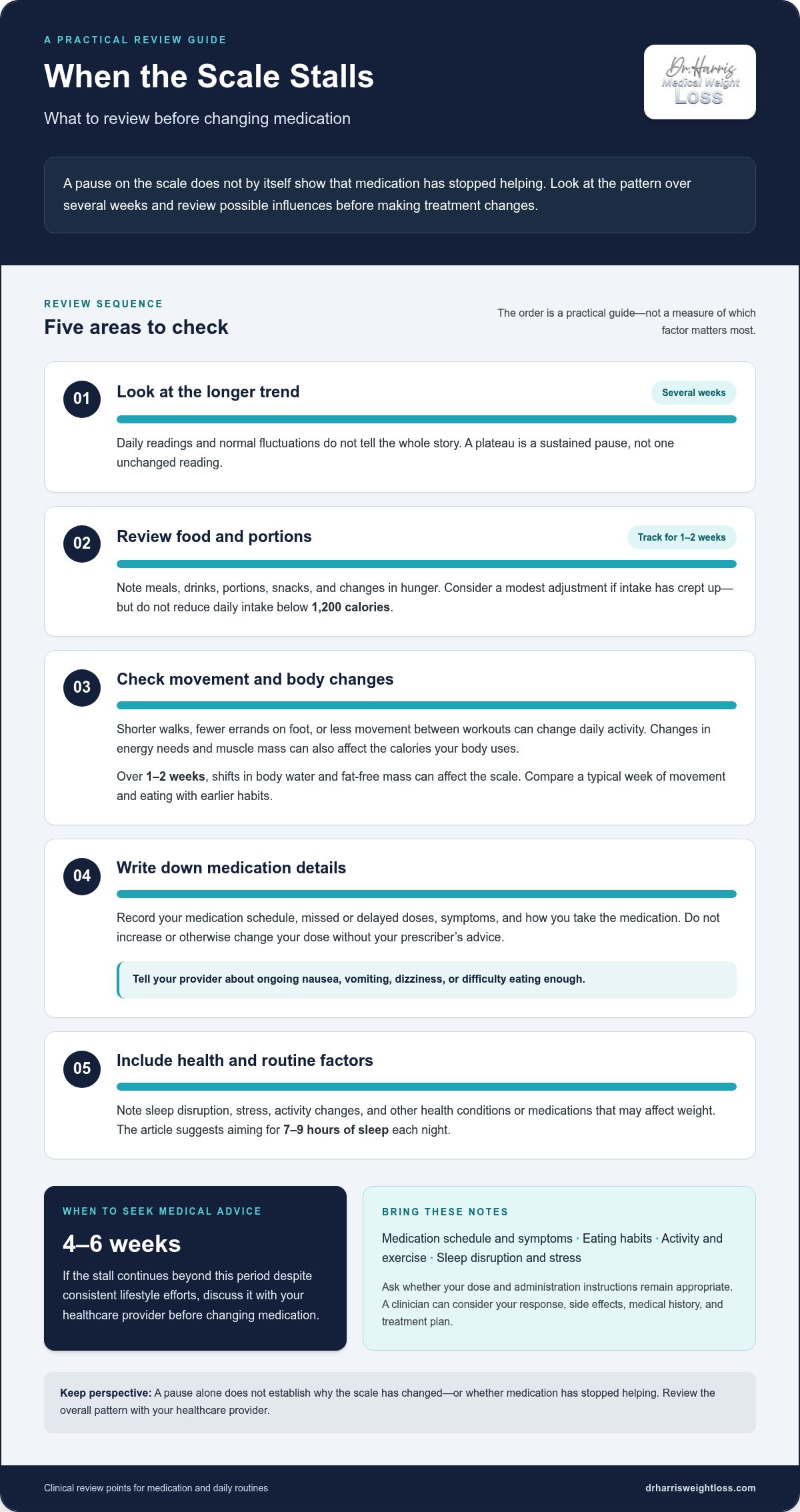
- Look at the weight trend over several weeks rather than reacting to daily fluctuations; a plateau is a sustained pause, not a single unchanged reading.
- Review eating patterns before adjusting intake. Any calorie reduction should be modest, and intake should not fall below 1,200 calories daily.
- Changes in energy needs, muscle mass, activity, and fluid balance can all affect the scale, so consider more than food intake alone.
- Keep notes on medication use and any symptoms, then discuss administration or dose questions with your healthcare provider instead of changing the dose yourself.
1. What is a weight-loss plateau?
A plateau means your weight shows no significant change for several weeks despite ongoing lifestyle efforts. A stable reading over several weeks, or fluctuations without a consistent trend, may be a reason to review your routine. Daily scale readings alone don’t show the whole picture.
Your calorie needs can change as your body changes. Losing weight may also involve losing some muscle, which can lower metabolism and reduce the calories your body burns. A plateau can happen when the calories you consume match the calories you burn. That balance may shift even when your meals and exercise seem unchanged, so review your intake thoughtfully rather than making an abrupt cut.
Track food and drinks for 1 to 2 weeks, noting portions, snacks, and changes in hunger. Compare that record with your physical activity and exercise routine. If intake has crept upward or activity has declined, a modest calorie adjustment or a practical activity change may support your loss goal. Don’t cut daily intake below 1,200 calories; overly aggressive restriction can increase hunger, reduce energy, and risk muscle loss. Aim for changes that feel sustainable within your lifestyle.
In the United States, out-of-pocket medication costs depend on the medication, prescribed dose, pharmacy, and insurance plan. Coverage varies by plan and prescribed treatment.
Yes, reviewing calories, getting enough protein, adjusting exercise, and aiming for seven to nine hours of sleep each night may help address a plateau while taking medication. Keep notes on these habits so you can see which changes support a workable balance.
2. Discussing medication dose and administration with a healthcare provider
During the appointment, describe how you take the medication and any missed or delayed doses. Ask whether your current dose and administration instructions remain appropriate, and whether a dose adjustment is suitable. A healthcare provider considers your response, side effects, medical history, and treatment plan. GLP-1 medications require medical evaluation and monitoring because they aren’t right for everyone.
Contact your provider about ongoing nausea, vomiting, dizziness, or difficulty eating enough while taking a GLP-1 medication. These symptoms can affect nutrition and daily functioning. A registered dietitian can also help review dietary habits and make practical changes that support your weight loss goal without relying on severe restriction. Share specific examples, such as skipping meals because of nausea or struggling to maintain resistance exercise.
If your efforts aren’t helping, discuss other tactics and possible underlying health conditions or medications that can affect weight. Sleep disruption and stress are useful details to raise, since they can shape routines around eating and physical activity. Keep health goals broader than the scale: weight reduction can improve chronic conditions associated with excess weight. For a clinician-led medication discussion, explore medical weight management options.
3. Reasons weight loss plateaus happen
Your body’s energy needs can change as your weight changes. During weight loss, you may also lose muscle, which can reduce the calories you burn at rest. As a result, the calories you consume may come closer to the energy your body uses. This adjustment is worth considering when overcoming a weight loss plateau with medication: a pause alone doesn’t show that the medication has stopped helping.
Changes in routine can affect this balance, too. Shorter walks, fewer errands on foot, or less movement between workouts can reduce daily activity. Food portions and snacks may also shift without notice. Review a typical week of eating and movement, then compare it with your earlier habits before changing your approach or cutting calories further.
Scale changes over 1 to 2 weeks can reflect shifts in body water and fat-free mass, not just body fat. In the first few weeks, glycogen use can release stored water and contribute to an early drop. Later fluctuations may feel frustrating, so consider the longer trend alongside symptoms, activity, and eating patterns.
Medication timing alone doesn’t establish the cause of a plateau. In a two-year semaglutide study, participants tended to reach a plateau around 60 weeks. That finding describes study participants, not a set timeline for every person. Compare medication timing and symptoms with food records and activity changes, then share the pattern with your prescriber. Don’t adjust your dose alone. For support with overcoming a weight loss plateau with medication, arrange a medication review and discuss your routine and next steps.
Dr. Harris Medical Weight Loss: Tirzepatide (Zepbound) Program
Dr. Harris Medical Weight Loss offers a medically supervised Tirzepatide (Zepbound) Program for people considering medication as part of weight management. If your progress has stalled, a clinician can review your treatment and health context, including how you take medication, your symptoms, and the routines that support your goals. A plateau alone is not a reason to increase your dose or change how you take medication without medical guidance.
The clinic also offers Semaglutide medication and Phentermine as prescription options. Each requires an individual discussion about your needs and treatment plan. Medication is not a substitute for monitoring nutrition, activity, and overall health.
Contact Dr. Harris Medical Weight Loss to discuss whether its Tirzepatide (Zepbound) Program may fit your care plan.
Make your next step a supported one
A plateau can be a prompt to reassess the support that fits your health needs, not a reason to abandon your care plan. Track what has changed in your routine, what feels manageable, and what questions you want answered. This gives you a clearer starting point for discussing medication and next steps in overcoming a weight loss plateau with medication.
Dr. Harris Medical Weight Loss offers Tirzepatide (Zepbound), Semaglutide, and Phentermine as part of its medically supervised weight management programs. A conversation with the practice can help you discuss these options in the context of your care. Medication decisions should reflect your health needs and remain guided by a clinician.
Contact Dr. Harris Medical Weight Loss to discuss your next step. Progress deserves thoughtful support, and you can move forward one considered decision at a time.
Frequently Asked Questions
What is a weight-loss plateau?
A weight-loss plateau is a period of several weeks without significant change in body weight despite continued lifestyle efforts. Daily readings may rise and fall while the overall trend stays level. Consistent weigh-ins over time can help distinguish a pause from ordinary fluctuations and provide clearer information to discuss during a care visit.
What counts as a weight loss plateau and how long does it last?
Weight staying about the same for three to four weeks, or fluctuating a few pounds without a clear trend, can indicate a plateau. There isn’t a set duration that applies to everyone. If it continues beyond 4 to 6 weeks despite consistent lifestyle changes, seek medical advice to review your treatment, habits, and other factors that may affect weight.
When should a clinician increase, switch, or stop a weight loss medication?
A clinician considers your response, medication routine, symptoms, health history, and treatment goals before recommending a change. A plateau alone doesn’t determine whether to increase, switch, or stop a medication. Share changes in appetite, eating, or activity, as well as any side effects. Don’t change your dose or stop treatment without discussing it with your prescriber.
How effective are semaglutide, tirzepatide, and other medications after a weight loss plateau?
Medication response varies, and a plateau by itself doesn’t show whether treatment has stopped helping. GLP-1 medications can reduce appetite, increase fullness, and help stabilize blood sugar. In a two-year semaglutide study, participants tended to reach a plateau around 60 weeks. Your prescriber can review your progress and treatment plan to assess what the pattern means for you.
What are the risks of increasing weight loss medication doses without medical supervision?
Increasing a dose without medical advice can lead to a dose that isn’t appropriate for your treatment or health needs. GLP-1 medications require medical evaluation and monitoring, and ongoing nausea, vomiting, dizziness, or difficulty eating enough warrant contacting your provider. Share when symptoms occur and how they affect meals or daily routines. Don’t raise your dose to address a plateau on your own.