Phentermine and vitamin B12 may be used together under medical supervision, but personal health factors still matter. An interaction checker lists no interaction between them, though that doesn’t rule out individual risks. Possible effects to watch for include an increased heart rate, headache, dizziness, trouble sleeping, nausea, or restlessness.
It’s reasonable to want a clear answer before adding a treatment to your plan. This article explains potential side effects, what a pilot study of phentermine with vitamin B12 examined, and how to interpret its findings. You’ll also learn what the evidence says about whether vitamin B12 contributes to weight loss and why clinical oversight matters when considering treatment options.
Key Takeaways
- Review your health conditions and current medications before considering phentermine with vitamin B12; these factors shape safety.
- The pilot study planned to recruit approximately 30 patients, according to the U.S. National Library of Medicine (ClinicalTrials.gov). Its design helps put the findings in context.
- Learn what the evidence says about whether vitamin B12 itself contributes to weight loss, rather than assuming the combination has added benefits.
- Explore how a medically supervised phentermine plan may fit your needs and what other treatment options are available.
Phentermine and B12 side effects
Phentermine is a prescription medication that stimulates norepinephrine release, which may suppress appetite and increase energy. Side effects are unwanted responses to a medication; phentermine may increase heart rate or cause an irregular heartbeat. Before treatment, share your health history and current medicines with your healthcare provider.
Vitamin B12 is a nutrient involved in red blood cell production and nervous system function. B12 products can also contain other ingredients, so read the label carefully. A B-complex formula with caffeine or guarana may worsen phentermine-related effects, including restlessness or trouble sleeping.
Possible effects reported with phentermine and vitamin use include headache, dizziness, trouble sleeping, nausea, and restlessness. An interaction checker found no listed interaction between phentermine and vitamin B12, but that does not establish that every combination is risk-free. Your complete supplement list helps your clinician assess the ingredients you take.
Some people should avoid phentermine. The U.S. National Library of Medicine lists a history of cardiovascular disease, hyperthyroidism, glaucoma, agitated states, drug abuse, pregnancy, nursing, or known hypersensitivity to sympathomimetic amines. Discuss any of these with a healthcare provider before considering treatment.
Phentermine can affect the central nervous system, so note changes such as restlessness or disrupted sleep. Record when symptoms begin and which products you took that day. Share this information with your healthcare provider, especially if symptoms persist or include a change in heart rhythm.
Phentermine is a prescription medication.
Pilot trial of phentermine and B12 for weight loss
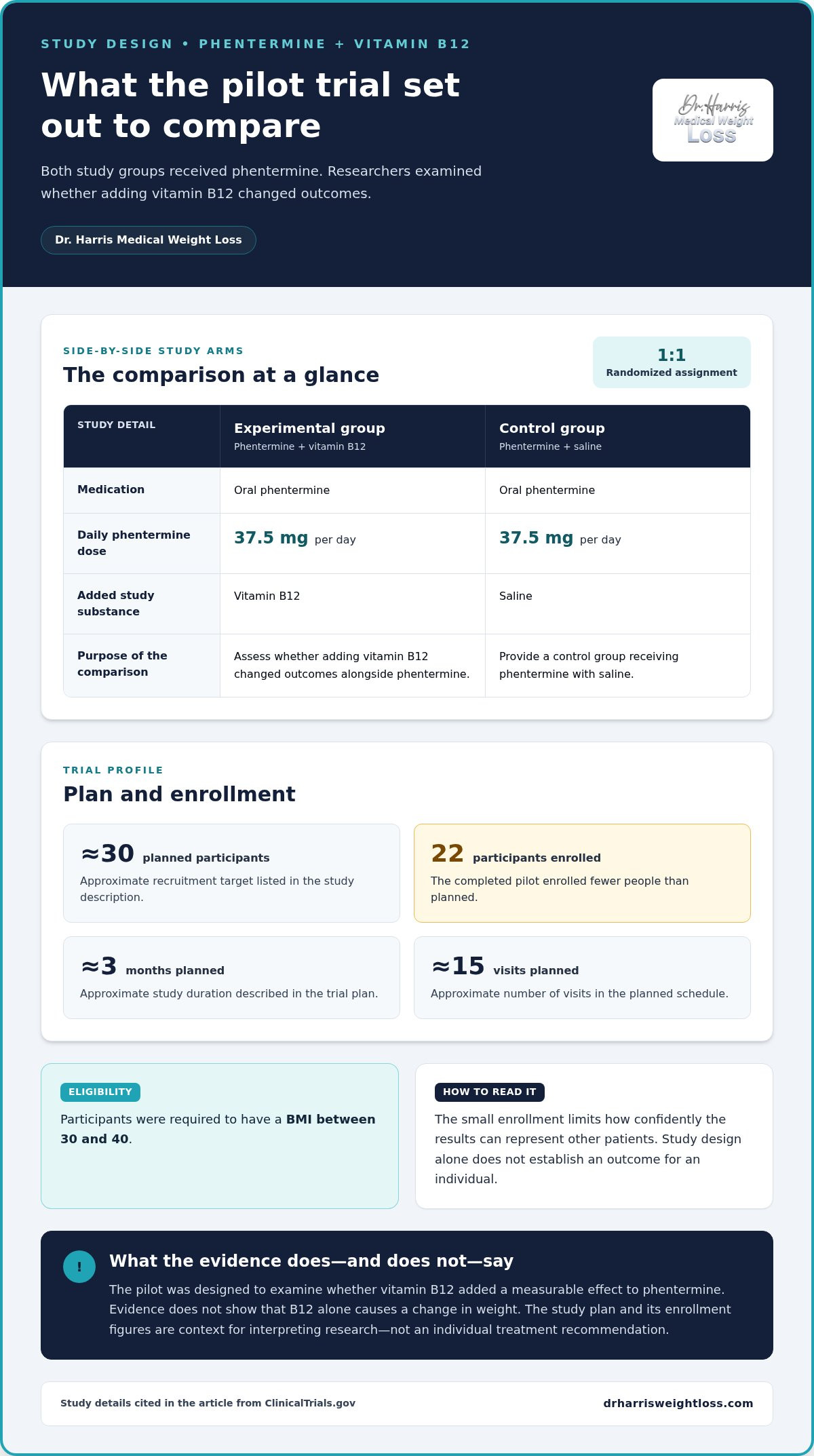
A pilot trial is a small study that tests a research approach before broader evaluation. This trial examined whether vitamin B12 added a measurable effect to phentermine treatment. Its comparison group received phentermine with saline, helping researchers distinguish the added study substance from the medication’s effects.
The U.S. National Library of Medicine (ClinicalTrials.gov) says the study description planned to recruit approximately 30 patients. The completed pilot enrolled 22 participants, so fewer people took part than the study originally intended. A small enrollment limits how confidently results can represent other patients.
According to the U.S. National Library of Medicine (ClinicalTrials.gov), the study was planned to last approximately 3 months and include approximately 15 visits. Both groups were assigned oral phentermine at 37.5 mg per day; the experimental group also received vitamin B12, while the control group received saline. This design focused on whether the added substance changed outcomes alongside the same medication.
The trial’s design is useful for understanding what researchers set out to test, but it doesn’t establish that adding B12 will produce a particular result for an individual. The reported enrollment and study schedule describe the research plan, not a treatment recommendation. If you’re considering phentermine, explore phentermine medication options as part of a discussion about your health history and treatment goals.
Participants were randomized in a 1:1 ratio; eligibility required a BMI between 30 and 40. The planned weekly intramuscular injections were 1000 mg of B12 or saline.
Does vitamin B12 improve weight loss with phentermine?
Vitamin B12 is a nutrient that supports normal blood cell formation and nervous system function. Its role in the body doesn’t establish that taking extra B12 causes weight loss. Evidence does not show that B12 alone produces weight loss, so it shouldn’t be treated as an appetite medicine or a substitute for phentermine.
Phentermine is a prescription medication that can reduce appetite. Any change on the scale during treatment may relate to the medication, food intake, activity, health conditions, or other care, rather than B12. The pilot trial discussed earlier was designed to examine whether adding B12 changed outcomes compared with phentermine alone. Its design can help frame the question, but it doesn’t prove that B12 creates an added benefit.
A practical first step is reviewing why B12 is being considered. A clinician can assess symptoms, diet, medical history, and test results to determine whether deficiency is a concern. If B12 is needed to address a deficiency, that is a separate health goal from changing weight. Keep those aims distinct when tracking progress.
During phentermine treatment, record appetite changes, meals, activity, and any new symptoms. Share this record with your healthcare provider, especially if you have diabetes or take medicines that affect blood sugar. This can help distinguish treatment effects from other influences and support safer decisions. Don’t add supplements or change prescribed doses without discussing the plan with your prescriber.
If you’re considering phentermine, explore phentermine medication options and discuss how treatment fits your health history and goals.
Dr. Harris Medical Weight Loss: Tirzepatide (Zepbound) Program
Dr. Harris Medical Weight Loss offers a Tirzepatide (Zepbound) Program for people considering a medically supervised medication approach. If phentermine and vitamin B12 have raised questions about your treatment plan, a conversation about your goals, health history, and current medications can help clarify which option fits your needs.
Dr. Harris Medical Weight Loss offers a Semaglutide Medication Program and Phentermine Medication as separate treatment options. The right choice depends on your health circumstances and care goals. A discussion with a healthcare professional can help you understand these options and how they relate to your current plan.
For a thoughtful next step, contact Dr. Harris Medical Weight Loss to discuss the Tirzepatide (Zepbound) Program and your treatment goals.
Take the next step with a clear plan
Make your next conversation with a healthcare professional specific. Write down your priorities, current medications, relevant health history, and concerns. This can help focus the discussion on a plan that reflects your overall health and daily life, rather than one treatment add-on.
If you’re deciding which approach to consider, focus on what matters to you: what treatment involves, how it fits your health needs, and what follow-up will look like. Clear answers can help you feel prepared to participate in decisions about your care.
Dr. Harris Medical Weight Loss can discuss your treatment goals and available options. Contact Dr. Harris Medical Weight Loss to start a conversation at your pace.
Frequently Asked Questions
Can phentermine and vitamin B12 be used together?
They may be used together under healthcare supervision. Before combining phentermine and B12 shots, tell your prescriber about every prescription, supplement, and energy product you use. This review can identify overlapping ingredients, such as caffeine or guarana, and health factors that may affect your treatment plan. Keep the product labels available for a medication review.
Can phentermine be taken with other medications?
It depends on the specific medication and your health history. Bring your prescriber a current list of prescriptions, over-the-counter medicines, and supplements, including cold remedies and energy products. Sharing the exact name and ingredient list of a combination product can help assess its possible effects alongside phentermine.
Can vitamin B12 treatment accompany phentermine?
It may be considered in a supervised treatment plan, with a clear reason for using B12. Addressing a diagnosed deficiency is different from expecting B12 to change appetite. Tell your healthcare provider about previous reactions and any supplements you already take, so the plan accounts for what you’re using and why.
Are there known interactions between phentermine and B12?
An interaction checker lists no interaction between phentermine and vitamin B12, but that doesn’t rule out risks for every person. Before combining phentermine and B12 shots, discuss your full medication list and any new symptoms with your prescriber. Potassium monitoring may also be relevant during B12 therapy because low potassium has occurred.
What side effects and risks can phentermine cause?
Phentermine may cause an increased heart rate or irregular heartbeat, headache, dizziness, trouble sleeping, nausea, or restlessness. The U.S. National Library of Medicine lists certain conditions or histories that contraindicate its use, including cardiovascular disease, hyperthyroidism, glaucoma, pregnancy, or nursing. Share your medical history before treatment begins.