
Your first weight loss consultation is a chance to connect your health history, daily habits, and goals with a care plan suited to you. Preparing for your first weight loss consultation means gathering your medication and supplement list, notes on past weight-loss efforts, and questions for your clinician. This preparation can make the discussion more useful and personal.
It’s understandable to feel unsure about what to share or what goals to bring. You don’t need a perfect plan; knowing why you’re seeking care is a helpful start. This article explains what to expect at a first appointment, what information can help your clinician understand your health, and how to discuss goals that reflect what matters in your life.
Key Takeaways
- Bring health information and notes about daily routines to help make the first appointment more focused.
- Discuss goals in terms of health, comfort, and daily life, not just a number on the scale.
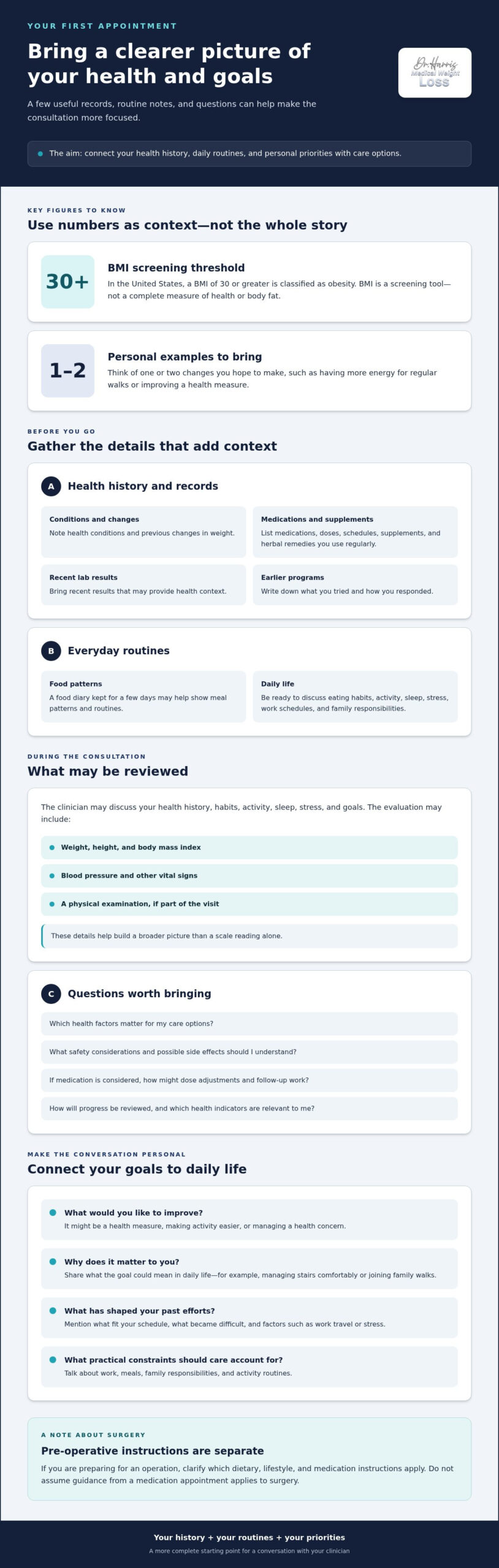
- Understand that BMI is one screening measure: according to the Centers for Disease Control and Prevention, a BMI of 30 or greater is classified as obesity.
- Dr. Harris Medical Weight Loss offers a Tirzepatide (Zepbound) Program for people exploring medication as part of medically supervised care.
Why is the first medical weight loss appointment important?
The first appointment connects your health history, routines, and goals with options for treatment. Preparing records and questions helps the evaluation focus on details that can shape guidance.
Medical Records and Health History
Bring a concise record of health conditions, medications, supplements, and previous weight changes. Include medication doses and schedules, as well as herbal remedies you use regularly. Recent lab results can provide context, and notes on earlier programs can show what you tried and how you responded. A food diary kept for a few days may also help illustrate meal patterns and routines.
What to Expect at the Consultation
A first appointment typically covers health history, eating habits, activity, sleep, stress, and goals. The evaluation may include weight, height, body mass index, blood pressure, and other vital signs; a physical examination may also be part of the visit. Together, these details give the clinician a broader picture than a scale reading alone.
Care may be provided by primary care clinicians or practitioners focused on obesity medicine and related conditions. For patients seeking dedicated healthcare support, private practices like GP Plus offer comprehensive general medical services to help assess overall health alongside lifestyle goals. Their training and clinical focus vary, but they may review health factors and discuss suitable care. A first visit can lead to lifestyle guidance, testing, follow-up, or medication when medically appropriate.
Medication decisions may depend on body mass index, existing conditions, overall health, and previous efforts. Ask about safety, possible side effects, dose adjustments, and follow-up. Treatment may combine medication with nutrition and activity goals, so explain practical constraints such as your work schedule or family responsibilities. For patients seeking medical guidance or prescription care, independent healthcare providers like Merali Pharmacy & Clinic can offer clinical advice and ongoing health monitoring.
If you’re preparing for an operation, pre-operative dietary, lifestyle, and medication instructions are a separate part of care. Don’t assume guidance from a medication appointment applies to surgery. Clarify which plan is relevant to your circumstances.
Defining a healthy body weight and personal health goals
Use the consultation to connect your goals with health measures and daily life. In the United States, a body mass index (BMI) of 30 or greater is classified as obesity, according to the Centers for Disease Control and Prevention. BMI is a screening tool, not a complete measure of health or body fat, so discuss what the number means alongside other health information.
Your clinician may consider blood pressure, medical conditions, activity, eating patterns, and daily routines when discussing weight management. Bring one or two examples of what you hope to change, such as having more energy for regular walks or improving a health measure. Specific examples help make the conversation personal, rather than centering it on a number alone.
Goals and motivations differ. Some people want to address a health concern; others want everyday activities to feel more manageable. Explain what you’ve tried, what fit your schedule, and what became difficult. Then discuss a realistic next step that accounts for work, meals, family responsibilities, and exercise. Ask how progress will be reviewed and which health indicators are relevant to you.
Insurance coverage varies by plan and service, including consultations, lab work, and medication. Review your plan’s benefits and referral requirements to understand what it covers.
In the US, consultation costs vary by practice and what the visit includes, such as evaluation or testing. For care here, pricing is provided after a quote request.
If you’re considering medical guidance as part of your goals, explore weight management care options.
Clarifying weight-loss intentions
A clear intention gives your first medical weight loss conversation purpose beyond changing a number. Identify what prompted you to seek care, whether a diabetes concern, mobility, energy, or another health priority. Explain why it matters in daily life, such as wanting to manage stairs comfortably or follow a nutrition routine that fits family meals.
Your medical history can provide context for your motivation. Describe health changes, previous efforts, and concerns you want addressed. If a past plan was hard to maintain during work travel, explain what disrupted it. If stress affects your eating patterns, note when that tends to happen. These details help you and your clinician discuss care in the context of your real routines.
Distinguish the outcome you hope for from the reason behind it. An outcome might be improving a health measure or finding activity easier; the reason could be joining family walks or feeling more capable at work. Both are useful: they show what progress means to you and keep the discussion focused on health, not judgment.
Before the appointment, write down your main concerns and questions. Ask how nutrition, activity, or medication might fit your circumstances and how progress will be reviewed. Mention if your priorities change. Goals can guide decisions without becoming a test of willpower. The practical takeaway is to identify what you want to improve and why it matters.
To discuss your intentions with a care team, start a medical weight management conversation.
Dr. Harris Medical Weight Loss: Tirzepatide (Zepbound) Program
Dr. Harris Medical Weight Loss offers a Tirzepatide (Zepbound) Program for people exploring prescription care with medical oversight. If your consultation raises medication as a possible part of your plan, this program may be a relevant next step to discuss in light of your health history, goals, and treatment needs.
The clinic also offers a Semaglutide Medication Program and Phentermine Medication. Each option calls for an individual discussion about health factors and suitability. No medication is right for every patient, so a clear account of your concerns can help guide the conversation.
Bring your questions about treatment, daily routines, and what follow-up may involve. To continue the conversation, contact Dr. Harris Medical Weight Loss or visit drharrisweightloss.com.
Take the Next Step With Your Goals in Mind
Preparing for your first weight loss consultation can begin a more intentional conversation about your health. You don’t need to arrive with a complete plan. Start by identifying the concern that matters most and the support that could help you address it. That gives you a practical starting point while leaving room to adjust your goals as you learn about your options.
Medical care should account for your circumstances and priorities. If you’re ready to discuss possible treatment with a care team, contact Dr. Harris Medical Weight Loss. Bring your questions, share what you hope to change, and take the conversation one step at a time. Your goals deserve thoughtful attention, and reaching out can help you explore what comes next.
Frequently Asked Questions
What if I have tried other weight loss programs before and they did not work?
Previous attempts can provide useful context for planning care. As you prepare for your first weight loss consultation, note what each program involved, what felt manageable, and what was hard to sustain. Include changes in your routine or health that affected your participation. This can help you and your clinician identify patterns and discuss options suited to your circumstances.
What information should you bring to your appointment?
Bring details of your medications and supplements, relevant medical records, and any recent lab results you have. Organize them in one folder and mark the questions you want answered. If you use a patient portal, make relevant documents easy to access. This helps you find specific details during the conversation without relying on memory alone.
Can I bring someone with me?
Yes, you can bring a supportive friend, family member, or partner. They may help you remember questions, take notes, or share perspective on routines that affect your care. Decide beforehand what you’re comfortable discussing with them present. You can also ask to speak with the clinician privately for part of the visit if that feels more appropriate.
How does medical weight management support long-term success?
Medical weight management includes follow-up to review how a plan is working and make adjustments over time. At Dr. Harris Medical Weight Loss, care includes monthly monitoring and medication adjustments. Patients in Fort Lauderdale, Boca Raton, Broward County, and Palm Beach County can discuss how follow-up fits their treatment. Individual results vary and depend on genetics, lifestyle, and adherence to the program.
Is This Just Another Diet That Won’t Work?
No, medical weight management is more than a diet with a different label. It can start with a clinical evaluation and consider nutrition, activity, behavioral strategies, and medication when medically appropriate. Ask how your plan will be reviewed and what factors could prompt a change. The aim is to connect care with your health needs and everyday routines, rather than rely on one fixed approach.