You can tell your doctor directly that you want to discuss medication as part of your care. If you’re unsure how to talk to your doctor about weight loss medication, explain what you’ve tried, how your health is affected, and what you hope treatment could address. According to the National Institute of Diabetes and Digestive and Kidney Diseases, medication may be considered for adults with a BMI of 27 or higher who also have a weight-related health problem.
Feeling embarrassed is understandable, but you deserve a respectful, practical conversation about your options. This guide offers clear ways to raise the topic, share useful health and treatment history, and ask whether medication or surgery may be appropriate for you. You’ll also learn what to ask if your doctor recommends another approach or declines to prescribe, so you can leave with a clearer next step.
Key Takeaways
- Open the conversation by explaining your health concerns, treatment goals, and what you’ve already tried.
- Ask how your BMI and any related health conditions affect eligibility for medication.
- If your provider declines to prescribe, ask what factors informed the decision and what steps or alternatives to consider next.
- Discuss medication and surgery as separate options, and ask which approach fits your health history and preferences.
What if your provider won’t prescribe you weight loss pills?
During an appointment, expect to discuss your health history, BMI, health conditions, and medications. Your doctor may also order laboratory tests or other evaluations before recommending a plan.
-
Check Medication Eligibility Criteria
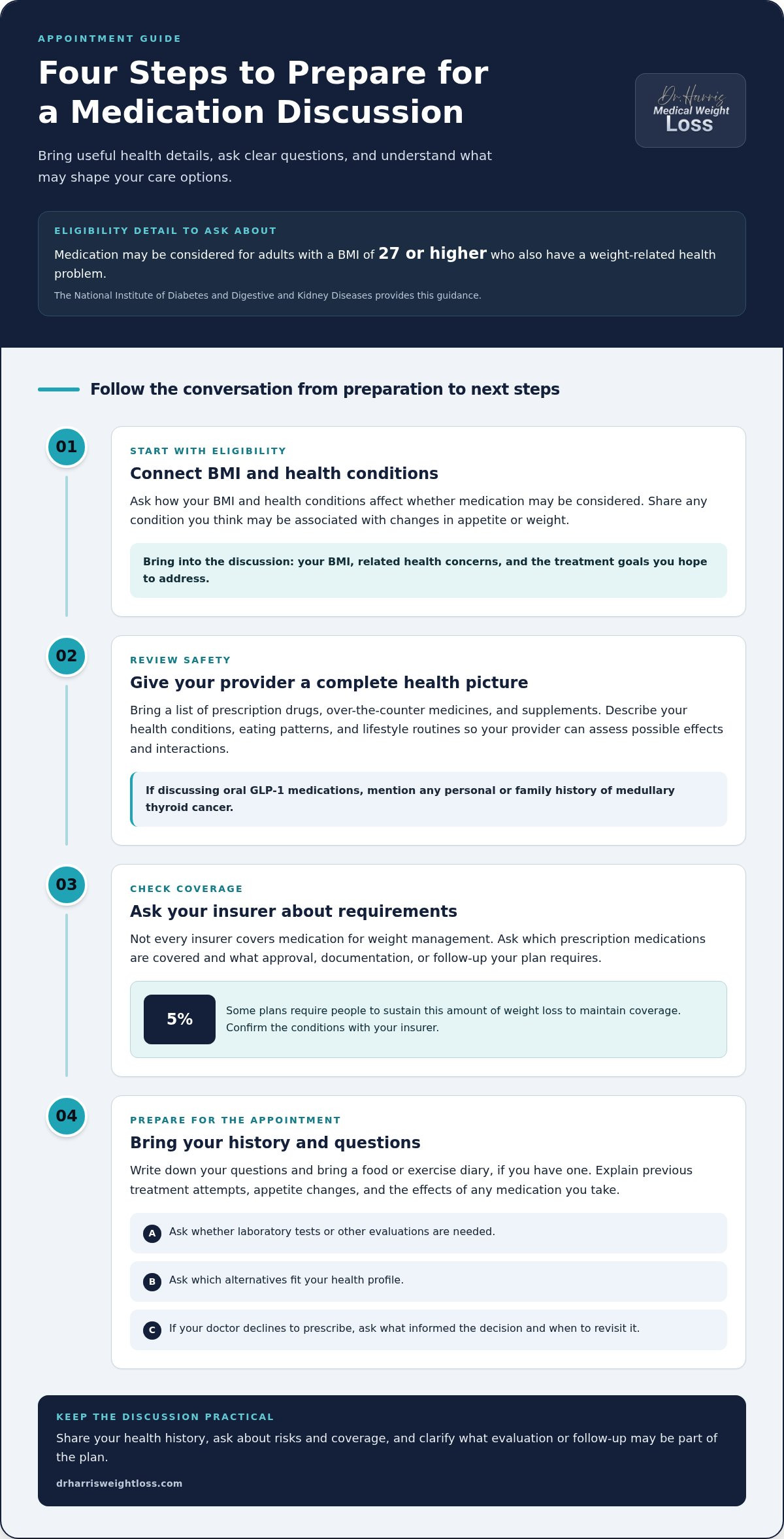
Ask how your BMI and health conditions affect whether you’re a candidate for medication. The National Institute of Diabetes and Digestive and Kidney Diseases says medication may be considered for adults with a BMI of 27 or higher who also have a weight-related health problem. Share any health condition you think may be associated with changes in appetite or weight.
-
Discuss Medication Safety
Bring a complete list of prescription drugs, over-the-counter medicines, and supplements. Describe your health conditions, eating patterns, and lifestyle routines so your provider can assess possible effects and interactions. Mention any personal or family history of medullary thyroid cancer, which matters when discussing oral GLP-1 medications such as Foundayo or the Wegovy pill.
-
Review Insurance Coverage
Ask your insurer which prescription medications it covers and what approval requirements apply. Not every insurer covers medication for weight management, and some require people to sustain 5% weight loss to maintain coverage. Ask what documentation or follow-up your plan requires, so you understand coverage conditions before starting treatment.
-
Prepare for the Appointment
Write down your questions and bring a food or exercise diary, if you have one. Explain previous treatment attempts, appetite changes, and the effects of any medication you take. Ask whether laboratory tests or other evaluations are needed, which alternatives fit your health profile, and when to revisit the decision if your doctor declines to prescribe.
What to do if a provider will not prescribe medication
Ask what informed the decision and what could change it. What benefits and results should you expect? The National Institute of Diabetes and Digestive and Kidney Diseases reports that prescription medication added to a lifestyle program helps adults lose about 3 to 12 percent more of their starting weight after one year than the program alone.
-
Explore Medication Options
Ask which prescription pills or injections could fit your health profile, and how each works. Options approved for obesity in the United States include orlistat, phentermine, semaglutide, and tirzepatide. Medications may reduce appetite, reduce nutrients the body absorbs, or increase fat burning. Ask about expected results, side effects, how long treatment may continue, and what may happen if you stop. Discuss how medication fits alongside diet, exercise, and other lifestyle changes.
-
Plan a Response to a Prescribing Refusal
Ask your doctor to explain the specific reason for declining, such as eligibility, another condition, a medication interaction, or a safety concern. Then ask what would need to change before reconsidering and whether another prescription option may be appropriate. If the concern involves side effects or another medication, ask how that risk affects your treatment choices. Keep the discussion focused on your health goals, not on persuading your doctor to prescribe a particular medication.
- Agree on a next step, such as reviewing your health history, discussing lifestyle changes, or arranging a follow-up conversation. Your doctor may recommend nutrition and behavior support or a structured program with monitoring. Ask how progress will be reviewed and when to revisit medication if your plan isn’t meeting your needs.
- If you want another clinician-guided discussion of medication options, explore prescription medication care. Bring the questions you’ve identified, including how treatment would fit your health history and daily routine.
Discussing eligibility for weight loss medication or surgery
Use the appointment to understand how your health history, treatment goals, and preferences shape eligibility. Ask your physician to explain the reasoning behind each option, including surgery.
- Share your BMI and ask how it informs treatment discussions. A BMI of 30 or higher is one category used when considering medically guided treatment. BMI is only part of the conversation: describe health conditions such as diabetes or high blood pressure, and ask how they affect your options.
- Bring a clear account of previous diets, exercise routines, medications, and supplements. Include weight regain after earlier progress, if relevant. These details help your physician understand what you’ve tried and what barriers remain, rather than judge your effort. Ask how readiness for lifestyle changes factors into the treatment recommendation.
- Ask directly, “Am I a candidate for medication, surgery, or neither right now?” Medication and surgery are distinct approaches, so invite your physician to explain the potential role, requirements, and considerations for each. If surgical options are being weighed, pre-operative medical clearance from an internist like John Abroon M.D. can ensure key health factors are thoroughly evaluated beforehand. Ask what further evaluation or health checks would inform that decision, and how conditions such as high blood pressure affect the plan.
- Request advice you can act on, whether the next step is reviewing treatment choices, addressing a health concern, or continuing diet and exercise changes. Ask how you’ll assess progress and when to revisit the plan. If you want a clinician-guided discussion of medication, explore medication treatment options and prepare questions about how they fit your health history.
Dr. Harris Medical Weight Loss: Tirzepatide (Zepbound) Program
Dr. Harris Medical Weight Loss provides a medically supervised Tirzepatide (Zepbound) Program for people considering medication as part of weight-management care. If you’ve discussed eligibility with your physician and want to explore a medication option, the program offers a way to continue the conversation with clinical oversight in Broward and Palm Beach Counties.
Bring your health history, current medications, and questions about treatment goals, possible side effects, and follow-up. You can also discuss the Semaglutide Medication Program or Phentermine Medication as other options. The goal is to understand how a medication fits your health needs and the plan you’ve discussed with your physician, not to replace that conversation or promise a particular result. Individual results vary based on genetics, lifestyle, and adherence to the program.
Contact Dr. Harris Medical Weight Loss to discuss the Tirzepatide (Zepbound) Program.
Take Your Next Step With Confidence
If you’re considering how to talk to your doctor about weight loss medication, start by identifying what you want treatment to support in your daily life. That priority can keep the conversation personal and focused, rather than centered only on a number. You can also raise concerns about side effects, ongoing care, or how treatment fits your routine.
Dr. Harris Medical Weight Loss offers a Tirzepatide (Zepbound) Program, a Semaglutide Medication Program, and Phentermine Medication. If you want to discuss these options in a clinical setting, contact Dr. Harris Medical Weight Loss.
You don’t need to have every answer before taking the next step. A clear question is a meaningful place to begin.
Frequently Asked Questions
Is it normal to feel embarrassed to talk to your doctor about weight loss?
Yes, embarrassment can make the subject difficult to raise, but it doesn’t mean your concern is unimportant. You can start with a simple statement: “I’d like to discuss how my weight is affecting my health.” If speaking feels hard, write down your main concern and read it aloud or hand the note to your doctor.
What if my BMI is only a little above normal?
A BMI near a threshold doesn’t determine your care by itself. Ask your doctor to consider your overall health, including conditions such as high blood pressure or diabetes, and explain what the measurement means in your case. If medication isn’t appropriate now, ask which health changes to monitor and when to revisit the discussion.
What if my doctor brushes off my concerns?
Bring the conversation back to a specific effect on your health or daily life, such as difficulty managing a condition or a change in mobility. You might say, “I’m concerned about this and would like to understand my options.” Ask your doctor to explain their assessment and agree on a follow-up plan, including when to reconnect. If you still feel unheard, seeking an independent consultation with a private GP practice such as Kingsford Medical Services can provide the dedicated time needed to review your medical history and explore care options.
How do I bring up weight loss medication with my doctor?
If you’re wondering how to talk to your doctor about weight loss medication, state your goal plainly: “Can we discuss whether medication could be part of my care?” Then share what prompted the conversation and ask about potential benefits, risks, and other treatment approaches. This opens a clinical discussion without requesting a specific prescription before your health history is reviewed.
What information should I share with my doctor before discussing weight loss medication?
Describe changes over time, previous approaches you’ve tried, and how they affected your health or routine. Bring a current list of prescriptions, over-the-counter medicines, and supplements, including when you take them. Mention health conditions, relevant family history, and concerns about side effects. These details help your doctor assess treatment options in context.