Other people’s criticism doesn’t define what your progress means. Set a clear boundary, such as, “I’m not discussing my body,” then turn to people who respect your choices. Feeling confident after weight loss is easier to nurture when you don’t leave your worth in someone else’s hands. Criticism can still sting, even when you feel proud of the changes you’ve made.
You may have expected changes in your appearance to bring lasting self-esteem, only to find that difficult feelings remain. That disappointment doesn’t mean you’ve failed. This article offers practical ways to respond to comments, accept your body on days when confidence feels distant, and build self-respect around more than appearance. It also explains why weight loss may not resolve the beliefs or experiences that shape how you see yourself, and when emotional support may help you move forward.
Key Takeaways
- Set a respectful boundary when comments about your body feel intrusive, and lean on people who support your well-being.
- Use body neutrality to make room for changing feelings and reconnect with what your body can do.
- Notice whether self-worth is tied to appearance, and pursue meaningful activities without waiting for a particular number.
- Practice kinder self-talk after setbacks by recognizing effort and progress instead of focusing on perceived shortcomings.
1. How can I handle criticism or jealousy from others about my weight loss?
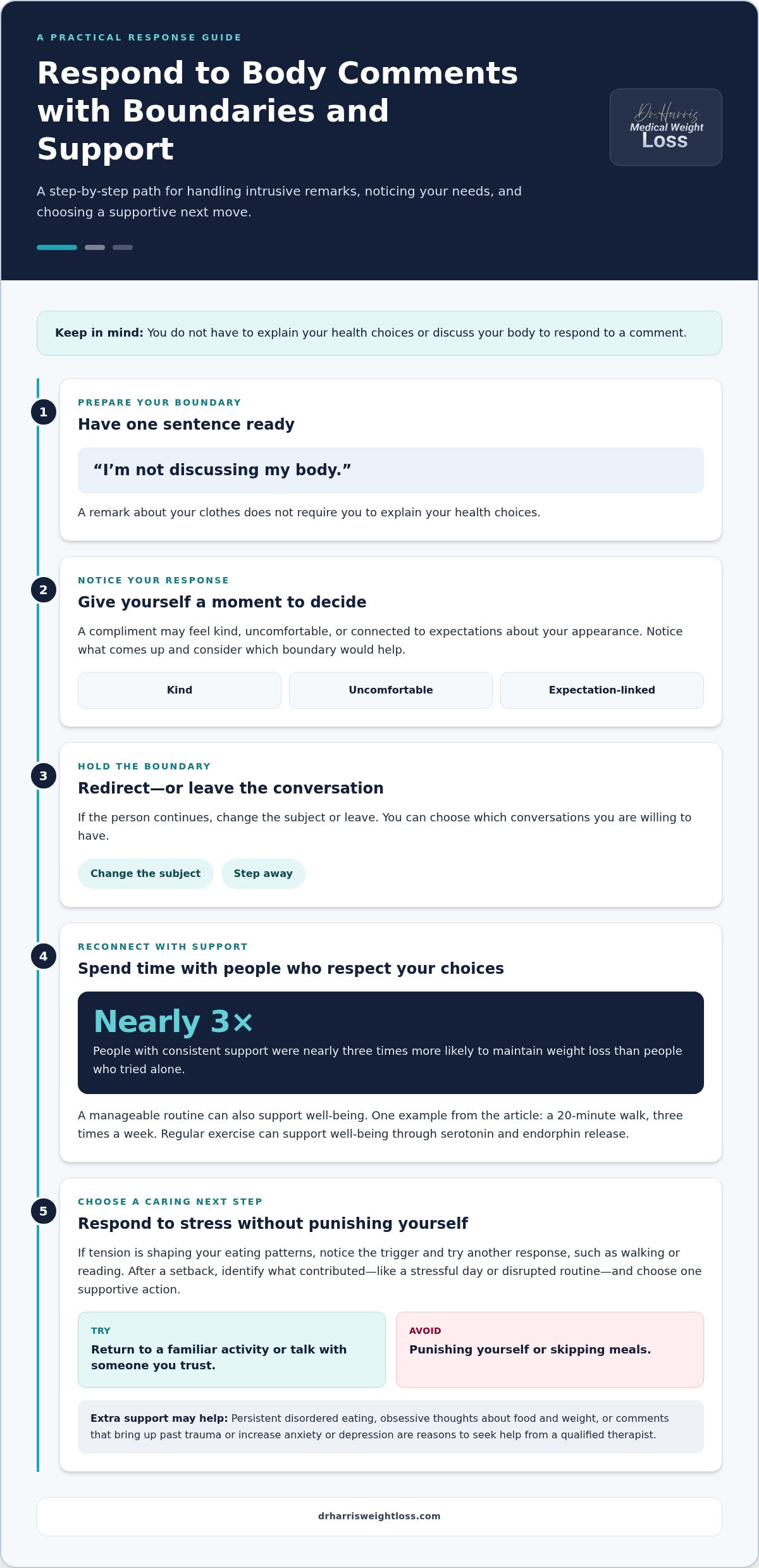
Prepare a sentence for comments that feel intrusive: “I’m not discussing my body.” If the person continues, change the subject or leave the conversation. For example, a coworker’s remark about your clothes doesn’t require you to explain your health choices. Feeling confident after weight loss can include deciding which conversations you’re willing to have.
Changes in attention can bring mixed emotions. A compliment may feel kind, uncomfortable, or tied to expectations about your appearance. Notice your reaction and decide what boundary would help. If comments bring up past trauma or increase anxiety or depression, professional support from providers like Mindbender Counseling can help you work through those feelings.
Support and healthy routines can help you feel less alone and keep attention on well-being. People with consistent support were nearly three times more likely to maintain weight loss than people who tried alone. Regular exercise can support well-being through serotonin and endorphin release. Choose a manageable starting point, such as a 20-minute walk three times a week.
Stress can also shape eating patterns. If you notice yourself eating in response to tension, try walking or reading and observe what changes. Persistent disordered eating or obsessive thoughts about food and weight deserve support from a qualified therapist. Feeling confident after weight loss doesn’t mean ignoring emotional needs. It can mean responding to them with care.
Weight gain may bring frustration or fear of criticism. Instead of punishing yourself or skipping meals, identify a trigger, such as a stressful day or disrupted routine. Then choose one supportive action, like returning to a familiar activity or talking with someone you trust.
2. How do I avoid feeling disappointed after losing weight?
Your body image may need time to adjust to physical changes. You might reach for familiar clothing or feel surprised by your reflection. Some people describe “phantom fat,” a lingering sense that their body looks or feels unchanged. Treat that feeling as a signal to pause, not proof that nothing has changed. Notice one concrete difference, such as easier movement or how an outfit fits. Feeling confident after weight loss can take time as your self-image catches up.
Your identity can shift, too. If routines or social roles once revolved around food or body size, losing weight may leave a gap. Choose an activity that reflects your interests, such as joining a book group or taking an art class. This gives your journey room for connection and enjoyment, rather than making appearance the only measure of progress.
Body positivity may feel out of reach on difficult days. Body neutrality offers another approach: accept your body as it is today without requiring yourself to love every feature. Try saying, “My body deserves care, even when I feel unsure about how it looks.” You can also appreciate what your body does, such as carrying groceries or walking with a friend. For some people, feeling confident after weight loss begins with this more neutral perspective.
Loose skin can affect body image and bring disappointment. Acknowledge the concern without treating it as failure. Consider what contributes to dissatisfaction, such as discomfort, comparison, past criticism, or expectations about appearance. For physical care, some individuals explore supportive treatments like remedial massage or body contouring through providers such as bodytherapist.com.au, while a therapist or support group can help you explore these feelings and build a more balanced relationship with your body.
3. Why Doesn’t Weight Loss Improve My Self-Esteem?
Weight loss can change how you look or move, but it may not address the reasons you judge yourself. If low self-esteem comes from criticism, perfectionism, or feeling unworthy, reaching a body goal may leave those beliefs intact. Weight loss can affect confidence, but it doesn’t determine your value or resolve every emotional concern.
Notice the thought that follows a setback. “I missed a workout, so I’ve failed” turns one event into a judgment about your whole character. Try replacing it with a specific, fair statement: “I missed today, and I can choose a helpful next step tomorrow.” This kind of self-compassion isn’t an excuse. It can reduce self-blame and support healthier eating behaviors and sustainable outcomes.
Build positive self-talk around actions you control. Name one effort each day, such as preparing a meal or keeping an appointment, rather than rating your appearance. Then set a goal beyond the number on the scale: call a friend, return to a hobby, or try an activity you’ve postponed. These steps build a sense of capability and give self-esteem more than one foundation.
If negative beliefs persist or interfere with daily life, therapy can help you understand their roots and practice new responses. A therapist can help you separate self-image from achievement, so a missed goal doesn’t erase your other strengths. Self-compassion is a skill developed through repeated choices, not a demand to feel positive all the time.
If you’re considering medical support for managing weight as part of your health goals, explore medically guided weight management. Treatment can support health goals, while self-esteem may need attention in its own right.
Dr. Harris Medical Weight Loss: Tirzepatide (Zepbound) Program
Dr. Harris Medical Weight Loss offers a Tirzepatide (Zepbound) Program as a medically supervised option for people seeking weight management support. Consider discussing it if you’re thinking about medication as part of your health plan. Medication doesn’t resolve self-esteem concerns or body dissatisfaction on its own, so emotional well-being deserves attention alongside physical health.
A conversation about your health goals, medical history, and concerns can help determine whether this program fits your needs. Contact Dr. Harris Medical Weight Loss in Broward or Palm Beach County to discuss your next step.
Keep Building Confidence on Your Own Terms
Confidence can grow through choices that reflect your values, not just changes in appearance. Give yourself room to define what well-being means now, whether that includes more energy for daily routines, time with people who respect your boundaries, or support for emotional health. Feeling confident after weight loss isn’t a finish line. It’s a relationship with yourself that can continue to develop.
If medication is part of the health support you’re considering, Dr. Harris Medical Weight Loss offers a Tirzepatide (Zepbound) Program, a Semaglutide Medication Program, and Phentermine medication. A medical professional can help determine whether an option fits your needs and health history. You can take a considered next step without expecting medication to resolve self-esteem concerns on its own.
Contact Dr. Harris Medical Weight Loss to discuss your options. Keep moving toward care that supports your health and respects your whole self.
Frequently Asked Questions
How can I handle criticism or jealousy from others about my weight loss?
Keep a prepared response for comments that catch you off guard. For example, say, “I’d rather talk about something else,” then ask a neutral question or step away. If the comments come from someone close, speak privately later and explain which topics feel respectful. This gives the person a clear way to change their behavior without turning your body into a debate.
How do I avoid feeling disappointed after losing weight?
Set expectations around experiences you can influence, not a promised feeling or appearance. Choose a personal goal, such as returning to a hobby you paused, and notice how it feels to take part. If disappointment remains, write down what you hoped would change and what still matters to you. This can help identify needs that a change in body size cannot meet.
What are non-scale victories, and why are they important?
Non-scale victories are meaningful changes that aren’t measured by body weight. Examples include having more energy for errands, improved stamina on a walk, or getting up from the floor more easily. Noticing these outcomes can broaden your definition of progress. Record a specific example in a journal so you can revisit it when the number on the scale feels discouraging.
What can I do if I feel worse about myself after weight loss?
Take the change in mood seriously rather than treating it as proof that you’ve done something wrong. Tell someone you trust what you’re experiencing, and consider speaking with a therapist, especially if anxiety, depression, or thoughts about food disrupt daily life. If you feel at risk of harming yourself or someone else, contact 911 for immediate help.
Why Doesn’t Weight Loss Improve My Self-Esteem?
Self-esteem can be shaped by experiences and beliefs that have little to do with body size. If you still feel unworthy after reaching a goal, identify one area of life where you want more meaning or connection. Take a practical step, such as making plans with a friend or restarting a creative project. Therapy can help address persistent negative beliefs and support that process.