
What if your reunion date is a useful starting point, not a deadline for dramatic change? If you’re hoping to lose weight for a reunion South Florida residents are attending, focus on routines you can build now rather than promises that may not fit your health or timeline.
It can be hard to know what’s achievable by the event when advice about food, activity, and medication conflicts. This guide can help you set a practical plan, choose habits you can maintain, and decide when to speak with a clinician. You’ll also find questions to ask about your medical history and whether options such as Semaglutide, Tirzepatide, or Phentermine merit an individual evaluation. For people in Fort Lauderdale, Boca Raton, Broward County, and Palm Beach County, a consultation is an opportunity to ask questions and understand available options. Let the reunion motivate a start, while your health guides the plan.
Key Takeaways
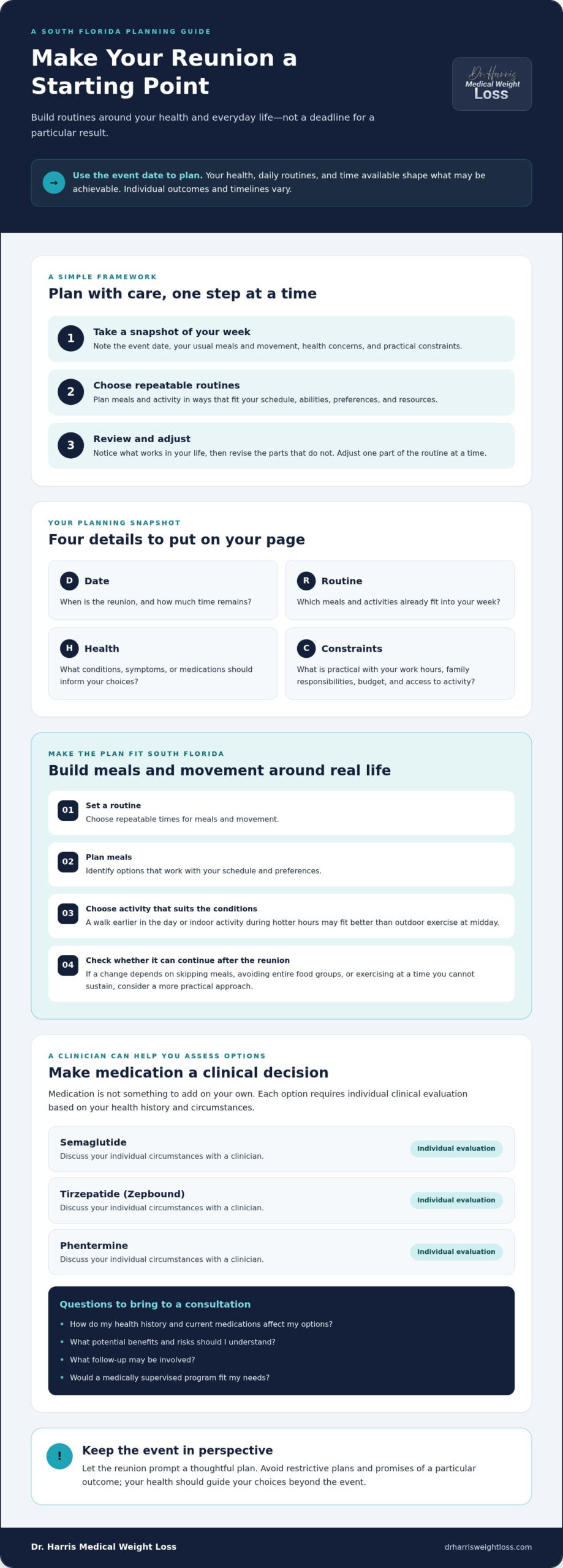
- To lose weight for a reunion South Florida, note the event date, your current routines, health concerns, and everyday constraints.
- Build a repeatable routine for meals and activity, then review what’s working and adjust.
- Plan movement around South Florida’s heat and your schedule so it is easier to maintain.
- A consultation with Dr. Harris Medical Weight Loss can help you discuss your goals, medical history, medications, and whether a program may suit your needs.
Planning to Lose Weight for a Reunion in South Florida: Start With the Date and Your Health
A reunion can give you a meaningful reason to make a change. If you want to lose weight for a reunion South Florida, start by looking at your circumstances rather than setting a fixed result. What may be achievable depends on your health, daily routines, and the time available. Individual outcomes and timelines vary, so use the event date to plan, not to predict a particular result.
Make a simple snapshot of your week. Note the reunion date, your usual meals and movement, any health concerns, and practical limits such as work hours, family responsibilities, budget, or access to places to exercise. You might also note when meals are hardest to plan or when activity is easiest to fit in. The overview of Weight management provides broad context, but your plan should reflect your needs. Treat the reunion as one milestone, not a substitute for ongoing care or a reason to judge yourself.
- Date: When is the event, and how much time remains?
- Routine: Which meals and activities already fit into your week?
- Health: What conditions, symptoms, or medications should inform your choices?
- Constraints: What changes are practical with your schedule and resources?
How much time do you have before the reunion?
The time available can help you decide where to begin, but it can’t predict your individual result. Choose routine changes you can maintain, such as planning meals or setting aside time for activity. If you have symptoms, a medical condition, or questions about medication, speak with a qualified clinician rather than trying to manage the concern on your own.
Keep the event goal separate from your longer-term health needs. Avoid restrictive plans or promises of a particular outcome. A clinician can consider your health history and goals with you, so the reunion becomes a prompt to plan with care, not a deadline that overrides your well-being.
Build a Practical South Florida Plan Around Meals, Movement, and Follow-Through
A routine you can continue after the reunion is more useful than a short-term reset that disrupts daily life. Start with a weekly plan: choose realistic times for meals and activity, identify meals you can prepare or order consistently, and select movement that fits your abilities. Then review what worked and adjust one part of the routine at a time. In Fort Lauderdale, Boca Raton, and elsewhere in Broward and Palm Beach counties, a walk earlier in the day or indoor activity during hotter hours may fit your schedule better than relying on outdoor exercise at midday.
Keep the plan flexible. Work hours, family responsibilities, mobility, budget, and weather can all affect what’s realistic. The sustainable weight management guide offers more ideas for building habits you can carry beyond the event.
- Set a routine: Choose repeatable times for meals and movement.
- Plan meals: Identify options that work with your schedule and preferences.
- Add activity: Pick movement that suits your mobility and the weather.
- Review and adjust: Notice which parts fit your life, then revise what doesn’t.
What changes can you maintain after the event?
Ask whether a change would still work after reunion plans are over. If it depends on skipping meals, avoiding entire food groups, or exercising at a time you can’t sustain, look for a more practical approach. For readers looking to lose weight for a reunion South Florida, repeatable routines can help keep the event from becoming the only reason to care for health.
Medication is a clinical decision, not a shortcut to add on your own. Before considering it, discuss your health history, current medications, goals, and potential benefits and risks with a clinician. If you have questions, explore Dr. Harris Medical Weight Loss to learn about medically supervised programs and discuss your circumstances.
When to Consider a South Florida Medical Weight Management Consultation
If you searched “lose weight for a reunion South Florida,” the event can be a reason to ask questions, not a reason to rush into treatment. A clinician can help you consider whether medical care fits your needs and what follow-up may involve.
Dr. Harris Medical Weight Loss, owned and operated by Dr. Jacob Harris, MD, offers medically supervised programs featuring Tirzepatide (Zepbound) and Semaglutide, as well as Phentermine medication options. Each option requires individual clinical evaluation. A clinician can assess suitability based on your health history and circumstances. People in Fort Lauderdale, Boca Raton, Broward County, and Palm Beach County can read about medical weight management in Fort Lauderdale without assuming a particular treatment is right for them. The practice also offers Lipotropic and B-12 injections as options that complement its primary weight management programs.
What should you ask about medication options and clinical oversight?
Bring a list of your medical conditions, symptoms, current medications, and goals. Ask about potential benefits and risks, how your health history affects suitability, and what follow-up involves. Be open about other treatments or supplements you use, and don’t start, stop, or change medication without professional guidance.
- Tirzepatide (Zepbound): Ask what clinical evaluation and follow-up are involved in the Tirzepatide program in Fort Lauderdale.
- Semaglutide: Ask whether this medication option may suit your health history and what monitoring is involved.
- Phentermine: This prescription option also requires an individual medical assessment. Discuss your current medications and health concerns with the clinician.
A consultation is a chance to understand your options and raise concerns. Ask questions, consider the guidance, and decide what feels appropriate for your health. Do not expect a guaranteed result by reunion day.
Let Your Reunion Be the Start of a Health Plan
A reunion can offer a reason to begin, but the event date can’t predict an individual outcome. Note the time available, choose meal and movement routines that fit your life, and adjust them as you learn what’s sustainable. Keep your health needs in view. A clinician can help you consider your history, medications, goals, and whether a medical option may be appropriate.
If you’re looking to lose weight for a reunion South Florida, you don’t have to make decisions under pressure. Dr. Harris Medical Weight Loss is owned and operated by Dr. Jacob Harris, MD, and is a LegitScript certified dispensing office. A conversation can help you understand whether its medically supervised programs fit your needs, without implying a guaranteed outcome.
Contact Dr. Harris Medical Weight Loss to discuss a clinician-guided consultation and take the next step at a pace that respects your health. Your reunion matters, and so does the care you continue afterward.
Frequently Asked Questions
How can I lose weight for a reunion without crash dieting?
Focus on repeatable routines for meals and activity rather than severe restriction. If you’re searching “lose weight for a reunion South Florida,” remember that the date alone can’t establish a safe or predictable outcome, and results vary. Choose changes that fit your week. If you have a health condition or medication questions, consult a qualified clinician before changing your routine.
Can I start a weight management medication before a reunion?
Possibly, but medication isn’t appropriate for everyone, and a reunion date doesn’t determine whether it’s suitable. A clinician can review your medical history, current medications, goals, potential risks, and follow-up needs before discussing options. Don’t start, stop, or change a prescription on your own. Starting treatment by a particular date can’t guarantee a specific result by the event.
How much weight can I lose before my reunion?
No reliable personal result can be predicted from the reunion date alone. Outcomes depend on your circumstances, health, and any care plan, so online estimates may not reflect what’s appropriate for you. Rather than treating the event as a deadline, focus on your health needs and ask a clinician to discuss expectations based on your individual situation.
Where can I discuss medical weight management in South Florida?
Dr. Harris Medical Weight Loss serves Fort Lauderdale, Boca Raton, Broward County, and Palm Beach County. Contact the practice to confirm current service details and ask about an evaluation, including what health information to bring and what follow-up may involve. A clinician determines whether an available option fits your medical history and needs; location alone doesn’t establish eligibility or guarantee treatment.