What if an evaluation isn’t a pass-or-fail form, but a conversation about whether medication fits your health needs? If you’re searching “medical clearance for weight loss medication Florida,” it’s understandable to wonder whether your medical history or current prescriptions could affect your options.
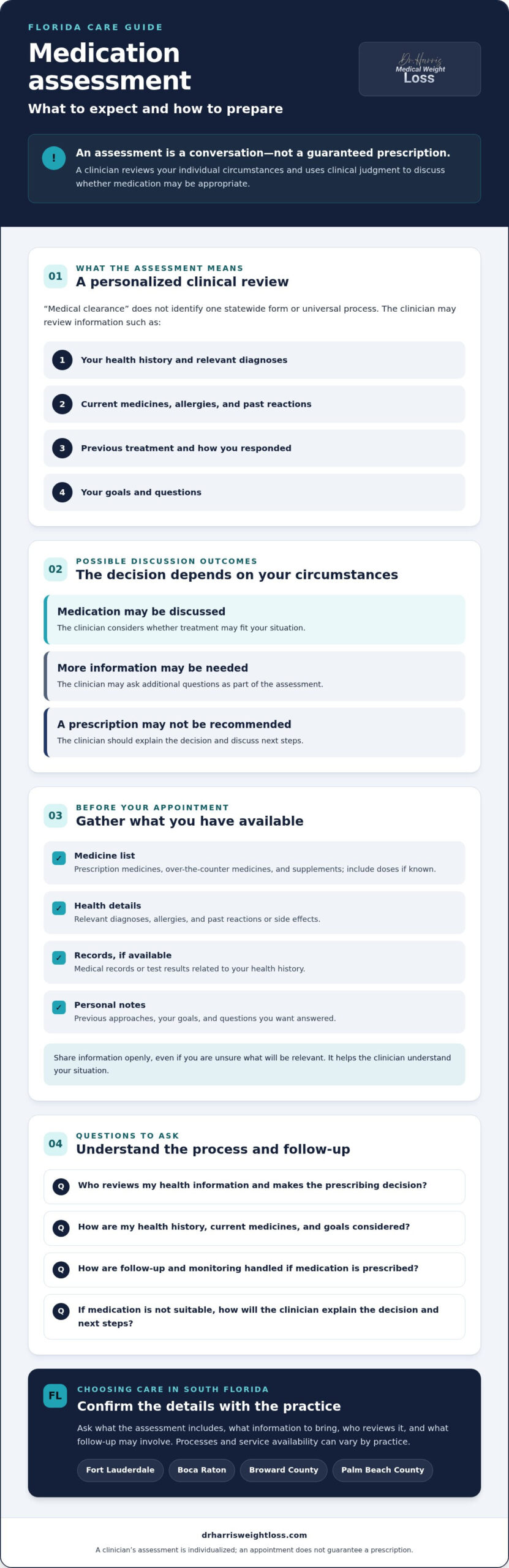
A clinician’s assessment is individualized, and an appointment doesn’t guarantee a prescription. The clinician may ask about your health history, medications, previous care, and goals to understand your needs and discuss whether treatment may be appropriate. This guide explains what medical clearance can and can’t establish, what information to prepare, and what questions to ask a Florida weight management practice. A little preparation can make the conversation more focused, whatever the clinician recommends.
Key Takeaways
- Medical clearance for weight loss medication Florida involves an individualized clinical assessment, not a guaranteed prescription.
- Gather your health history, current medication list, diagnoses, allergies, and notes about past treatment before your appointment.
- Ask how the clinician assesses whether medication may be appropriate and what follow-up care involves.
- When considering care in Fort Lauderdale, Boca Raton, Broward County, or Palm Beach County, ask who reviews your health information and explains the next steps.
What Medical Clearance for Weight Loss Medication Means in Florida
“Medical clearance” is a clinician’s assessment of whether a prescription may be appropriate for an individual, not a form that guarantees medication. If you’re researching medical clearance for weight loss medication Florida, keep that distinction in mind: an evaluation is a chance to discuss your health and options, not an automatic approval.
The phrase doesn’t, by itself, identify a single statewide form or universal process. A clinician may consider your health history, current medicines, relevant diagnoses, previous treatment, and goals before discussing whether treatment fits your situation. Sharing these details helps the clinician consider potential concerns and explain the reasoning behind next steps. For general background on medication types and how they work, see this overview of anti-obesity medications.
Does an assessment mean a prescription is certain?
No. The clinician determines whether treatment is appropriate after reviewing your individual circumstances. The assessment may lead to a discussion of medication, additional questions, or a recommendation not to prescribe. That decision should reflect clinical judgment, not simply a request for a particular prescription.
Before arranging an appointment, ask the practice what its assessment includes, what health information to bring, and whether appointments are available for your location. This is useful whether you’re looking for care in Fort Lauderdale or Boca Raton, or elsewhere in Broward County or Palm Beach County. Service availability and evaluation processes can vary by practice, so confirm details directly rather than assuming every clinic follows the same steps.
How to Prepare for a Weight Loss Medication Assessment
Preparation can help the clinician understand your health history and use the appointment well. Write down your goals and the approaches you’ve tried, including any prescription medicines you’ve taken and how you responded. Bring the information you have, even if you’re unsure what will be relevant. Share it openly so the clinician can assess your situation and explain which details affect the discussion.
What information should I bring to the appointment?
Gather what you have available. An up-to-date list gives the clinician a clearer view of your health and current care:
- Prescription medicines, over-the-counter medicines, and supplements, including doses if known
- Relevant diagnoses, allergies, and past reactions or side effects
- Medical records or test results related to your health history, if available
- Notes about previous treatment approaches, your goals, and questions you want answered
For context on clinician involvement, read about the physician-led medical weight loss approach. You can also review Florida’s standards for prescribing; ask the clinician how applicable requirements relate to your assessment.
Use your questions to clarify what care may involve. Ask who reviews your information, how follow-up and monitoring are handled, what responsibilities you would have if prescribed medication, and what the next steps are if the clinician decides it isn’t suitable. If you’re considering an appointment with Dr. Harris Medical Weight Loss, you can ask about the assessment process. Having your medication list and questions ready can make the conversation more focused, while leaving the treatment decision to the clinician.
Choosing Clinician-Led Medication Care in South Florida
A thoughtful consultation should make clear who reviews your health information, how the clinician explains a decision, and what follow-up may involve. When seeking medical clearance for weight loss medication Florida, look for a conversation that makes room for your questions rather than treating a prescription as a given. You can also review Florida’s standards for prescribing weight loss drugs and ask the practice how its assessment process addresses applicable standards.
What should I ask a Florida weight management clinic?
- Who evaluates patients and makes the prescribing decision?
- How does the clinician consider my health history, current medicines, and treatment goals?
- How are follow-up and monitoring arranged if medication is prescribed?
- If a medication isn’t suitable, how will the clinician explain that decision and discuss next steps?
Dr. Harris Medical Weight Loss serves Fort Lauderdale, Boca Raton, Broward County, and Palm Beach County. Its medically supervised programs include Tirzepatide (Zepbound), Semaglutide, and Phentermine. These are different prescription options to discuss with the clinician, who determines whether any may be appropriate for your circumstances. The clinic also offers Lipotropic and B-12 injections to complement its weight loss programs. Learn more about the Tirzepatide program in Fort Lauderdale.
If you’re considering an assessment, you can contact the clinic with your questions and ask whether an evaluation may be appropriate. The conversation is an opportunity to understand the process, not a promise of a prescription.
Take the Next Step With Informed Questions
Medical clearance for weight loss medication Florida is an individualized clinical assessment, not a guarantee of a prescription. Bringing your health history, medication list, and questions can make the conversation more useful. Ask who will review your information, how the clinician explains treatment decisions, and what follow-up may involve.
Dr. Harris Medical Weight Loss offers clinician-supervised medication programs, including Tirzepatide (Zepbound), Semaglutide, and Phentermine. The clinician can discuss the available options after reviewing your circumstances. The clinic is a LegitScript certified dispensing office; you can ask about its evaluation and dispensing process when you contact the practice.
Ready to ask questions about the process? Contact Dr. Harris Medical Weight Loss to discuss an evaluation. Taking time to understand your options is a meaningful step toward care that considers your health and needs.
Frequently Asked Questions
Is medical clearance required before taking weight loss medication?
Whether an assessment is needed and what it involves can depend on the medication and your circumstances. The phrase “medical clearance for weight loss medication Florida” doesn’t, by itself, establish one requirement for every patient or medication. Discuss eligibility and safety with a qualified clinician, and ask which current prescribing guidance applies to your situation.
What happens during a medical assessment for weight loss medication?
A clinician may review your health history, current medicines, previous treatment, and goals, as relevant to your care. The assessment is specific to you and doesn’t promise a prescription. Ask who makes the prescribing decision, what information the practice needs, and how follow-up and monitoring are handled. Confirm the practice’s process directly, since evaluation details may vary.
Can my medical history affect whether I qualify for weight loss medication?
Yes. Your health history and current medicines may inform the clinician’s decision about whether a medication is appropriate. Share relevant diagnoses, allergies, and previous medication experiences, even if you’re unsure whether they matter. Ask how your circumstances affect the options being discussed. Only a clinician who reviews your situation can assess your eligibility; no general answer can predict the outcome.
How do I find a clinician for weight loss medication in South Florida?
Confirm the practice’s service area, who evaluates patients, how health information informs decisions, and what follow-up involves. Dr. Harris Medical Weight Loss serves Fort Lauderdale, Boca Raton, Broward County, and Palm Beach County. Contact the clinic with questions about its assessment process and availability before deciding whether to pursue an evaluation. An inquiry doesn’t guarantee a prescription.