What if the monthly cost of a GLP-1 program depends on more than the medication itself? In Florida, the total may also include clinical visits, monitoring, or other program fees, so comparing a single advertised price can leave important questions unanswered. If you’re researching medical weight loss payment plans Florida, it’s reasonable to want clear monthly costs before deciding how to proceed.
This guide explains payment plan structures, what to ask about insurance coverage, and how to check whether an HSA or FSA can be used for eligible expenses. You’ll also learn what costs to clarify and how physician oversight fits into the value of care. Dr. Harris Medical Weight Loss is a physician-led clinic in Fort Lauderdale and Boca Raton, with on-site dispensing for approved patients and LegitScript certification. The goal is a clearer view of the financial options, so you can make an informed decision without pressure.
Key Takeaways
- Learn what may contribute to program costs, including consultations, laboratory reviews, and medication, so you can ask for an itemized estimate.
- Explore medical weight loss payment plans Florida readers may encounter, and confirm whether third-party financing or installment options are available to you.
- Find out what to ask about HSA or FSA eligibility and insurance coverage before choosing how to pay.
- Review how physician oversight and on-site dispensing relate to Dr. Harris’s Tirzepatide and Semaglutide programs.
Understanding the Investment in Medical Weight Loss
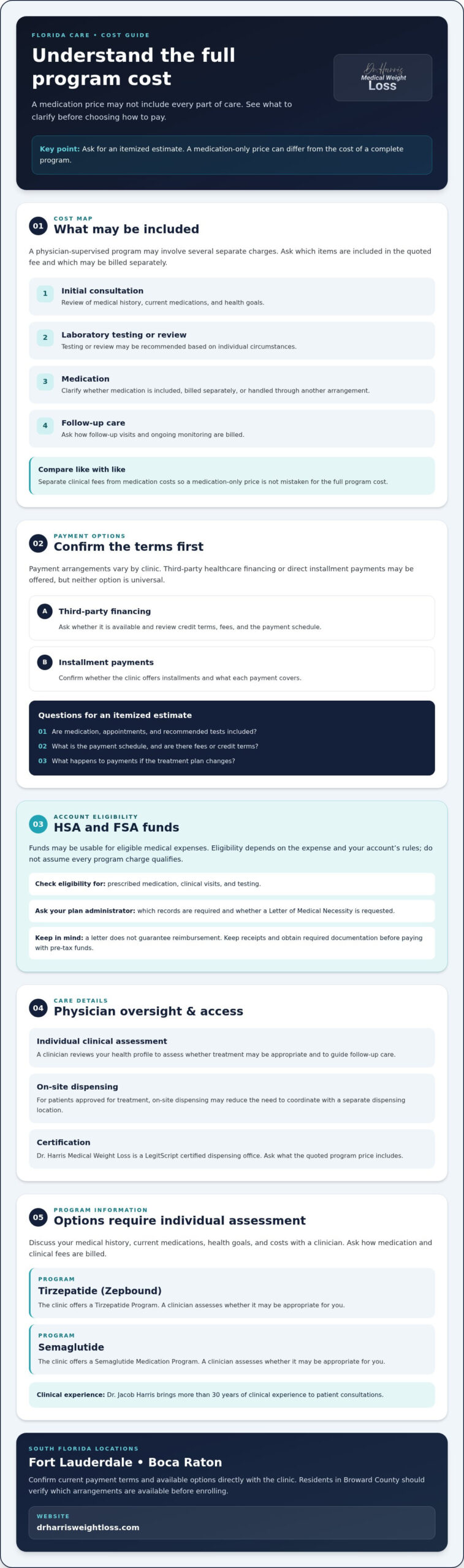
A physician-supervised program involves more than medication. The full cost may include the initial consultation, review of laboratory results, medication, and follow-up care. Ask the clinic to separate these items in its estimate so you can understand which charges are clinical fees and which are medication costs. That distinction makes it easier to compare payment options without mistaking a medication-only price for the cost of a complete program.
Obesity has multiple contributing factors and health effects, as outlined in understanding obesity. For GLP-1 medications, physician oversight helps assess whether treatment is appropriate and allows a clinician to review your health profile as care continues. A program focused on sustaining weight loss in Florida can place treatment within a longer-term plan for health and vitality.
The Clinical Components of Program Costs
An initial evaluation gives the clinician an opportunity to review your medical history, current medications, and health goals. Laboratory testing or review may be recommended based on your circumstances. These steps help inform whether a medication is suitable and what follow-up may be needed. Ask which evaluations are included in the quoted fee and which could be billed separately.
Dr. Harris Medical Weight Loss is a LegitScript certified dispensing office. For patients approved for treatment, on-site dispensing can simplify access by reducing the need to coordinate with a separate dispensing location. Certification is a useful marker to consider, but ask what the program’s quoted price includes.
Ongoing monitoring allows the physician to check how treatment fits your health profile over time and address concerns that arise. Before enrolling, clarify how follow-up visits and medication are billed. Understanding these components is a practical first step when evaluating medical weight loss payment plans Florida.
Payment Plans and Financing Options in Florida
Payment arrangements vary by clinic, so residents in Fort Lauderdale, Boca Raton, and Broward County should confirm which options are actually available before enrolling. Florida clinics may use third-party healthcare financing or offer installment payments directly, but these arrangements aren’t universal. Ask whether medication, appointments, and any recommended tests are included in each payment, and request an itemized estimate to understand the full commitment.
Structured payments can spread eligible charges over time, helping patients plan around monthly budgets while staying engaged with clinician-directed care. If you’re researching medical weight loss payment plans Florida, confirm the payment schedule, fees, credit terms, and what happens if your treatment plan changes. A medical weight loss provider in Fort Lauderdale may be able to explain local program costs and which payment methods the clinic accepts. The CDC’s data on the health impact of obesity offers wider public-health context, but your own care plan and costs require an individual discussion.
Utilizing HSA and FSA for Weight Loss
HSA or FSA funds may be usable for eligible medical expenses, but eligibility depends on the expense and your account’s rules. Don’t assume every program charge qualifies. Ask your plan administrator whether prescribed medication, clinical visits, or testing are eligible, and what records they require. A physician’s Letter of Medical Necessity may be requested in some situations, but it doesn’t guarantee reimbursement. Keep receipts and obtain any required documentation before paying with pre-tax funds.
For a clear picture of available care and payment questions, you can review Dr. Harris Medical Weight Loss and confirm current terms directly with the clinic.
Accessible Weight Management with Dr. Harris
Choosing care should start with your health profile and a conversation with a clinician, not a sales comparison between medications. Dr. Jacob Harris brings more than 30 years of clinical experience to patient consultations. The clinic offers a Tirzepatide (Zepbound) Program and a Semaglutide Medication Program. Each option requires an individual assessment to determine whether it may be appropriate for you. Ask what the program includes and how medication and clinical fees are billed before making a decision.
Cost transparency matters as much as treatment details. Review the FTC consumer advice on weight loss for guidance on recognizing unsupported promises and understanding claims. For local patients considering semaglutide, the clinic’s information on semaglutide injections in Fort Lauderdale can be a starting point for learning about the program.
Starting Your Clinical Program in South Florida
At the Boca Raton or Fort Lauderdale location, begin by discussing your medical history, current medications, health goals, and questions about costs with the clinical team. The physician can evaluate your profile and discuss whether a program is suitable. For approved patients, on-site dispensing can simplify access by reducing the need to coordinate medication pickup at a separate location.
Care can then continue through clinician guidance and follow-up, with the aim of keeping treatment aligned with your health needs over time. If you’re weighing medical weight loss payment plans Florida, ask how the recommended program’s clinical visits and medication costs are itemized, and which payment methods the clinic currently accepts.
Take the Next Step with Clarity
Before choosing care, separate medication costs from clinical fees, request an itemized estimate, and confirm which payment methods the clinic accepts. HSA and FSA eligibility can depend on your account’s rules, so verify requirements with your plan administrator. Understanding these details can make medical weight loss payment plans Florida easier to assess against your budget and health needs.
Dr. Harris Medical Weight Loss is physician-owned and operated, led by Dr. Jacob Harris, who brings over 30 years of clinical experience. The clinic is also a LegitScript Certified Office. These credentials offer useful context as you consider physician-guided care, but your consultation is the place to discuss whether a program suits your health profile and to ask for current pricing and payment information.
Schedule Your Consultation with Dr. Harris Today to discuss your questions and options. You deserve clear information and care that supports informed decisions at every step.
Frequently Asked Questions
Does insurance cover medical weight loss in Florida?
Insurance coverage for medical weight management in Florida varies by plan and isn’t standard. Check your benefits for the specific medication, diagnosis criteria, and any prior authorization requirements, then ask whether the clinic bills your insurer or expects self-pay. Patients in Fort Lauderdale, Boca Raton, Broward County, and Palm Beach County should confirm coverage directly with their insurer and clinic before budgeting.
Can I use my HSA or FSA card for weight loss medications?
An HSA or FSA card may be usable for expenses that qualify under your account rules, but eligibility isn’t automatic for every medication or clinic charge. Before paying, ask your plan administrator which expenses qualify and what documentation is needed. Keep itemized receipts, and check whether consultations, medication, or laboratory work are treated differently under your plan.
How do monthly payment plans work for Tirzepatide or Semaglutide?
Monthly payment arrangements may use third-party medical financing or clinic installment billing, but availability and terms differ by provider. The monthly amount depends on what’s financed, the repayment period, and whether medication, visits, or testing are included. For medical weight loss payment plans Florida, request written terms and ask about interest, fees, due dates, and what charges apply to your prescribed treatment. Confirm current options with the clinic.
What is included in a medical weight loss program fee?
A program fee may cover a clinician evaluation, laboratory review, follow-up visits, medication, or some combination; inclusions depend on the clinic. Request an itemized estimate that separates clinical fees from medication and tests, then ask which charges recur monthly and which occur once. Dr. Harris Medical Weight Loss provides Tirzepatide and Semaglutide programs. Confirm current program inclusions before enrolling.