Did you know that without a targeted nutritional plan, lean muscle tissue can account for nearly 25% of the total reduction during weight loss on therapies like tirzepatide? It’s natural to feel concerned about side effects like nausea or gastrointestinal discomfort, especially when you’re trying to maintain your daily energy. You shouldn’t have to guess about your protein requirements or worry about losing strength. Knowing what to eat when taking tirzepatide is a vital clinical tool that helps you manage these symptoms while supporting your physical vitality and long-term health.
This guide provides a clear nutritional roadmap to help you navigate your treatment with confidence. We’ll explore the specific high-biological-value proteins that protect your muscle mass, hydration strategies to support renal clearance, and the gentle, nutrient-dense foods that help you achieve weight loss without the burden of severe side effects. By understanding the biological needs of your body during this transition, you can restore your energy and focus on sustainable transformation.
Key Takeaways
- Manage gastrointestinal discomfort by learning how to select foods that align with the medication’s effect on gastric emptying.
- Discover the clinical protein thresholds necessary to preserve lean muscle mass and maintain your strength during weight loss.
- Master the specifics of what to eat when taking tirzepatide to ensure your body receives the nourishment required for long-term vitality.
- Understand the importance of physician-led guidance when adjusting your nutritional strategy during medication dosage titrations.
Optimising Your Nutrition for Tirzepatide and GI Comfort
Tirzepatide works by mimicking natural hormones that regulate blood sugar and appetite. As a dual GIP and GLP-1 receptor agonist tirzepatide, it significantly decelerates the rate at which your stomach empties. While this process is fundamental to the medication’s effectiveness, it often leads to gastrointestinal discomfort if your diet isn’t adjusted. When food remains in the stomach longer, heavy, fatty, or fried items can trigger intense nausea. These foods require more effort to break down; they essentially sit in the digestive tract, causing discomfort during the weight loss process.
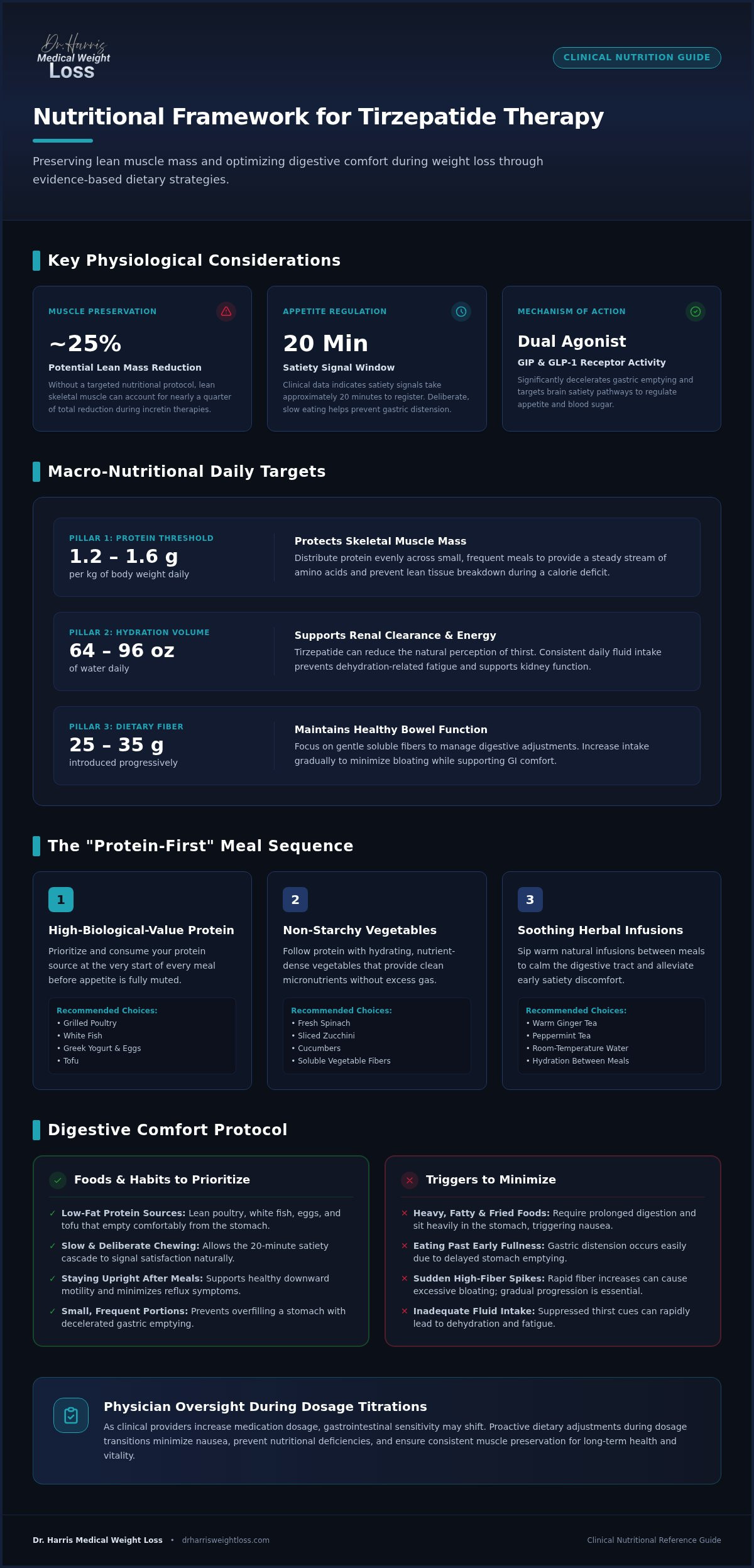
Focusing on what to eat when taking tirzepatide involves a shift toward lighter, easily digestible meals. Because the medication targets satiety pathways, your brain’s hunger signals are often muted. You might not feel the physical urge to stop eating until you’re uncomfortably full. Clinical data shows it takes roughly 20 minutes for satiety signals to register. Practicing deliberate portion control and eating slowly is necessary to prevent gastric distension. Choosing bland but nutrient-dense options helps settle the stomach while providing the biological fuel required for weight loss.
Foods to Prioritise for Digestive Stability
Selecting the right ingredients can make a substantial difference in how you feel during your treatment. We recommend focusing on these gentle, supportive options:
- Low-fat proteins: Opt for grilled poultry, white fish, or tofu. These provide essential amino acids without the heavy fats that often trigger nausea.
- Non-starchy vegetables: Spinach, zucchini, and cucumbers offer hydration and fiber without causing excessive bloating or gas.
- Soothing infusions: Sip on warm ginger or peppermint teas between meals. These natural aids are excellent for alleviating early satiety discomfort and calming the digestive tract.
Macro-Nutritional Pillars for Lean Mass Preservation
Maintaining your strength is just as vital as achieving weight loss. When your body is in a calorie deficit, it may begin to break down skeletal muscle tissue for energy. Clinical reviews indicate that without targeted protocols, muscle can account for roughly 25% of the total reduction on incretin therapies. To prevent this atrophy, we recommend an intake of 1.2 to 1.6 grams of protein per kilogram of body weight daily. This high-protein focus is a core part of knowing what to eat when taking tirzepatide. Distributing this intake evenly across small, frequent meals ensures your muscles have a steady supply of amino acids.
Hydration and fiber are equally critical pillars for your comfort. Tirzepatide can reduce your natural perception of thirst, which may lead to dehydration or fatigue. Aim for 64 to 96 ounces of water daily to support renal clearance. If you experience changes in bowel habits, progressively introducing 25 to 35 grams of fiber is helpful. Clinical experts emphasize the importance of managing GLP-1 digestive side effects by staying upright after eating and choosing soluble fibers that are gentle on the gut.
The Protein-First Framework
Prioritizing protein at every sitting is the most effective way to protect your lean mass when your appetite is low. We suggest starting each meal with your protein source before moving to vegetables. High-quality options like Greek yogurt, eggs, and lean cuts of poultry are excellent choices that provide high biological value. For those seeking professional oversight, our Tirzepatide Weight Loss Program in Fort Lauderdale offers personalized nutritional coaching. If you’re looking for expert guidance, you can also connect with our team to refine your strategy and support your long-term vitality.
Implementing Your Plan with Dr. Harris in South Florida
Dr. Harris Medical Weight Loss provides a physician-led environment where your progress is monitored with clinical precision. Having an expert who understands the nuances of incretin therapy is essential for your safety and success. Our approach combines medication with comprehensive lifestyle education. We ensure you don’t just achieve weight loss but also gain the knowledge to maintain your results long after your program concludes. This focus on long-term vitality is what distinguishes our practice from automated weight management systems that lack human oversight.
Navigating dosage escalations requires careful, proactive adjustments to your diet. As your clinical provider increases your dose, your body’s sensitivity to certain foods may change. We provide specific guidance on what to eat when taking tirzepatide during these transitions to minimize nausea and ensure you’re meeting your nutritional needs. Regular check-ins allow us to recognize signs of nutritional deficiencies early, such as fatigue or muscle weakness, which may require clinical intervention. This level of oversight ensures your biological harmony remains stable throughout the entire process.
Professional Oversight at Our Clinical Offices
We invite you to schedule regular check-ins at our Fort Lauderdale or Boca Raton locations. These visits offer personalized guidance on managing the transition between different dose strengths. By working closely with a board-certified physician with over 30 years of experience, you receive the support needed for a Weight Loss Program in Florida residents can trust. Our LegitScript-certified dispensing office ensures that every aspect of your care meets the highest medical standards. This structured oversight helps you stay focused on your health journey while feeling empowered and secure in your choices.
Your Path to Sustainable Transformation and Vitality
Success on your journey is defined by the harmony between clinical treatment and supportive nutrition. By focusing on high-biological-value proteins and soothing, nutrient-dense ingredients, you safeguard your muscle tissue while maintaining digestive stability. Understanding what to eat when taking tirzepatide empowers you to manage side effects effectively, allowing you to focus on the restoration of your energy. This methodical approach ensures that your weight loss is supported by science and professional care.
Dr. Jacob Harris provides the seasoned expertise and physician-led oversight required to navigate this transition safely. Our LegitScript-certified office offers over 30 years of clinical experience and the convenience of on-site medication dispensing in Boca Raton and Fort Lauderdale. Start Your Medically Supervised Tirzepatide Program Today to begin a partnership rooted in integrity and medical ethics. We’re committed to helping you achieve a state of renewed vigor and quiet confidence.
Frequently Asked Questions
Can I drink alcohol while taking Tirzepatide?
Alcohol should be consumed with extreme caution or avoided while on your program in South Florida. Since the medication slows gastric emptying, alcohol stays in your stomach longer, which often worsens nausea and acid reflux. It also provides empty calories that don’t support your physical vitality. We recommend choosing sparkling water with lime during social gatherings to stay hydrated and comfortable.
What should I do if I am too nauseous to eat?
If you feel too nauseous to eat, focus on small portions of bland, nutrient-dense foods like chilled Greek yogurt or plain grilled poultry. Understanding what to eat when taking tirzepatide during these episodes helps you maintain your strength without overwhelming your digestive system. Sip ginger tea and stay upright after eating. If nausea persists, please contact our Boca Raton or Fort Lauderdale offices.
Is it okay to skip meals if I am not hungry on Tirzepatide?
Skipping meals isn’t recommended because your body needs a steady supply of protein to prevent muscle loss. When your hunger signals are muted, it’s better to consume four or five small mini-meals instead of three large sittings. This strategy ensures you reach your clinical protein targets and maintain your energy levels as you navigate your health journey in Broward County.
How much water should I drink daily during the program?
You should aim for 64 to 96 fluid ounces of water every day. Proper hydration is essential for supporting renal clearance and managing gastrointestinal side effects like constipation. Keeping a water bottle with you while traveling through Palm Beach County makes it easier to hit these targets. This consistent fluid intake is a key part of what to eat when taking tirzepatide.