Imagine sitting down to a favorite meal, only to feel a wave of intense nausea after just a few bites. For many starting Tirzepatide, this sudden shift in digestion feels both frustrating and unpredictable. You may worry that one nutritional mistake will lead to an evening of discomfort or vomiting. It is completely natural to feel overwhelmed as your body adapts to a new biological rhythm. This guide provides a clinical perspective on the foods to avoid on Zepbound to help you minimize gastrointestinal side effects. By understanding how the medication slows gastric emptying, you can align your choices with your body’s needs. We will examine how to prioritize comfort and clarity, ensuring you feel empowered during weight loss. You will learn practical strategies to support long term vitality while maintaining a steady, confident path toward your health goals.
Key Takeaways
- Understand how Tirzepatide interacts with your body to slow digestion, allowing you to select meals that prioritize digestive comfort.
- Identify the specific foods to avoid on Zepbound, such as high-fat and sugary items, to minimize common gastrointestinal side effects.
- Discover how physician-led oversight in Fort Lauderdale and Boca Raton provides the guidance necessary to navigate social dining during weight loss.
- Learn to synchronize your nutritional habits with the medication’s biological mechanisms to support your health and weight loss.
Understanding the Biological Mechanism of Tirzepatide and Digestion
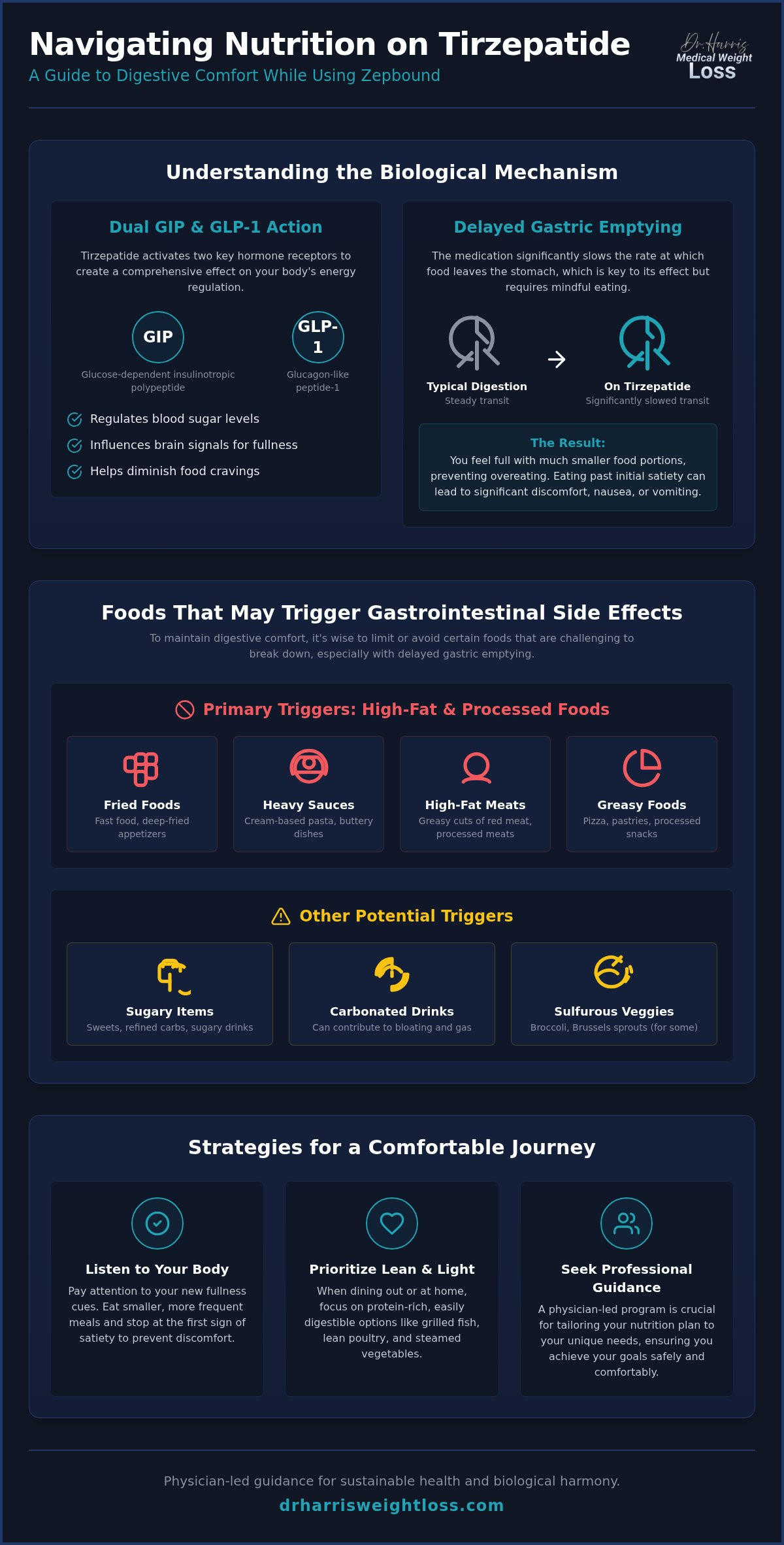
Tirzepatide represents a sophisticated advancement in weight loss. It acts as a dual agonist, meaning it activates two distinct hormone receptors: glucose-dependent insulinotropic polypeptide (GIP) and glucagon-like peptide-1 (GLP-1). This dual action provides a comprehensive approach to health by regulating blood sugar levels and influencing the brain’s signals regarding hunger and fullness. It’s about more than just appetite; it’s about shifting how your body interacts with nutrition at a cellular level. Understanding Tirzepatide’s Biological Mechanism is the first step in achieving biological harmony with your body.
When these receptors are activated, your perception of food changes. You may find that cravings diminish and your interest in certain snacks fades. This internal shift is a signal that the medication is working to manage your energy regulation and internal balance. Learning about the foods to avoid on Zepbound allows you to navigate these changes with confidence. By aligning your diet with these hormonal changes, you create a sustainable environment for long-term health.
How Delayed Gastric Emptying Affects Your Food Choices
One of the primary ways this treatment supports your journey is through the process of delayed gastric emptying. Usually, the stomach moves food into the small intestine at a steady rate. Tirzepatide significantly slows this transit time. Delayed emptying prevents the stomach from processing large or heavy meals at a typical pace. Because food remains in the stomach longer, you feel full with much smaller portions.
This physiological change makes identifying the right foods to avoid on Zepbound essential for your comfort. If you eat past the point of initial satiety, you risk significant discomfort, as the stomach simply doesn’t have the space to accommodate excess volume. Listening to these new signals helps prevent nausea and supports weight loss without the stress of digestive upheaval.
Identifying Foods That May Trigger Gastrointestinal Side Effects
Adapting your palate is a vital component of a successful journey. While the medication manages your appetite, certain nutritional choices can disrupt your digestive harmony. Identifying the specific foods to avoid on Zepbound helps you sidestep the nausea that often follows a heavy meal. High-fat and fried items are particularly challenging because they require more effort to break down. When combined with slowed gastric emptying, these foods linger in the stomach, which often leads to reflux or significant discomfort.
Sugary treats and refined carbohydrates can also cause issues. These items may lead to rapid shifts in blood sugar that interfere with the steady energy levels you’re working to achieve. Additionally, carbonated beverages and sulfurous vegetables like broccoli or Brussels sprouts might contribute to bloating or the “sulfur burps” some patients report. Reviewing the Official FDA Approval and Safety Information confirms that gastrointestinal symptoms are common, but they’re often manageable through mindful eating.
Managing High-Fat and Processed Foods for Better Tolerance
Greasy meals are the most frequent triggers for vomiting and indigestion. To maintain your comfort, it’s wise to limit or avoid the following:
- Deep-fried appetizers and fast food
- Heavy cream sauces and buttery pastas
- High-fat cuts of red meat
- Pizza and processed pastries
The relationship between fat intake and transit time is direct; high-fat foods slow an already deliberate process. Identifying your personal triggers is easier when you practice mindful consumption. You don’t have to navigate these adjustments alone. Our physician-led program provides the professional oversight needed to tailor your nutrition for your unique biological needs, ensuring you maintain comfort during weight loss.
Integrating Clinical Guidance into Your South Florida Lifestyle
Living in South Florida offers a unique blend of vibrant social scenes and active outdoor lifestyles. Whether you’re dining along Las Olas or enjoying a weekend in Boca Raton, managing your nutritional choices is key to your comfort. Social dining often presents challenges, but focusing on protein-rich, easily digestible options like grilled fish or steamed vegetables can help you stay on track. By being selective about your orders, you’ll avoid the heavy, greasy foods to avoid on Zepbound that often lead to digestive discomfort. Integrating Clinical Guidance ensures that your lifestyle remains enjoyable while your body adapts to its new biological rhythm.
Clinical oversight is the foundation of our approach. We prioritize your energy and vitality, ensuring that your nutritional plan supports your daily activities. Our focus remains on helping you achieve weight loss through sustainable habits and biological harmony. This steady progress is supported by a partnership that values medical ethics over commercial trends. It’s about empowering you to feel your best while you reach your health goals.
Professional Oversight for Weight Loss in Broward County
Choosing a tirzepatide program Fort Lauderdale offers the advantage of real-time side effect management. Dr. Jacob Harris utilizes over 30 years of clinical experience to tailor advice to your specific physiological responses. This personalized care is essential when navigating the list of foods to avoid on Zepbound, as individual tolerances can vary. Our comprehensive medical weight loss Fort Lauderdale services provide the breadth of clinical support necessary for long-term vitality. We act as your partners, helping you translate clinical data into a kitchen-table reality that fits your South Florida life.
Empowering Your Path to Biological Harmony
Navigating your health journey requires a partnership between clinical science and daily lifestyle choices. By understanding how Tirzepatide regulates your appetite and slows digestion, you can make informed decisions about your nutrition. Prioritizing easily digestible proteins while identifying specific foods to avoid on Zepbound reduces the risk of gastrointestinal side effects. This clarity allows you to focus on your progress with confidence and stability. You don’t have to manage these nuances alone.
Dr. Jacob Harris brings over 30 years of clinical experience to our LegitScript certified dispensing office, providing the medical oversight necessary for long-term vitality. We’re here to guide you through every adjustment, ensuring weight loss is managed with professionalism and care. Schedule a consultation for your physician-led Tirzepatide program today and take the next step toward a renewed sense of vigor. You have the tools and the support needed to achieve success on your own terms.
Frequently Asked Questions
Can I drink alcohol while taking Zepbound for weight loss?
Alcohol can be consumed in moderation, but it’s important to be cautious of how it affects your stomach. The medication’s effect on gastric emptying means alcohol may remain in your system longer, potentially increasing feelings of nausea or dizziness. Additionally, alcohol can impact blood sugar regulation. Focusing on hydration and limiting intake helps maintain your comfort during weight loss.
Why do fried foods cause nausea while on Tirzepatide?
Fried items are difficult for the body to process because high fat content requires significant digestive effort. Since the medication already slows the movement of food through your stomach, greasy meals linger much longer than usual. This extended transit time frequently triggers acid reflux or nausea, making them important foods to avoid on Zepbound. Avoiding these heavy fats is essential for comfort.
What should I eat if I am not feeling hungry at all?
When your appetite is low, it’s best to consume small, protein-rich snacks throughout the day. Choosing nutrient-dense options like a hard-boiled egg or a light protein shake ensures you get the fuel you need without feeling overfull. This approach prevents the weakness that can come from under-eating and helps you stay on a path toward weight loss.
Is coffee or caffeine allowed during the Zepbound program?
Caffeine is typically allowed, though you should monitor how your body reacts to its acidity. Some patients find that coffee increases heart rate or stomach irritation while taking the medication. If you notice increased reflux, it’s helpful to treat highly acidic drinks as foods to avoid on Zepbound. Moderation is key to maintaining your daily energy and digestive balance.