The physical discomfort you feel isn’t a sign that your treatment is failing; it’s often a signal that your body is learning to regulate its biology in a whole new way. If you’ve been hesitant to start your journey because you’re worried about zepbound side effects like nausea or fatigue interrupting your daily life, you aren’t alone. It’s completely natural to feel anxious when your system undergoes such a profound shift in metabolic regulation. We believe that clarity is the best antidote to anxiety, and understanding why these changes occur is the first step toward lasting comfort.
We’re here to ensure your journey toward weight loss and health feels supportive and sustainable. This guide provides a deep dive into the biological mechanisms behind common symptoms and offers physician-led strategies for managing them throughout your treatment. You’ll gain a clear understanding of the side effect timeline, learn actionable dietary tips to reduce physical discomfort, and know exactly when a symptom requires medical intervention. By the end, you’ll have the tools to move forward with quiet confidence in your long-term vitality.
Key Takeaways
- Discover how delayed gastric emptying influences digestive comfort and why understanding this biological shift is essential for managing early symptoms.
- Learn why the 2.5 mg starting dose is a critical period for metabolic acclimation and how it helps minimize zepbound side effects during the initial weeks of treatment.
- Gain practical dietary strategies, such as prioritizing smaller and more frequent meals, to reduce gastric pressure and maintain steady energy.
- Understand how a physician-led tirzepatide program Fort Lauderdale provides the clinical oversight necessary for real-time symptom management and treatment personalization.
- Identify the specific clinical signals that help you distinguish between manageable discomfort and symptoms that require professional medical intervention.
Common Gastrointestinal and Systemic Zepbound Side Effects
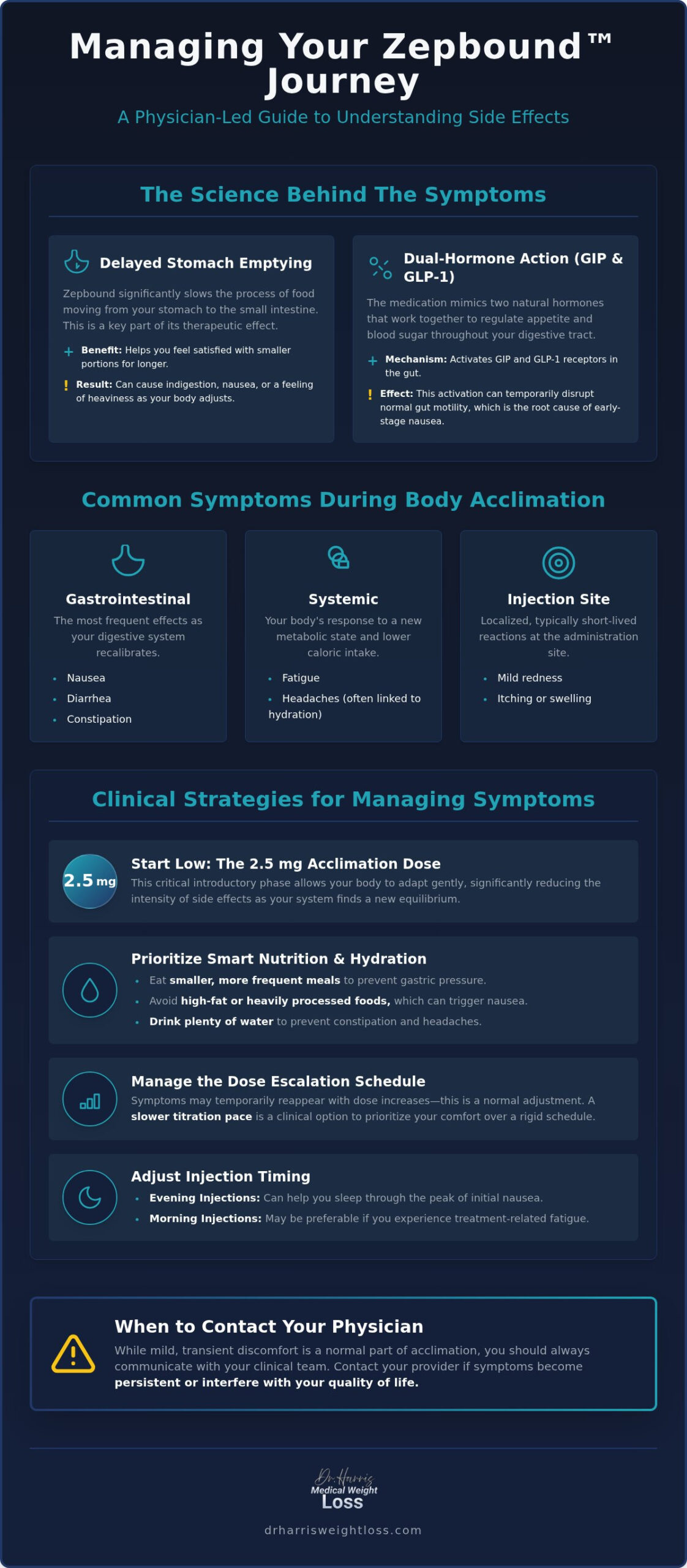
The physical shifts you experience during the first few weeks of treatment are often a direct result of how the medication interacts with your digestive system. Most zepbound side effects are gastrointestinal in nature, including nausea, diarrhea, and constipation. These symptoms occur because the medication significantly slows gastric emptying, which is the process of food moving from your stomach into the small intestine. While this delay helps you feel satisfied with smaller portions, it can lead to indigestion or a feeling of heaviness if your meal sizes aren’t adjusted. Recognizing these as predictable biological responses allows you to focus on your progress without unnecessary alarm.
The Biology of GIP and GLP-1 Receptors
Understanding the science helps remove the mystery of your symptoms. Tirzepatide (Zepbound) is a unique dual-agonist medication that mimics two natural hormones: glucose-dependent insulinotropic polypeptide (GIP) and glucagon-like peptide-1 (GLP-1). These hormones work together to regulate appetite and blood sugar. Because receptors for these hormones are located throughout the digestive tract, their activation can temporarily disrupt normal gut motility. This slowing of digestion is a primary therapeutic goal for weight loss, but it’s also the root cause of early-stage nausea as your system recalibrates.
Systemic Responses: Fatigue and Headaches
You might notice a period of fatigue as your body adapts to a new metabolic state. This isn’t always a direct side effect of the medication itself. Often, it’s a systemic response to a lower caloric intake and the body shifting its energy sources. Headaches are also common during the titration phase. These are frequently linked to changes in hydration levels. Because the medication can suppress thirst as well as hunger, staying proactive with water intake is essential to maintaining your daily energy and preventing tension.
Localized sensitivity at the injection site is another common experience. You may notice mild redness, itching, or swelling where the medication was administered. These reactions are typically short-lived and can be managed by rotating your injection sites between the abdomen, thigh, or back of the arm. By monitoring these zepbound side effects with a clinical eye, you can maintain your comfort while moving steadily toward your health goals. For those who want to separate documented clinical findings from viral misinformation, our detailed resource on zepbound side effects in females addresses specific hormonal considerations and common myths that may be influencing your expectations.
Clinical Strategies for Managing Symptoms During Treatment
The 2.5 mg starting dose serves as a critical period for metabolic acclimation rather than immediate weight loss. This introductory phase allows your body to adapt to the medication without overwhelming your digestive system. By starting at this lower threshold, we can significantly reduce the intensity of zepbound side effects as your hormones find a new equilibrium. Following the FDA approval of Zepbound, clinical data has shown that a gradual approach to dosing improves long-term adherence and comfort.
Dietary adjustments play a vital role in maintaining your daily well-being. Because your stomach empties more slowly, prioritizing small, frequent meals helps prevent excessive gastric pressure. You’ll likely find that high-fat or heavily processed foods become triggers for nausea or heartburn. Identifying these personal triggers early allows you to make adjustments that support your comfort. Strategic hydration is equally important; drinking plenty of water throughout the day prevents constipation and supports kidney function as your body processes these changes.
Managing the Dose Escalation Schedule
As you move through the titration schedule, you may find that zepbound side effects temporarily resurface with each dose increase. This is a normal part of the physiological adjustment process. If symptoms become persistent or interfere with your quality of life, clinical protocols allow for a slower titration pace. Pausing at a current dose for an extra month gives your system more time to stabilize before increasing the concentration. This patient-first approach is a cornerstone of our tirzepatide program Fort Lauderdale, where we prioritize your comfort over a rigid schedule.
Lifestyle Modifications for Comfort
The timing of your administration can also influence your experience. Many people find that evening injections help them sleep through the peak of initial nausea. Conversely, if you experience treatment-related fatigue, morning injections might be preferable to maintain a steady rhythm. Quality sleep hygiene further supports your recovery and energy levels. Ensuring you get seven to nine hours of rest allows your body to focus its resources on regulation, reducing the overall burden on your system. Small adjustments in your daily routine often yield the most significant improvements in how you feel.
Professional Oversight and Safety Standards in South Florida
Choosing a medically supervised path ensures that you have a dedicated partner to navigate the nuances of your treatment. Our tirzepatide program Fort Lauderdale provides the real-time symptom management necessary for a stable and safe experience. Dr. Jacob Harris utilizes over 30 years of clinical experience to personalize your care, ensuring that titration is handled with precision. Safety is our primary focus; our Boca Raton office is a LegitScript certified dispensing location, which guarantees the highest standards for medication handling and patient education. This level of oversight helps you move forward with confidence, knowing your health is monitored by a seasoned professional.
When to Contact Your Physician
Most zepbound side effects are temporary and resolve as your system adjusts to the new hormonal balance. However, it’s vital to distinguish between mild digestive shifts and serious medical concerns. If you experience severe abdominal pain that radiates to your back, persistent vomiting, or yellowing of the skin, you must seek immediate consultation. While rare, conditions like pancreatitis or gallbladder issues require professional intervention. Reviewing a comprehensive list of Zepbound side effects helps you stay informed and proactive about your health throughout your journey.
The Role of Clinical Monitoring
Regular check-ins are the foundation of our weight loss program Florida. These appointments allow us to evaluate your progress and adjust your plan based on metabolic tracking and routine blood work. By monitoring your kidney function and glucose levels, we ensure that the medication is working in harmony with your biology. This human-first approach provides a level of safety and reassurance that automated platforms cannot match. We’re here to guide you through every milestone with clinical wisdom and personal encouragement, ensuring your path to health remains steady and secure.
Empowering Your Path to Sustainable Health
Managing your journey requires more than just a prescription; it demands a deep understanding of how your body responds to treatment. We’ve explored how common zepbound side effects are often the result of predictable biological shifts in digestion. By prioritizing a gradual titration schedule and adjusting your dietary habits, you can navigate these changes while maintaining your daily energy. Knowledge is the foundation of confidence, and you now have the tools to manage your symptoms with clarity and poise.
You don’t have to navigate these transitions alone. Dr. Jacob Harris brings over 30 years of medical experience to every patient interaction, providing the steady, physician-led clinical supervision you deserve. As a LegitScript certified practice, we prioritize your safety and provide the clinical wisdom needed for weight loss. Take the first step toward a more vibrant future and Schedule a Consultation with Dr. Harris in Fort Lauderdale today. Your journey is unique, and we’re honored to be your partner in restoring your personal energy and long-term vitality.
Frequently Asked Questions
How long do Zepbound side effects typically last?
Most zepbound side effects are temporary and typically resolve within a few days to a few weeks as your system adapts to the medication. Clinical data indicates that these symptoms are most prevalent during the initial titration period or immediately following a dose escalation. As your body becomes accustomed to the dual hormone regulation, the frequency and intensity of gastrointestinal discomfort generally decline, allowing you to focus on your progress with greater comfort.
Are there ways to prevent nausea when starting Tirzepatide?
You can proactively manage nausea by strictly adhering to the 2.5 mg starting dose and prioritizing smaller, more frequent meals. Avoiding high-fat or heavily processed foods helps reduce the burden on your digestive system while it adapts to slower gastric emptying. Staying consistently hydrated and choosing bland foods during the first few days after an injection can also provide significant relief as you begin your weight loss journey.
Can Zepbound cause long-term digestive issues?
Current clinical evidence doesn’t suggest that zepbound side effects lead to permanent or long-term digestive damage in the general population. Most gastrointestinal symptoms are functional and subside once the medication is discontinued or your body reaches a stable maintenance dose. However, it’s essential to maintain regular physician-led oversight to monitor for rare but serious conditions like pancreatitis, which require professional medical intervention to ensure your safety.
What should I do if I miss a dose due to side effects?
If you miss a dose because of persistent discomfort, you should contact your physician immediately to discuss a potential adjustment to your titration schedule. You shouldn’t take two doses at once to make up for a missed one; instead, follow your provider’s specific guidance on when to resume your next scheduled injection. This partnership ensures that your treatment remains safe and that any adjustments are made with your long-term health and vitality in mind. Women navigating these decisions may also benefit from reviewing the clinical facts on zepbound side effects in females, which covers hormonal interactions and birth control considerations that are relevant to treatment planning.